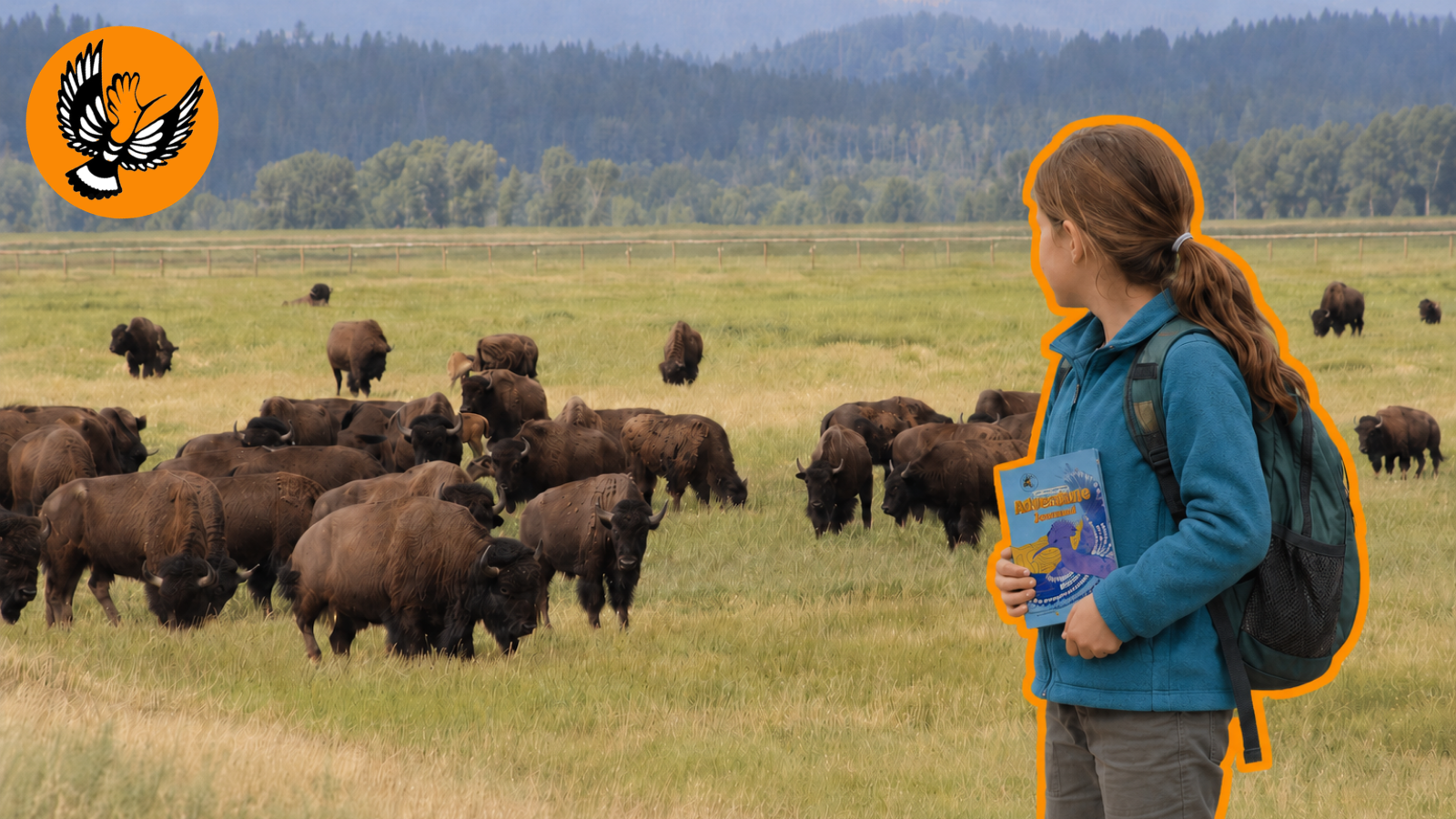
Wildlife watching in Yellowstone is one of the best ways for kids to become curious explorers. Around every bend, there is a chance to spot wildlife enjoying the mountain air. You might see a bison walking through the meadow, an elk grazing near hot springs, a bird soaring over the canyon, or maybe even a gray wolf watching from a distance.
Yellowstone is home to a variety of wildlife, including around 300 species of birds, 16 species of fish, 5 species of amphibians, and 67 species of mammals. Yellowstone has its own ‘big five,’ which often includes bison, elk, bears, wolves, and moose. Many visitors hope to see one of those five, and if they are lucky enough, all five.
Wildlife watching is so important for children because it gives them a chance to slow down, look closely, ask questions, and write down the moments they want to remember.

The Best Times for Wildlife Watching in Yellowstone
Wildlife in Yellowstone is usually most active during dawn and dusk. That means the earlier your family wakes up, the better chance you will have of seeing animals.
When I went to Yellowstone, the coolest encounter with wildlife happened in the morning. We were driving through the park when all of a sudden, out of the corner of our eyes, we saw a gray wolf about to cross the road right in front of us. It made direct eye contact with us as it trotted across the street. We didn’t even have time to pull our phones out to take a picture. It was almost as if the Wolf only wanted us to see him.
One morning, we also stumbled upon a wolf watching group. They travel all around Yellowstone following the wolves that have trackers on them. They let us look through their binoculars to see the wolves lying down in the meadow.
A simple journal prompt could be
What animal did I see today, and what was it doing?
Wildlife that lives in Yellowstone
The one animal you are guaranteed to see is the bison. They may look fluffy and calm, but they like their personal space. You can find them in almost every single meadow. Kids will also spot elk, especially around Mammoth Hot Springs. You know it’s an elk when it looks like a teen moose.
Gray wolves are rarer to find, but they are one of the most exciting animals to see from a distance or in a car. They are the most active in the early morning or evening. Black bears and grizzly bears have the honor of coexisting in the park. It is quite rare to be able to look to your right and see a grizzly and then to your left and see a black bear.
Each season brings something different. In spring, bison travel through the snow with their calves. In summer, families may see elk herds and bears searching for food. In the fall, elk and bighorn sheep become more active. Migratory birds may find themselves passing through the park. In winter, wolves are often easier to spot as they follow wildlife populations through the winter landscape.

Where Kids Can Look for Wildlife
These are my top places to find wildlife in the park that offer great photo opportunities.
Mammoth Hot Springs is known for elk. Kids will find them resting or grazing in the open grassy area. You may even see one from the nearby buildings peering in the window.
Yellowstone Lake is my personal favorite spot to see wildlife because of the variety of animals that gather here. You can look for waterfowl, otters, and sometimes even a grizzly bear coming to the shore for a drink of water.
Old Faithful is a great spot since you can see the famous geyser, but it’s also home to bison, elk, and sometimes a black bear.
The Grand Canyon of Yellowstone offers beautiful views and chances to see bighorn sheep, osprey, deer, and elk. This is a must-see spot due to the variety of sights to see in this canyon.
Hayden Valley is one of the most peaceful wildlife watching areas in the park. Families may see bison, bears, and sometimes wolves. It is a wonderful place to bring a blanket and binoculars to let kids observe from a safe distance.

How to Observe Wildlife Safely
The most important rule in Yellowstone is simple: give wildlife space.
Visitors should stay at least 100 yards away from bears and wolves, and at least 25 yards away from all other wildlife, including bison and elk. If an animal moves closer to you, don’t freak out; just move away calmly to keep a safe distance.
Bear spray is essential, especially if you plan on hiking. This is a must. When I was there, we hiked every day, and we did not encounter one bear up close, but you never know what waits for you around the bend. It’s better to be prepared than not. Make sure you research how to use it correctly.
Binoculars are a great tool to bring with you, especially for kids, because they let children see animals clearly without getting too close. It is so important to remember that the park is the animals’ home, and we are just guests visiting.
Kids should never touch, feed, or crowd wildlife. Even bison, which may look gentle and fluffy, are powerful wild animals that are the most likely to injure humans in the park. This is due to people getting too close, often because they want an up-close and personal picture of their child with a bison.
The best explorers observe quietly and keep a safe distance so they can keep exploring.
Turn Wildlife Watching in Yellowstone into a Journal Adventure
The best part of seeing wildlife in Yellowstone is letting kids record the animal they saw, where they saw it, and how the moment made them feel. That is where Zwela’s Worldwide Adventure Journal becomes the perfect travel companion. Instead of parents having to come up with journal prompts on the spot, the journal already includes pre-made prompts that help kids reflect on their day, rate their experiences, and write down what they saw along the way.
After spotting wildlife in Yellowstone, kids can use their journal to remember the little details they may forget later, like the animal’s movement, the colors they noticed, or the feeling of seeing a bison, elk, bear, wolf, or moose in real life. The journal also encourages imagination with fun pages that ask questions like what animal they would be if they could be one.
These guided prompts make journaling feel less like homework and more like part of the adventure. With space to write, draw, rate the day, and reflect on what they discovered, children can turn a quick wildlife sighting into a memory they can return to again and again.

Wildlife watching in Yellowstone isn’t just about seeing bison, bears, wolves, moose, or elk. It is about teaching kids to pay attention to the world around them. When children slow down, observe carefully, and write about what they see, they become more than travelers. They become storytellers.
So before your family heads into Yellowstone, pack Zwela’s worldwide adventure journal, a pair of binoculars, a sense of curiosity, and excitement. The animals may not remember you, but your child will carry these memories forever.
Did you know we have a free camping printable – with all your camping packing essentials listed in an easy checklist! Go grab it here!