
There is a magical place in Barcelona where the streets seem to whisper.
Not loudly, just enough to hear the tales of the past. Barcelona’s Gothic Quarter is full of stories that are tucked into stone walls, carved into cathedral rooftops, hidden beneath bridges, and buried under centuries of footsteps. Don’t walk too quickly, or you may miss all these hidden treasures. Slow down, look up, and listen closely; the old city begins to speak ancient languages to you.
If you want to find yourself in the oldest parts of Barcelona, you can’t miss the Gothic Quarter. Long before the narrow medieval streets and shadowy balconies, this was the Roman city of Barcino. Its walls, temples, and foundations still remain if you look close enough.
The Roman walls, temples, and foundations still remain, buried beneath the modern city, just waiting to be noticed like lost treasure that doesn’t want to be forgotten.
If you are traveling with kids, the magical legends of the Gothic Quarter in Barcelona make the old city feel less like a history lesson and more like a real-life storybook adventure.
So this is where our tale begins

The Guardians of the Kingdom
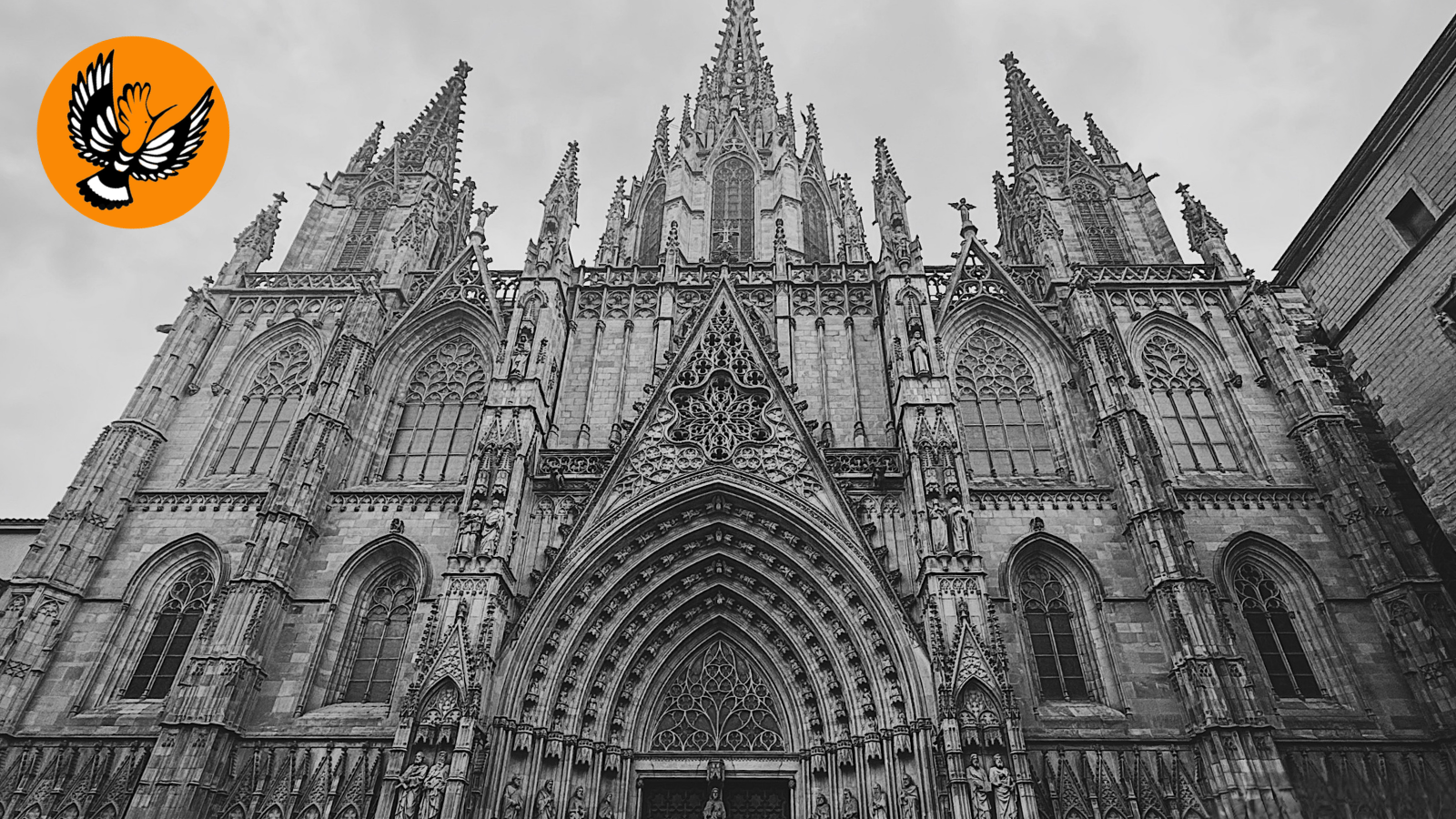
Every fairytale needs a castle, and in the Gothic Quarter, the Barcelona Cathedral appears as the perfect fairytale castle.
It is the heart of the Gothic Quarter; everything else functions around it. It was built mainly in the 13th and 15th centuries. Standing before it, you feel the history buzzing beneath you, like a time capsule that has been left open for all to see. It makes you seem so small, maybe due to the stone work, but I think it’s because of the time that has taken place here.
But do not only look at eye level.
Look up.
Perched atop its walls, the cathedral’s gargoyles crouch along the rooftops on their pedestals. There are around 200 different gargoyles watching over the Cathedral, including not only monstrous figures but also animals like a bull, an elephant, a goat, and everyone’s personal favorite, a unicorn.
The unicorn is especially popular for children, so try to help them spot it; it does not simply announce itself. It waits for the careful observer, the person willing to search the stone sky for something magical.
I got the privilege of seeing the gargoyles used for their true intention of moving rainwater away from buildings. These creatures seem to spit rainwater from the cathedral walls, as if the old monsters are still alive and displeased with the world below.
The 13 Geese of Saint Eulalia
Step inside the cathedral cloister, and the mood instantly changes from moody to lively.
The noise of the city softens. Palm trees and magnolias grow in the courtyard, and in the center, 13 white geese reside at all times.
The number is not random.
The geese are a living reminder of Saint Eulalla’s story, who died at the age of thirteen. Turning the cloister into something between a garden, a memorial, and a quiet fairytale scene. Their white feathers glide across the dark water, adding a sense of peace to the world around them.
The Mysterious Turtle Mailbox
Who doesn’t want a mailbox as cool as the Archdeacon’s featuring a good luck turtle?
On the outside of Casa de I’Ardiaca is a carved marble mailbox designed in 1895 by architect Lluis Domènech. It features swallows, ivy, and a tortoise. There is plenty of symbolism in this design meant to represent justice: the swallows are a suggestion of freedom and speed, the ivy represents a tangled bureaucracy, and the tortoise shows how slowly justice can move.
The birds want to fly, but the ivy traps them. The turtle moves slowly, almost going undetected beneath.
It is said that if you touch the head of the tortoise, it may bring good luck. Whether or not the luck is real, the turtle is a symbol of hope that better days are to come.
When I went to visit the lucky turtle, no one even noticed the free luck; they continued to walk past. It wasn’t until I went up and took a picture of the mailbox for those around me to understand the luck they have given up on. Another reminder to look around and go off the beaten path of the ones around you.

Do you dare to pull the Dagger Out?
The most mysterious sight in the Gothic Quarter is Pont del Bisbe, or the Bishop’s Bridge.
At first glance, the bridge looks ancient, like a medieval fantasy, joining two buildings together. I hate to burst your bubble, but the bridge is not medieval at all. It was built in the 1920s by architect Joan Rubió i Bellver, a disciple of Antoni Gaudí.
That’s the true magic of the Gothic Quarter: it has a way of turning even newer things into legends.
If you dare to walk under it and look up. Hidden beneath the arch is a skull pierced by a dagger. Many believe the skull to be cursed in hopes of cursing anyone who walks underneath.
Another legend says that if the dagger is ever removed, all of Barcelona will fall. A gentler version says that if you walk backward under the bridge while making a wish, it may come true. Fact or myth? This story adds a magical aura around the bridge, drawing thousands to marvel at the site.
This is where the Gothic Quarter feels most like a fairy tale with a dark twist.
The bridge makes you feel as if you are being watched by the one who haunts it.
Find yourself a King or Queen
Not so far away, the streets open into Plaça del Rei, the King’s Square.
This square feels quieter than it should, where even the stones seem to hold their breath. The moment you enter the square, it feels as if you have time-traveled to the medieval past of the city. It was once connected to the Palau Reial Major, the royal palace, which was once the residence of the Catalan counts.
There is even more history located beneath the courtyard are traces of Roman Barcino.
I strongly encourage looking deeply into the architecture of the square, or you might miss small hidden details. There is leftover royal imagery and stained glass connected to the Prince and Princess. Whether you find it quickly or not, that is part of the magic. Plaça del Rei rewards patience.
This isn’t just a square you simply visit.
It is a square you enter that takes you right into the memory of the medieval city.
The Roman Ghost Beneath the Gothic City
Before, Barcelona was known for its famous architecture; it was a Roman city.
The city of Barcino was known for the Temple of Augustus. Which is now hidden inside a medieval courtyard on Carrer Paradís, where four tall columns still remain. There are still defensive walls from the city of Barcino that have been built into the Medieval city.
These columns are more than 2,000 years old and are all that remains of the Temple of Augustus, built in the 1st century BC. When you stand beneath them, you feel like an ant waiting to get crushed by the pillars above.
Four Roman columns, standing quietly inside the Gothic Quarter, as if the ancient city is still holding up the modern one from beneath.
Long before tourists wandered its alleys, Roman soldiers, merchants, and families lived within these walls. Parts of the ancient defensive structure still rise through the neighborhood, especially near the cathedral and around the old city center.
This is where the true magic of Barcelona lies because every century is still there, layered on top of the one before it.
It is not one city.
It is many cities stacked together.

Barcelona’s Gothic Quarter is a Living Fable
The Gothic Quarter is spooky because of how real it is.
Its shadows come from history. Its legend grows from architecture, religion, war, empire, and stories. The gargoyles really do watch from the cathedral roof. The skull and dagger are really hidden beneath Pon del Bisbe. The Roman walls and columns have been left standing.
All of these legends make the Gothic Quarter feel like a fairytale.
Not because it asks you to believe in something untrue, but because it shows you that real places can still feel enchanted.

Do not rush the Gothic Quarter; let it show you the way.
Look up for unicorns.
Touch the turtle for luck.
Dare to step beneath the skull and dagger.
Remember that every stone has a story, and there is history happening right below you. Some of those stories are still watching from the dark.
Don’t forget to journal the history that creeps up and finds you.