
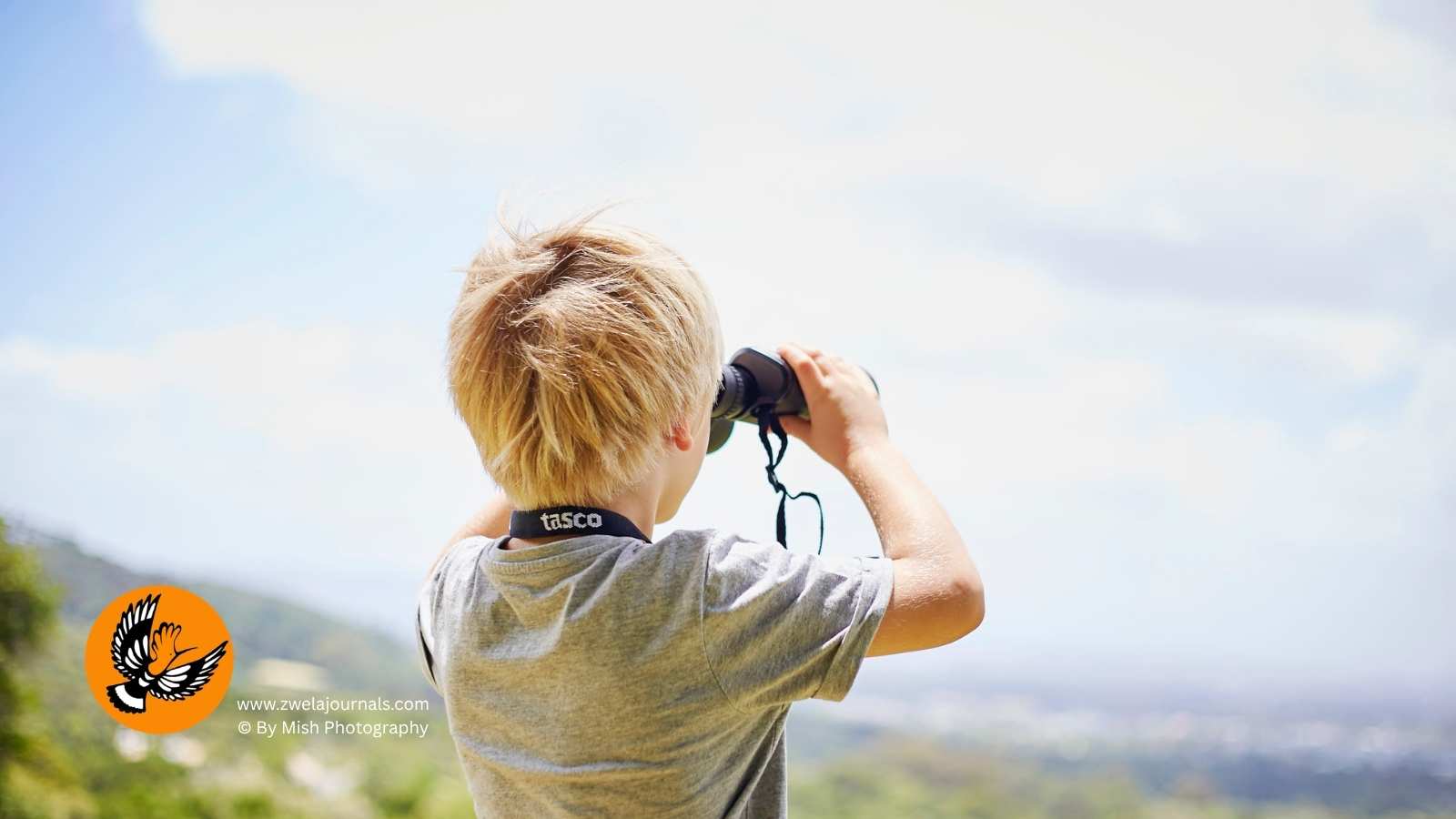
You spent months planning the annual family trip. You booked the museum tickets, found the restaurant with the good reviews, mapped out the perfect day. And then, weeks later, you ask your child what they remember about the trip and they light up about the dog they petted outside the hotel, or the funny noise the train made.
It can feel almost deflating. All that effort, and what stuck was the random, unscripted stuff. But here’s the thing most parents don’t realise:
That is the memory working exactly as it’s supposed to.
However, there is a way to bridge both your expectations and their experience! The details and the surprises. The big feelings and the little things. Introduce journalling to your kids, and discover what kids actually remember from family trips!
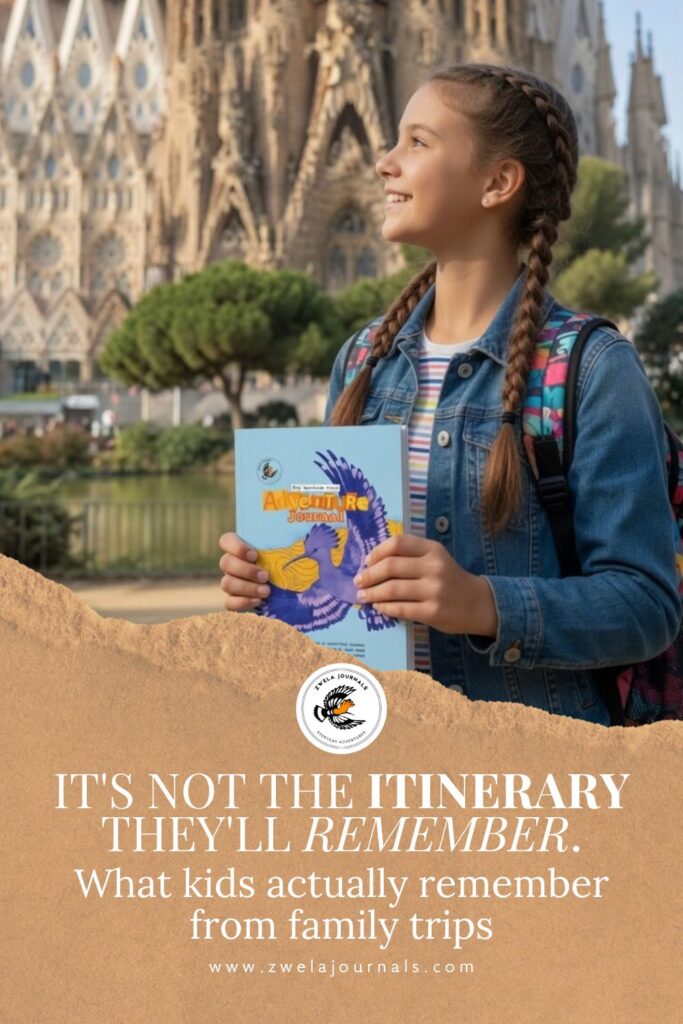
Kids remember experiences, not itineraries
Children rarely hold onto the details we might think matter: the name of the cathedral, the facts on the labels of the natural history museum, the little details of the cliff top hotel buffet that we googled before booking months in advance. What they keep instead is the feeling of a place and a moment. The salt smell of the sea. The first time food tasted strange and then turned out to be delicious. The way the light looked different somewhere far from home.
This is how young memory works. Kids encode emotion and sensation far more reliably than facts and sequences. So when your child can’t tell you the itinerary back, it doesn’t mean the trip didn’t land. It means it landed in a different place than you were looking.
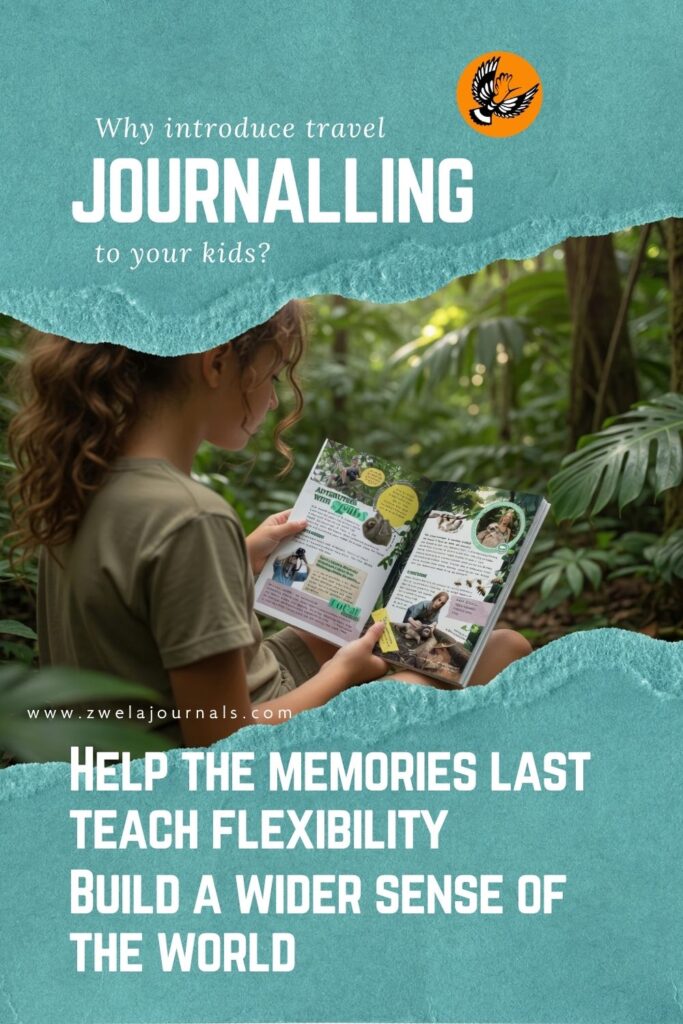
Journalling as a family can combine these two perspectives. Keeping a record of ALL the details we might forget! And years later, when they crack open the journal, the notes they have taken, the comments or funny things they said, will all bring those smiles and memories back!
What actually stays with them
When you stop measuring memory by the details, a richer picture appears. What family trips really leave behind tends to be bigger and slower-growing than a single recollection:
A wider sense of the world. Children who travel grow up understanding, in their bones rather than from a textbook, that the world is large and varied, that people live differently, eat differently, speak differently, and that this is normal and interesting rather than strange. That awareness doesn’t show up as a specific memory. It shows up as a worldview.
Curiosity. Trips plant questions. Why is it hotter here? Why do people drive on the other side? Why does everyone stop to eat in the middle of the afternoon? A child who has seen more of the world tends to keep asking more of it, and that curiosity outlasts any single destination.
Comfort with difference. New landscapes, new languages, new foods. Exposure to all of it early makes difference feel ordinary instead of intimidating. That’s a quiet gift that pays off for the rest of their lives.
Next time you worry that they won’t remember the details, that the trip won’t be appreciated or the memory forgotten because they are too young, don’t get caught up in the details. The experience of going camping as a family or that long road trip turn into core memories, and these don’t get forgotten. With the help of a journal to document the moment, you help to reinforce these memories, and reinforce those things that your family values. The bonding over the camp fire, the long hike to the waterfall, that once in a lifetime trip you have been saving for, and everyone told you to wait until the kids are older.
The family memory matters as much as the place
There’s a second kind of memory that often gets overlooked, and it has nothing to do with where you went.
Travelling together changes a family. You’re out of your routines, away from the usual distractions, navigating the unfamiliar side by side. You problem-solve as a team when the train is late or the map is wrong. You share small triumphs and the occasional small disaster. Kids absorb all of this, not as a story they can recite, but as a feeling that their family is a unit that figures things out together.
Years later, what they carry forward often isn’t the attraction at all.
It’s we were together, and it was an adventure.
That sense of belonging and shared experience is one of the most durable things a trip can give.
Trips teach flexibility
Travel almost never goes fully to plan. Flights shift, weather turns, the famous landmark is closed for repairs. And how the adults respond to those moments is itself a lesson. That adaptability, modelled on the road, is a skill they’ll use far from any holiday.
So if part of your trip goes sideways, take heart: those are often the moments that teach the most, and the ones that become family legend later. Journalling these moments can help to process them, and to help navigate similar issues in the future. A life skill worth building.
Helping the memories last
Because kids hold onto feeling more than fact, a little help recalling a trip goes a long way, and that’s where reflection matters. Talking about the trip afterwards, looking back at small mementoes, or letting a child record the moments that mattered to them (not the ones that mattered to the guidebook) helps soft, sensory memories settle into lasting ones. A simple travel journal, drawing, or a few collected ticket stubs can anchor a feeling to something they can return to.
The goal isn’t to make them memorise the trip. It’s to give them a way to revisit how it felt.
So the next time your carefully planned day gets upstaged by a stray dog and a funny noise, smile. The trip is working. Your child is gathering exactly the kind of memory that lasts – a wider world, a curious mind, and the deep, wordless knowledge that their family is a team that explores together.
That’s what kids actually remember. And it’s worth far more than the itinerary. Check out some of our adventures and see how we use journalling to document our trips!