Category: Educational Travel

  • What to Write in a Travel Journal: 20 Prompts Kids Can Use Again and Again

    What to Write in a Travel Journal: 20 Prompts Kids Can Use Again and Again

    Hand a child a blank journal at the end of a long travelling day and watch what happens. They stare at the page, write “today was fun”, and close it.

    It is not that they have nothing to say. It is that “write about your day” is far too big a question, and a blank page is intimidating at any age.

    The usual fix is a spotting list: find a dung beetle, find a padstal, tick them off. That works for about three days, and then it is finished. You cannot find your first padstal twice.

    What lasts is a different kind of question, and there are twenty of them below.


    Why the same question works again and again

    Ask a child “what could you hear when everyone stopped talking?” on a game drive at six in the morning and you get lions calling, doves, a hyena somewhere, people whispering.

    Ask exactly the same question four days later on a beach and you get surf, wind, gulls, kids shouting in the distance. Ask it on a mountain path and you get almost nothing at all, which is its own answer.

    One question, three completely different days, and a child who has started comparing them without being told to. That is the whole trick. Questions about the senses never run out, because the senses meet something new everywhere you take them.

    They also work for any age. A seven-year-old answers “what did today smell like?” in three words and a twelve-year-old writes a paragraph, and both of them have properly noticed something.

    What to Write in a Travel Journal: 20 Prompts Kids Can Use Again and Again

    Each one comes with the sort of answer it tends to produce in South Africa, though that is only a hint. The point is that they work anywhere you go. Head to our Kids Travel Resources section to download a list of 30 questions in printable format, that you can print and tuck into their journal… and grab a Zwela Journal while you are at it, its these kind of prompts that make our journals stand out from the rest!

    1. What could you hear when everyone stopped talking? The best question on this list. Lions before dawn, surf, wind in a fever tree, absolutely nothing.
    2. What did today smell like? Dust after rain, woodsmoke from a braai, salt, sun cream, hot tar.
    3. What was the smallest living thing you saw? A dung beetle, an ant lion pit, a gecko on a wall, a beetle in the tent.
    4. What was the furthest thing you could see? A mountain nobody could name, a storm coming across the Karoo, a ship.
    5. What colour was the ground today? It genuinely changes: red, grey, gold, white sand, black rock.
    6. What woke you up? A bird you could not identify, the person next door, a baboon on the roof, an alarm at half past four.
    7. Something you touched that you have never touched before. Kelp, an elephant footprint, a thorn, water far colder than expected.
    8. Was today hot, cold, wet, dusty, or all four? On a South African road trip it is often all four before lunch.
    9. Something you tasted for the first time, and an honest verdict. Biltong, rooibos, a koeksister, something on the braai nobody could name.
    10. What was moving that nobody else noticed? Trains children to look rather than be shown.
    11. A word you heard today that you did not understand. Write it down the way it sounded, then find out what it means.
    12. What was the loudest thing today? Often not what anyone expects.
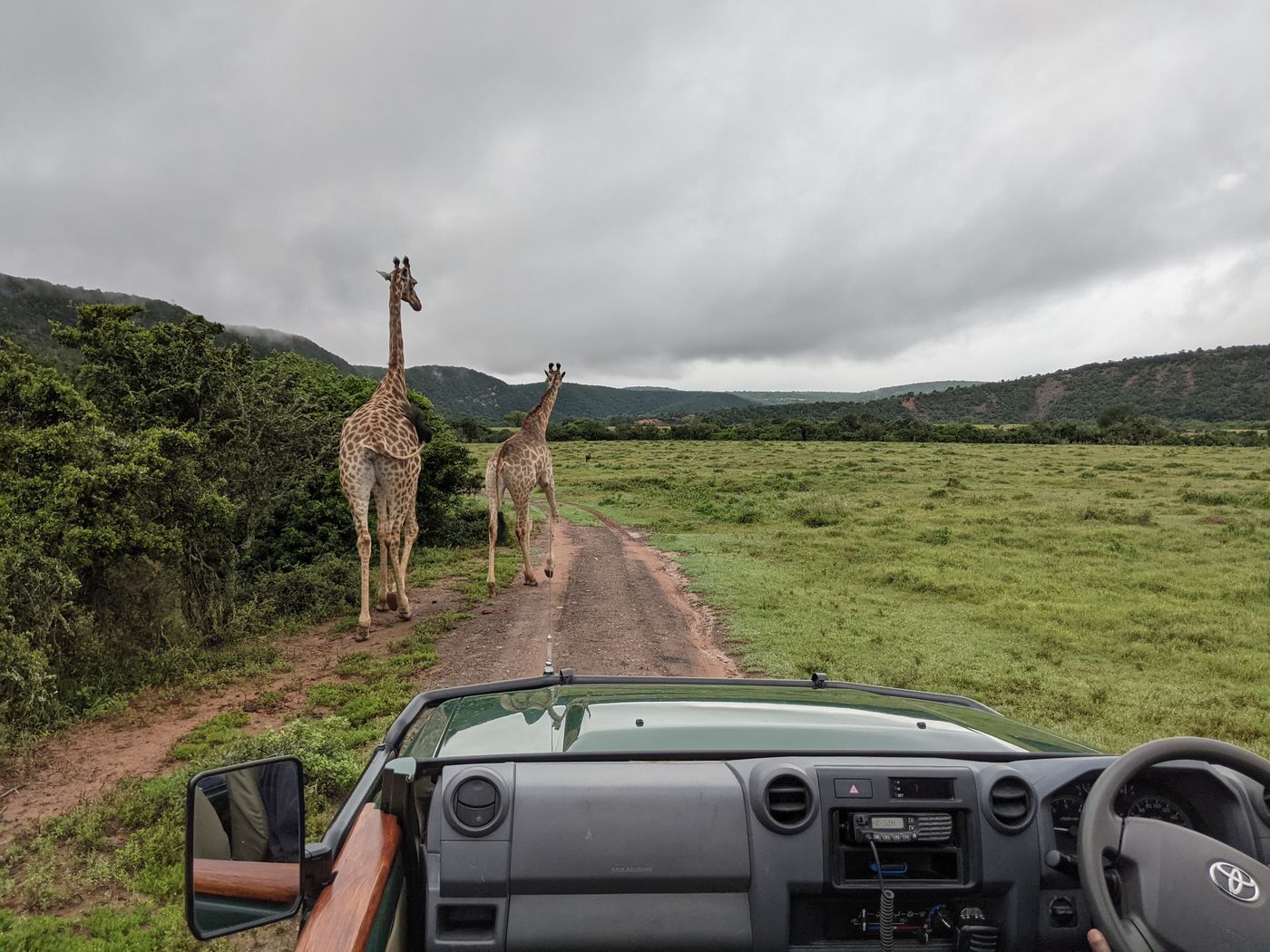
    13. Draw one thing exactly the size it looked from where you were standing. A giraffe from fifty metres is smaller than children think, and they enjoy being wrong about it.
    14. What did the water feel like? Two oceans, a tidal pool, a hotel pool, a river. All different, all worth recording.
    15. What surprised you today? The one that produces the answers you never see coming.
    16. What was the best five minutes of today? Better than asking about the best day, because five minutes is a real memory rather than a summary.
    17. Who did you meet, and what did they tell you? Guides, the person who filled the car, a child on a beach.
    18. What would you tell someone at home about first? Reveals what actually landed, which is rarely the expensive part.
    19. What do you want to see again tomorrow? Turns the journal forwards instead of only backwards.
    20. What are you grateful for today? Ask it every single night. It is the one that changes how children look at the whole trip.


    How to use them

    A few things make the difference between something a child uses and something abandoned on day three.

    Ask two or three, not twenty. Pick a couple in the morning so they spend the day gathering answers, and one at night. A list produced at bedtime is a test. A question produced at breakfast is a treasure hunt.

    Repeat them deliberately. The same question in the bush, at the coast and in a city is the point, not a failure of imagination. Comparing the three answers is where the noticing actually happens.

    Let drawings count. A bad sketch of a dung beetle is a perfectly valid answer, and children who cannot yet write fluently should not be shut out of this.

    Do it in the middle of the day. On safari especially, the hot hours between drives are the natural moment. Everyone is sitting down, nothing is happening, and the morning is still fresh.

    Answer them yourself too. Children write far more when the adults are writing as well, and your answers will be different from theirs, which they find fascinating.

    Child writing in a Zwela South African travel journal

    A good question is only half of it

    Here is the part that catches families out. A question tells a child what to notice. It does not tell them where the answer goes.

    A blank notebook does not solve that, because a blank page is exactly the problem we started with. Loose paper gets lost by day four. A note on somebody’s phone is not theirs and will never be read again.

    What children need is somewhere the question has already been asked, so all they have to do is answer it, and somewhere the answers stay in order so that six months later the whole trip is still sitting there in sequence.

    What is inside the South African Travel Journal

    This is the reason we made ours, and it is built around one trip to one country rather than being a general-purpose diary.

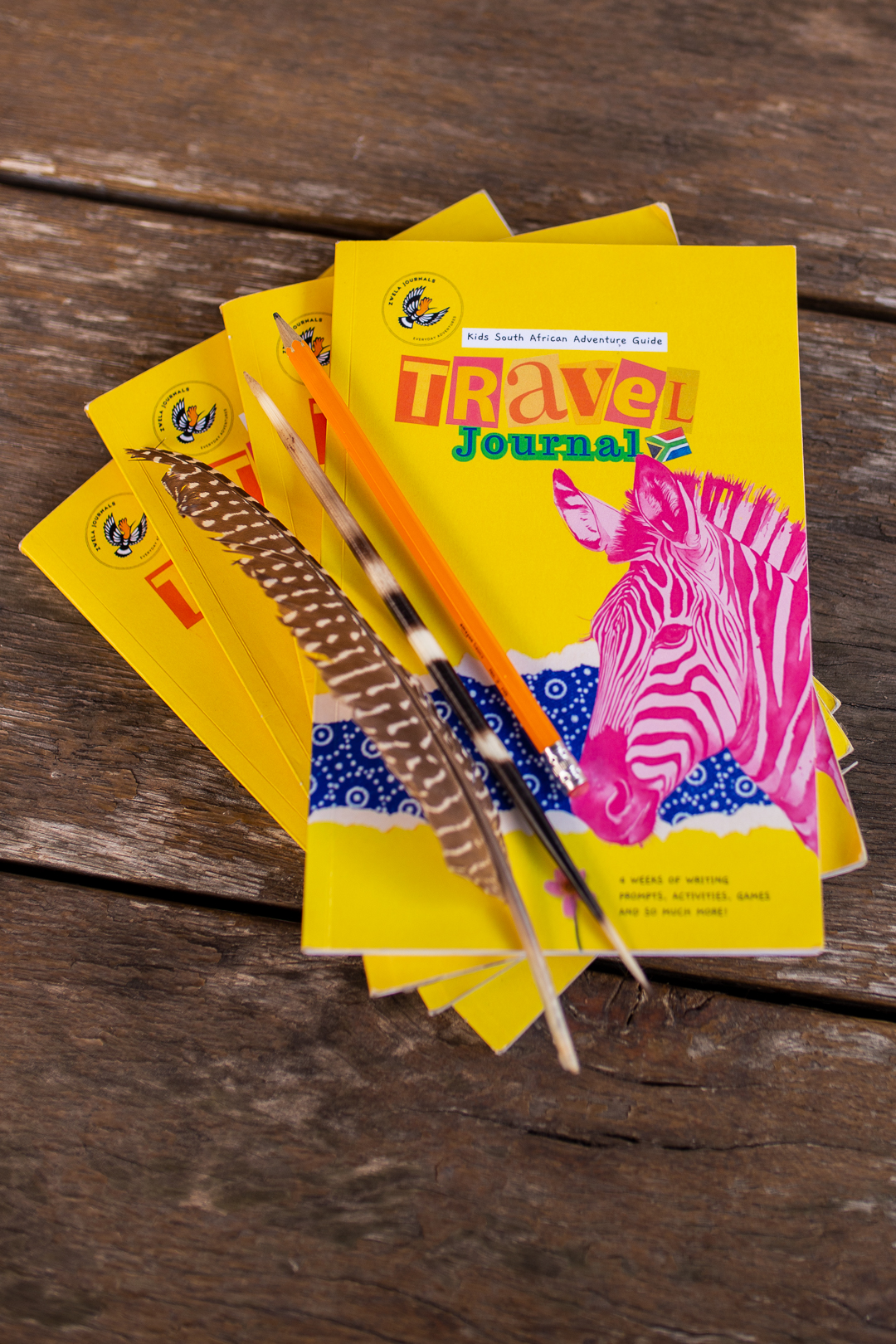
    It runs to 126 full-colour pages, for ages seven to twelve, in paperback or hardcover.

    • Maps and dreams. South African maps to plan the journey on, and bucket-list pages that run from Cape Town to Kruger.
    • Guides and discoveries. The landscapes, from beach to bush to mountain, the Big Five and the wildlife beyond it, and pages on the food, the culture and the languages.
    • Prompts and reflection. Four weeks of prompted journal pages with a daily gratitude check-in, and room for drawings, doodles and photographs.
    • Checklists. Wildlife lists made for ticking off from a moving car, which is the bit children reach for first.
    • Games and play. Road-trip games, mazes, code-breaking puzzles, scavenger hunts and colouring pages, for the long drives and the hot afternoons.

    That last part matters more than it sounds. Children will not carry three separate things, and they will not fill in a journal that is only a journal. It has to earn its place in the bag on the days when nobody feels like writing, which is why ours is a travel guide, an activity book and a keepsake at the same time.

    Our honest view

    Children do not forget a trip because it was not memorable. They forget it because nobody gave them a way to hold onto it while it was happening, and an unrecorded holiday compresses very fast into “we saw elephants”.

    Start with three of the questions above. Ask them tomorrow, ask the same three again next week somewhere completely different, and let your child hear how differently they answer.

    Take note of the little things, celebrate the big things. The little things are what the senses catch, and they are almost always the ones children still have years later.

    You can see the whole journal on our South African Travel Journal page.

    If you are still planning the trip itself, our complete family travel guide to South Africa covers the route, our month-by-month guide covers the timing, and safari with kids is where these questions do their best work.

  • Safari with Kids: What to Expect and How to Make the Most of It

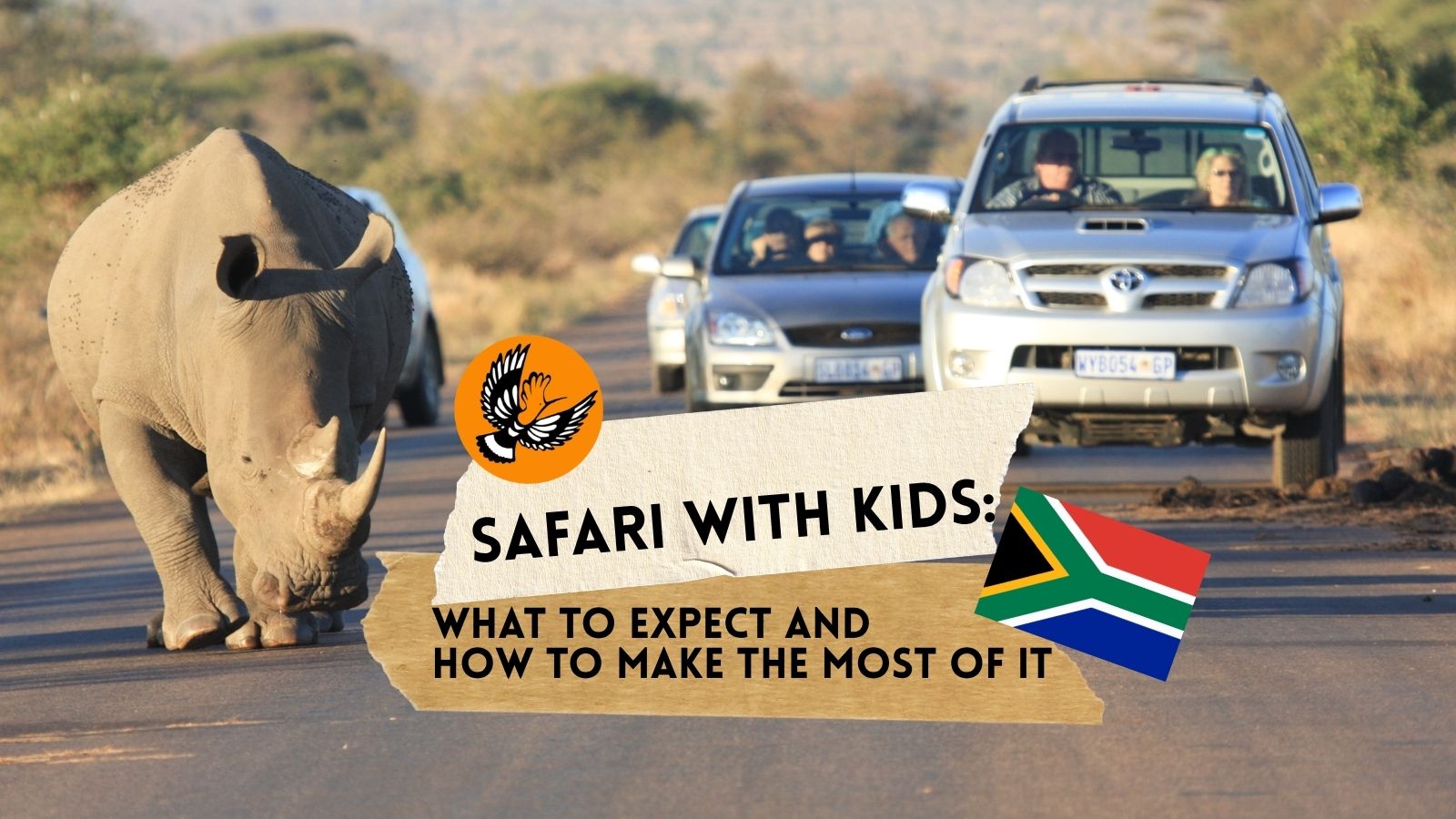
    Safari with Kids: What to Expect and How to Make the Most of It

    In our guide to Safari with Kids: What to Expect and How to Make the Most of It, we look at what safari is like in South Africa.

    A safari is the thing children remember for the rest of their lives, and it is also the thing most likely to test them. Long drives, early starts, hours of looking at nothing in particular, and a firm rule about staying in the vehicle.

    None of that is a reason to leave them at home. It just means a safari with children is a slightly different animal to a safari without them, and it repays a bit of thought before you go.

    This is about the experience rather than the destination: what a safari day actually looks like, what ages suit it, how to handle the long gaps between sightings, and what turns a child from a passenger into someone who is genuinely looking.

    What a safari day actually looks like

    The rhythm surprises most first-timers, and it is worth explaining to children in advance so nobody feels ambushed.

    You are woken somewhere between half past four and half past five. Camp gates open between about half past four and six depending on the season, and the first hour after opening is the best of the whole day, so the aim is to be sitting at the gate before it lifts rather than rolling up an hour later. There is coffee and a rusk, and then you are out.

    The morning drive runs two to three hours with children. Longer is a mistake. Back by half past nine or so for a large breakfast, and then the middle of the day belongs to everybody, because it is hot and the animals are lying in the shade.

    The afternoon drive leaves around four, runs until dusk, and usually stops somewhere with a view for a drink and a snack while the sun goes down. Then dinner, and children who have been awake since five fall asleep at the table. That is a good day, not a failed one.

    Two full drives a day is a lot for a small child. There is no rule that says you must do both, and skipping a morning drive to swim instead is a perfectly reasonable decision that will improve everyone’s week.


    What age is a good age?

    There is no single right answer, but there are patterns, and the honest version is more useful than the encouraging one.

    Under four. Difficult, and not because of danger. Three hours strapped in with no getting out and a requirement to be quiet near animals is a lot to ask of a two-year-old. It can be done, and self-driving makes it far more manageable, because you set your own length and can turn round whenever you like.

    Four to six. Workable with shorter drives and low expectations. Elephants and giraffes land beautifully at this age. Anything requiring patience does not.

    Seven to eleven. The sweet spot. Old enough to sit still, look through binoculars, take in facts and hold onto them, and young enough to find all of it genuinely thrilling. If you get to choose when to take them, take them now.

    Twelve and up. Excellent, and this is the age where photography or birding can take hold and turn into something they carry on with at home.

    One practical point that catches families out: many private lodges set minimum ages for shared game drives, commonly six or eight, and some go higher. Most will take younger children if you book a private vehicle, which costs more. National parks have no such limit if you are in your own car, which is a large part of why self-driving suits families with small children.

    The honest problem, and how to solve it

    Here is what the brochures leave out. Between sightings, there can be forty minutes of bush. Then some impala. Then more bush, and more impala.

    Adults are fine with this because the landscape is enough. Children are not, and by the fourth impala the questions start being about lunch. This is the single biggest reason safaris go flat with children, and it is entirely fixable.

    The fix is to stop treating them as passengers. A child who is watching is bored. A child who is looking for something is not, and the difference between those two states is small and easy to create.

    • Give every child their own binoculars. Not one pair between them, which causes more arguments than it solves. They do not need to be good. A light, small pair suits little hands far better than a heavy adult set they cannot hold steady.
    • Put each child in charge of something. One is the bird spotter, one watches the left-hand side, one calls out every time the vehicle crosses a dry riverbed. Rotate it between drives.
    • Use the sightings board. Most rest camps keep a board where visitors pin what they saw and where, and it is the best thing in camp for a child. They can check it before a drive, plan a route around it, and add their own sightings when they get back. It turns the whole day into something with a beginning and an end.
    • Keep a running list. Everything seen, in order, written down as it happens. It settles the “have we seen more than yesterday” question that children love asking.
    • Let them ask the guide directly. Guides are used to it and are usually delighted, and a child who has asked their own question listens to the answer far more closely than one who overheard yours.
    • Give them a Zwela Journal. With checklists and activities, kids can find loads of interesting things to pass the time between animal spotting.


    Self-drive or guided?

    These are genuinely different experiences with children, and the right answer usually involves a bit of both.

    Self-driving gives you control, which with young children is worth a great deal. You go when they are ready, you stop when someone needs the loo, you turn round when the mood has gone, and everyone is warm, contained and behind closed windows. It costs a fraction of a guided drive and it means the family car becomes a small mobile hide with snacks in it.

    It also gives you the picnic sites and the hides, which matter more with children than anyone expects. National parks have designated spots where you are allowed out of the car, some with braai facilities and a kettle, and hides built at waterholes where you can sit quietly and watch things come to drink. For a child who has been stuck in a car for two hours, a hide is a revelation.

    The trade-off is that you will see less. You are driving, so you cannot look properly. You do not have the radio network that guides use to share sightings, you cannot leave the road, and you do not have someone who knows which tree that leopard uses.

    Guided drives flip all of that. A good guide finds things you would drive straight past, explains what you are looking at, and in a private reserve can go off-road to follow something. Open vehicles put you properly in the landscape, and night drives with a spotlight are a completely different world that self-drivers never see.

    The trade-offs are the fixed schedule, the minimum ages, the fact that you cannot leave early, and the cold. An open vehicle at half past five in June is genuinely freezing, whatever the daytime temperature suggests.

    For most families, the best answer is to self-drive most of the trip and book one or two guided drives, ideally including a sunset drive. You get the freedom and the expertise, and the guided drives feel like an event rather than a routine.

    The middle of the day is not wasted time

    Every safari itinerary has a hole in the middle of it, roughly ten in the morning until four in the afternoon, when it is too hot for the animals and therefore too hot for you. Families arrive expecting this to be the boring part. It is usually the part children like best.

    Most national park rest camps have a swimming pool, and a pool after a five o’clock start is worth more than another hour of looking for lions. Many camps also run a junior ranger programme, a proper activity kit that gets children learning to identify tracks, dung, birds and trees, and it holds their attention far longer than you would guess.

    Then there are the hides, which are open all day and cost nothing. Sitting still in a hide for half an hour with binoculars is the closest most children get to actually watching wildlife rather than glimpsing it from a moving car.

    Card games, filling in a Travel journal, the sightings board, the camp shop, a nap. None of it is filler. It is what makes the early starts survivable, and skipping it is the most common mistake families make.

    Elephants gathering at a waterhole on a family safari in South Africa

    What to take in the vehicle

    Small list, and each item earns its place:

    • Binoculars for every child. The single best thing you can hand them.
    • Layers. It can be four degrees at dawn and twenty-eight by ten in the morning. A beanie and gloves in winter are not an overreaction on an open vehicle.
    • A cool box with more snacks and water than you think. Three hours is a long time, and picnic sites are not always where you want them.
    • A change of clothes. Spills, dust and the occasional small disaster.
    • A Zwela journal and pencils. Pencils rather than pens, which leak in the heat and roll under seats.
    • A simple field guide, bird checklist or animal cards so children can find things themselves rather than asking what everything is.
    • An offline park map. Signal inside the parks is patchy to non-existent.
    • Sun cream, hats and sunglasses for the afternoon. The low sun on a game drive burns shoulders and the backs of necks.
    • Wet wipes, for reasons that will become obvious.

    Leave the drone at home. Flying one in a South African national park is illegal, and rangers take a dim view.

    The things nobody warns you about

    A handful of practicalities that catch families out, none of them serious and all of them easier if you know in advance.

    On a guided drive, there are no toilet stops. You get out only where the guide says it is safe, which may be once in three hours. Everybody goes before you leave, including the adults who insist they are fine. Self-driving is the opposite, with picnic sites and camps dotted through the park, which is another quiet argument for doing it yourself with small children.

    Gate times are real. Camps close their gates at a fixed hour and being late means a fine, so build in far more time than the distance suggests. Speed limits inside the parks are low and properly enforced, and on the smaller gravel roads you will average less than thirty kilometres an hour. A fifty-kilometre drive can genuinely take two hours.

    Some drives are blank. You will have a morning where you see almost nothing. That is not bad luck or a bad guide, that is what wild animals are. Say so to children beforehand and the blank drive stops being a disappointment, also you will be never short of birds… sometimes its interesting to just stop the car, open the windows and see what you can spot with binoculars… even in winter, it can be surprising what may be hiding in an otherwise “empty” patch of bush!

    Good sightings get crowded. A leopard in a popular park can gather fifteen cars. It is worth telling children why everyone is being patient and quiet.

    Three or four days is plenty. Safari fatigue is real, and it arrives faster in children. Two or three nights in the bush, then something completely different, works far better than a week of game drives. Nobody regrets leaving while they still want more.

    Teaching them to look properly

    The Big Five is a useful hook and a terrible way to spend a week. Chasing five animals makes everything else feel like filler, which is exactly backwards.

    The children who love safari most are the ones who learn to read the place rather than tick it off, and that is easier to teach than it sounds.

    Show them tracks in the sand at the edge of the road and let them decide what came past in the night. Point out the oxpeckers riding on a buffalo and ask why the buffalo puts up with it. Listen for the alarm calls of monkeys and francolins, which tell you a predator is somewhere nearby long before you see it. Look up when a vulture circles.

    Then there are the Little Five, which every guide knows and most visitors have never heard of: the elephant shrew, the ant lion, the rhino beetle, the buffalo weaver and the leopard tortoise. Finding all five is much harder than finding the Big Five, and children adore the fact that the grown-ups will probably lose. Add to that the Shy Five, the Ugly Five… and you have a much more fun spotting list… what 5 would you make?

    Birds are the other secret. South Africa has hundreds of species and there is always one in view, which means there is never truly nothing to see. A child who has decided to find a lilac-breasted roller has something to look for over the entire drive.

    Holding onto it afterwards

    Safari produces more than children can hold. Three days in, the individual sightings blur, and by the time they are home the whole thing has compressed into “we saw elephants”.

    The middle of the day is what saves that. It is the natural moment to write down what happened that morning while it is still sharp: what they saw, what it was doing, what the guide said, what the tracks looked like.

    It does not need to be neat or long. A list of animals with a bad drawing next to each one is worth more in ten years than any photograph you take, because it is theirs.


    Our honest view

    Safari with children asks more of you than most holidays. The starts are brutal, the drives are long, and there will be an afternoon when somebody cries about a giraffe.

    It also does something almost nothing else does. Children who have watched a herd of elephants cross a road in front of them, close enough to hear, do not think about animals the same way afterwards. It rearranges something.

    Go with lower expectations than the brochures suggest. Keep the drives short. Give every child a pair of binoculars and something to look for. Let the middle of the day be genuinely lazy, and leave the bush while everyone still wants one more drive. Then let them tell you what they saw, in their own words, before it fades.

    Take note of the little things, celebrate the big things. On safari, the little things are usually the ones they remember.

    Zwela South African Travel Journal and pencils laid out ready for a safari

    Safari with Kids: What to Expect and How to Make the Most of It…

    For when to go, our month-by-month guide explains why the dry winter months give you the best game viewing of the year. Our honest guide to safety with children covers the rules in the vehicle and around camp, and if you are heading for the best-known park, our five favourite family camps in Kruger is the place to start. For the wider trip, try our complete family travel guide to South Africa.

    And to give children somewhere to gather the animals, the tracks and the small discoveries while they are still fresh, our South African Travel Journal is built for exactly that. There are more ideas on our Kids Travel Resources page.

  • Botswana Travel with Kids: Meerkats, quad bikes and a night on the Makgadikgadi Pans, the #1 Adventure

    Botswana Travel with Kids: Meerkats, quad bikes and a night on the Makgadikgadi Pans, the #1 Adventure

    The adventure, followed by logistics & tips at the end.

    During our family self-drive trip through Botswana, we decided to splurge on the Planet Baobab meerkat and Makgadikgadi Pans overnight experience. It wasn’t cheap, and we spent a long time wondering whether it would be worth it.

    Spoiler alert: it absolutely was! This would become our the best Botswana travel with kids experience!

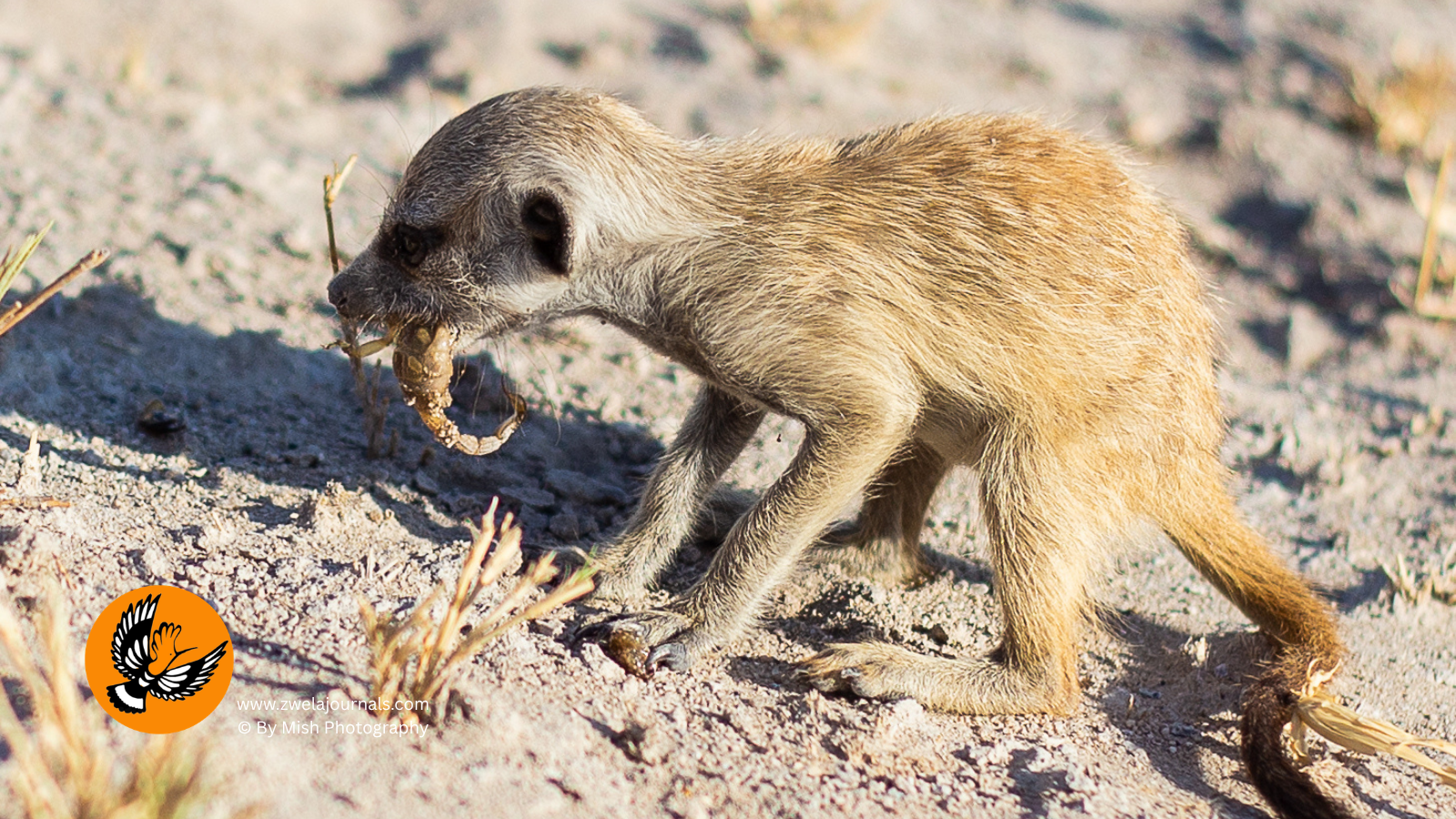
    adventures with kids in Botswana  Sitting on the dry earth, less than two feet from a family of meerkats as they dug up and devoured scorpion after scorpion, was not how I imagined spending my morning. If you’d ever asked me whether I would happily sit on the ground while scorpions were being pulled from the very earth beneath me, I would have laughed and said absolutely not. Yet there I was, completely captivated. The meerkats were finding scorpions everywhere! The landscape looked barren,  just dry grass and dusty earth stretching into the distance,  but beneath the surface was a hidden world teeming with life. It was a lesson in noticing. Looking around, I would never have guessed how many scorpions were living just a few digs below the ground.

    It after seeing the twentieth scorpions crunched down that I decided I wasn’t technically sitting *in* the earth, merely *on top* of it. And at the rate the meerkats were eating the scorpions, it would be incredibly bad luck if one escaped and wandered over to investigate me. Planet baobab meerkat experience with kids, family travel in Botswana    Our adventure began with an open 4×4 ride from Planet Baobab Campsite. Along the way, our guide stopped to tell us about the baobab trees scattered across the landscape. We drove on dusty roads, seeing hardly another vehicle, or person, with the wind in our hair and the growing excitement of the adventure ahead. Our first stop was to meet a mob of habituated meerkats. I’ll admit, I was initially hesitant by the words “habituated”. I don’t enjoy seeing wild animals fed or tamed for tourism, but thankfully, that wasn’t the case here. Habituated simply meant the meerkats were used to people being nearby and carried on with their lives completely unfazed by our presence. After a quick briefing on meerkat etiquette – don’t touch, don’t disturb, don’t make too much noise – we walked out onto the dry grassland.

    At first, we spotted just a few meerkats. Then more appeared, and more. They seemed to be everywhere. And they all seemed to be furiously digging. At first it was simply cute, until we realised what they were digging for. Scorpions, lots of scorpions.

    Adventure with kids activity Botswana, Planet Baobab sleep-out on the pan. self drive with kids in Botswana

    I lost count of how many were unearthed and promptly eaten within a few feet of where we were sitting. It was fascinating, slightly alarming, and completely unforgettable all at once. We spent about an hour with these incredible little animals before climbing back into the 4×4 and heading off to the next stage of our adventure. A short drive later, we arrived at a small village where a line of quad bikes was waiting for us. After a quick safety briefing, we set off across the Makgadikgadi Pans. And wow. We’ve travelled to some incredible places, but there is something very special about driving across one of the largest salt pans in the world. The space feels endless, the horizon stretches forever, and it genuinely feels as though you’ve driven into the middle of nowhere.

    quad biking salta pan botswana, family trip Africa, Travel with kids Africa, Safari with kids, Botswana self-drive, activities with kids We sped across the pan, taking it all in, with the occasionally mouthful of dust when the wind changed direction. We quickly learned the importance of keeping a healthy dust-distance from the bike in front. The feeling was exhilarating, freedom, open space, and adventure in every direction. By late afternoon we arrived at what was to be our camp for the evening. camp out with kids in botswana, self drive iin Botswana, family travel A simple canvas toilet stood off to one side, just four canvas walls, no roof, just views for miles. A fire was being lit, and a table was set for dinner. Our roll mats had been laid out around the edge of camp beneath the open sky. As we settled in with an ice-cold drink and chatted around the fire, the sun began to sink below the horizon. Dinner was a delicious three-course meal cooked in the middle of nowhere, somehow tasting even better because of where we were. sunset in botswana family safari  Then the stars appeared, and appeared, and didn’t stop appearing… With no light pollution for miles, the sky filled with more stars than we had ever seen. The Milky Way stretched overhead while the campfire crackled below. It was one of those moments where nobody reaches for a phone because everyone is simply taking it all in, and there was definitely no reception out in these parts.

    These are some of my best moments, a true disconnect where you phone merely becomes a camera. Being August, the night was chilly, but hot water bottles had been tucked into our beds – beds are a roll mat with sleep bag in one. They were super comfy and cozy, and under a blanket of stars we happily fell asleep. The next morning we woke to the sun rising over the pans. Fresh coffee was brewing, muffins were waiting, and one of the guides was strumming a guitar as the first light spread across the landscape. Honestly, I couldn’t have imagined a more perfect start to the day.

    After coffee we climbed back onto the quad bikes and made our way back across the pans to the village. Dust-covered and smiling, we transferred back into the 4×4 for the journey to Planet Baobab. A hot shower, a proper cooked breakfast, and a refreshing swim in the pool were waiting for us. The perfect ending to an unforgettable adventure.

    So, was it worth it? Without a doubt.

    This experience combined everything we love about family travel: wildlife, adventure, learning, wide-open spaces, and those magical moments that become family stories for years to come. Who knew that sitting on the ground watching meerkats eat scorpions would become one of our favourite family travel memories?

    It’s exactly the sort of unexpected moment that deserves a place in the kids travel journal – and it took pride and place in their Travel Journal! Journal entry alongside some excellent artwork of the scorpion buffet! The ultimate in Botswana travel with kids. As a family we realised that some of our best memories are made send out in nature, another favourite was our night of camping at Baines Baobabs, and if you find yourselves self-driving this amazing part of the world we highly recommend you add this to your itinerary! Two totally different experiences and both incredible!  

    Logistics & tips

    Getting There: Planet Baobab is located near Gweta in Botswana, on the edge of the Makgadikgadi salt pans. It is usually reached by road from Maun (about 2.5–3 hours’ drive) or from Nata (around 2 hours’ drive). The sleep-out experience departs from Planet Baobab’s main lodge.

    Bookings: Book directly with Planet Baobab

    Best Time to Visit: The best time for a sleep-out on the Makgadikgadi Pans is during the dry season (roughly May to October). Skies are clear, temperatures are cooler at night, and the vast salt pans are fully accessible. Full moon nights are especially magical, as the landscape glows silver and you can often see the Milky Way stretching across the sky.

    What to Pack:

    • Warm layers (it gets very cold at night, even after hot days)
    • Light, breathable clothing for daytime
    • Closed walking shoes or boots
    • A beanie or hat and warm socks for night
    • Sunscreen, sunglasses, and lip balm (the sun is strong)
    • Head torch or small flashlight
    • Camera for sunrise and sunset shots, the light is dreamy and the meerkats too cute!
    • A sense of adventure (essential!)
    • Zwela Travel Journal – to capture and reflect on the adventures

    Travel Tips:

    • The sleep-out experience is very remote –  no lights, and total silence.
    • Bring extra warm clothing for sleeping under the stars.
    • Go with an open mind, and ready for adventure! The stars here are some of the clearest!
    • Book in advance as it’s very popular.
    • If you are on the fence, don’t think twice, just book it! 🙂


  • How to encourage kids to write without forcing them

    How to encourage kids to write without forcing them

    As a kid, journaling always felt like a task I was given. I was always writing as fast as I could and never got anything out of it. I saw it as something my mom was forcing me to do, and that it wasn’t for myself. Journaling shouldn’t feel like just another writing assignment. It should be a place where they feel like they can express themselves creatively and freely.

    Kids are constantly learning from the world around them, whether they are on a family trip, sitting in a classroom, reading from a book, or simply walking down the street. Journaling helps them pause and have time to make sense of what they felt, noticed, and learned. Currently, children aren’t writing for enjoyment; they feel like they are forced to sit down and write about something they have no interest in. How do you encourage reluctant writers to simply write because they want to? 

    Start Small

    Children do not need to write a full page for it to count. The best way to make it quicker for them is to start with one sentence, a short list, or a couple of words in a journal is still writing. For reluctant writers, starting small can make the task feel less overwhelming. 

    You can start out with simple prompts like

    What is one word to describe today? 

    Name something that made you smile today? 

    Did you see any animals on your way to school? 

    Let them have Creative Freedom

    Reluctant kids are more likely to write when they get to choose the topic. They can write about animals, sports, friends, food, vacations, or made-up stories. Giving them options helps writing feel less forced.

    As a kid, I loved to write stories about my favorite stuffed animals’ adventures. It was called the adventures of Bunny and friends. She would often find herself getting into trouble with my brother’s stuffed animal george the monkey. When I was on vacation with my family, I would often find myself making my bunny do all the things we did on vacation. So when I go back and reread these journal entries, I can see all the things we did on vacation through my stuffed animal. This helped me enjoy journaling and make it something that was fun for me.

    Encouraging Kids to Write   

    I find the more you encourage reluctant writers to be as expressive as they want, the more they get out of it. Let them decorate the pages with drawings, stickers, colored pens, or photos it makes for a better story. Journaling does not have to be perfect. It is supposed to be creative, messy, and personal.

    I still find myself decorating the pages of my own journal, going back and highlighting key words with funky colors. This has always been my favorite part of journaling since I was little. It lets me be creative and shows the true emotions behind my writing. I can see the days I was sad, happy, or angry, depending on the color I decided to highlight.

    But the part I hated most was when my mom overcorrected my writing. If a child is writing for fun, do not focus too much on spelling or grammar. Too many corrections can make writing feel like an assignment. Reluctant writers don’t want you nitpicking their work all the time. Instead, encourage their ideas and effort. 

    Children are more likely to write when they see adults doing it too. Try writing beside them or creating a family journal where everyone adds one sentence about their day. You are their biggest role model, and it always helps if they have a older sibling or cousin who journals. If the older one is doing it, then the younger one will follow. 

    Making it a family effort makes for very fun stories and memories.

    Learning how to encourage kids to write without forcing them is about making writing feel safe and enjoyable. Start small, give choices, keep it fun, and celebrate effort. Over time, reluctant children will become more comfortable putting their thoughts on paper.  Take it one step at a time and remember journaling is not supposed to be perfect. 


  • What kids actually remember from family trips

    What kids actually remember from family trips

    You spent months planning the annual family trip. You booked the museum tickets, found the restaurant with the good reviews, mapped out the perfect day. And then, weeks later, you ask your child what they remember about the trip and they light up about the dog they petted outside the hotel, or the funny noise the train made.

    It can feel almost deflating. All that effort, and what stuck was the random, unscripted stuff. But here’s the thing most parents don’t realise:

    That is the memory working exactly as it’s supposed to. 

    However, there is a way to bridge both your expectations and their experience! The details and the surprises. The big feelings and the little things. Introduce journalling to your kids, and discover what kids actually remember from family trips!

    Kids remember experiences, not itineraries

    Children rarely hold onto the details we might think matter: the name of the cathedral, the facts on the labels of the natural history museum, the little details of the cliff top hotel buffet that we googled before booking months in advance. What they keep instead is the feeling of a place and a moment. The salt smell of the sea. The first time food tasted strange and then turned out to be delicious. The way the light looked different somewhere far from home.

    This is how young memory works. Kids encode emotion and sensation far more reliably than facts and sequences. So when your child can’t tell you the itinerary back, it doesn’t mean the trip didn’t land. It means it landed in a different place than you were looking.

    Journalling as a family can combine these two perspectives. Keeping a record of ALL the details we might forget! And years later, when they crack open the journal, the notes they have taken, the comments or funny things they said, will all bring those smiles and memories back!


    What actually stays with them

    When you stop measuring memory by the details, a richer picture appears. What family trips really leave behind tends to be bigger and slower-growing than a single recollection:

    A wider sense of the world. Children who travel grow up understanding, in their bones rather than from a textbook, that the world is large and varied,  that people live differently, eat differently, speak differently, and that this is normal and interesting rather than strange. That awareness doesn’t show up as a specific memory. It shows up as a worldview.

    Curiosity. Trips plant questions. Why is it hotter here? Why do people drive on the other side? Why does everyone stop to eat in the middle of the afternoon? A child who has seen more of the world tends to keep asking more of it, and that curiosity outlasts any single destination.

    Comfort with difference. New landscapes, new languages, new foods. Exposure to all of it early makes difference feel ordinary instead of intimidating. That’s a quiet gift that pays off for the rest of their lives.

    Next time you worry that they won’t remember the details, that the trip won’t be appreciated or the memory forgotten because they are too young, don’t get caught up in the details. The experience of going camping as a family or that long road trip turn into core memories, and these don’t get forgotten. With the help of a journal to document the moment, you help to reinforce these memories, and reinforce those things that your family values. The bonding over the camp fire, the long hike to the waterfall, that once in a lifetime trip you have been saving for, and everyone told you to wait until the kids are older.

    The family memory matters as much as the place

    There’s a second kind of memory that often gets overlooked, and it has nothing to do with where you went.

    Travelling together changes a family. You’re out of your routines, away from the usual distractions, navigating the unfamiliar side by side. You problem-solve as a team when the train is late or the map is wrong. You share small triumphs and the occasional small disaster. Kids absorb all of this, not as a story they can recite, but as a feeling that their family is a unit that figures things out together.

    Years later, what they carry forward often isn’t the attraction at all.

    It’s we were together, and it was an adventure.

    That sense of belonging and shared experience is one of the most durable things a trip can give.

    Trips teach flexibility

    Travel almost never goes fully to plan. Flights shift, weather turns, the famous landmark is closed for repairs. And how the adults respond to those moments is itself a lesson. That adaptability, modelled on the road, is a skill they’ll use far from any holiday.

    So if part of your trip goes sideways, take heart: those are often the moments that teach the most, and the ones that become family legend later. Journalling these moments can help to process them, and to help navigate similar issues in the future. A life skill worth building.

    Helping the memories last

    Because kids hold onto feeling more than fact, a little help recalling a trip goes a long way, and that’s where reflection matters. Talking about the trip afterwards, looking back at small mementoes, or letting a child record the moments that mattered to them (not the ones that mattered to the guidebook) helps soft, sensory memories settle into lasting ones. A simple travel journal, drawing, or a few collected ticket stubs can anchor a feeling to something they can return to.

    The goal isn’t to make them memorise the trip. It’s to give them a way to revisit how it felt.

    So the next time your carefully planned day gets upstaged by a stray dog and a funny noise, smile. The trip is working. Your child is gathering exactly the kind of memory that lasts –  a wider world, a curious mind, and the deep, wordless knowledge that their family is a team that explores together.

    That’s what kids actually remember. And it’s worth far more than the itinerary. Check out some of our adventures and see how we use journalling to document our trips!

  • Welcome to Zwela: Inspiring Kids to Explore South Africa Through Journaling

    Welcome to Zwela: Inspiring Kids to Explore South Africa Through Journaling

    At Zwela, we believe that every journey, whether a weekend away or a big family adventure, has the power to teach, connect, and inspire. Our mission is to help children see the world with curiosity and joy, using journaling as a tool to capture their unique experiences and perspectives.

    Why We Created Zwela

    Zwela was born out of a simple question: how can we help kids engage more deeply with the world around them? As parents who love to explore, we wanted to find ways to make travel meaningful for our children… not just about the destination, but about reflection, creativity, and learning.
    That’s how the Zwela Journals was created: to encourage kids to notice, draw, write, and remember the moments that make each trip special.

    The Magic of Travel Through a Child’s Eyes

    Traveling with kids in South Africa offers endless opportunities, from discovering wildlife in Kruger National Park, to feeling the sea breeze in Cape Town, or exploring the markets of Durban. Children experience these moments differently; they’re naturally curious, imaginative, and open.
    By journaling, kids learn to make sense of their adventures. It helps them build memories that last long after the trip ends. And South Africa was the place that has inspired Zwela’s first travel journal.

    Why Journaling Matters

    Journaling isn’t just about writing; it’s about reflection. For children, it:

    • Strengthens observation and storytelling skills
    • Builds confidence in self-expression
    • Encourages gratitude and mindfulness
    • Creates lasting keepsakes of family memories

    Join the Journey

    Follow along as we celebrate family travel, creativity, and connection. And if you’d like to make your next trip more meaningful, explore our Zwela Travel Journal for Kids to South Africa, the perfect companion for young explorers.