
Travelling with kids is full of moments you wish you could bottle up. The first time they spot a wild animal in the bush, the strange new food they decide they absolutely love (or hate), or the questions that come out of nowhere when you’re exploring somewhere new.
But between the early starts, long drives, muddy shoes and everything else that comes with family travel, it’s easy for those little moments to slip by.
So, what if there were a simple way to help your kids get more out of the places you visit, while creating something of their own to look back on?
Travel journalling with kids is about much more than filling a notebook with holiday memories. It encourages children to get curious, express themselves, connect with the world around them and experience an adventure in their own way.
Here are 5 reasons to travel journal with your kids on your next family trip.
1. Travel journalling sparks creativity
Not every child wants to sit down and write about their day. And that’s the beauty of a travel journal: there’s no single right way to use it.
One day, they might draw an animal they’ve spotted on safari. The next, they could jot down a funny moment, make a list of everything they’ve eaten or invent a story about the place they’re visiting.
A travel journal gives kids the freedom to express themselves in different ways. They can write, doodle, sketch, answer questions or simply record whatever catches their attention.
There’s no need for perfect handwriting, lengthy diary entries or beautifully finished pages. Sometimes a quick drawing or a few scribbled words are all it takes to capture a moment.
The idea is to let them tell their story, their way.
2. It gives kids the confidence to explore their own ideas
When children travel, they encounter things they’ve never seen, heard or experienced before. They have questions, form opinions and make unexpected connections.
A travel journal gives them somewhere to explore these ideas for themselves.
Perhaps they’re wondering why a meerkat stands upright, how people live in a remote village, or what makes one landscape different from another. Answering a question, drawing what they’ve seen or recording something new they’ve learnt can encourage them to think about their experiences in their own way.
And their perspective might be completely different from yours.
Ask your kids what their favourite part of the day was, and you might expect them to mention the spectacular view or the incredible wildlife encounter. Instead, they might tell you about the goat that stole someone’s lunch or the stranger who taught them a new game.
That’s part of the fun. Travel journalling gives children space to explore what interests them.
3. It encourages curiosity and helps kids notice more
When you’re travelling as a family, it’s easy to focus on the destination. You’re heading towards the next campsite, trying to reach a viewpoint before sunset or making sure you arrive at your accommodation before dark. But some of the most interesting discoveries happen along the way.
A colourful bird perched on a fence. Strange tracks in the sand, a plant growing between rocks. The sound of an unfamiliar language or the smell of something cooking nearby.
Travel journalling encourages children to pause and pay attention to these details. A question or a small challenge can turn an ordinary walk into an opportunity to explore.
What can you find that you’ve never noticed before? Which animal left those footprints? What would you like to ask someone who lives here?
The more kids start looking, the more they often find. And the things they notice can lead to conversations, discoveries and experiences that might otherwise have passed them by.
It’s not about seeing more places. It’s about getting more out of the places you’re already visiting.
4. It creates opportunities for connection
Travel introduces children to different landscapes, wildlife, cultures, traditions and ways of life. But experiencing a place is not quite the same as connecting with it.
A travel journal can help bridge that gap.
Perhaps your child wants to find out how a local craft is made, learn the name of an animal from a guide or ask someone about a tradition they’ve never encountered before. Having questions to explore gives them a reason to engage with the people and places around them.
Journalling can also create opportunities for connection within the family.
At the end of the day, you might sit together and talk about what surprised you, what made you laugh or what you’d like to discover tomorrow. You might find that everyone remembers something different about the very same experience.
These conversations don’t need to be planned or formal. Sometimes a single question is enough to get everyone talking.
And often, it’s these unexpected exchanges that make a journey memorable.
5. It gives them their own collection of memories
Family photographs are wonderful. They capture the places you’ve visited and the people you’ve shared them with. But they don’t always tell the whole story.
They might show your family standing in front of a waterfall, but not the joke that had everyone laughing five minutes earlier. They might capture a magnificent elephant, but not the question your child asked about it or the details they noticed that nobody else did.
A travel journal holds these smaller, more personal moments.
Over time, it becomes a collection of drawings, stories, observations and discoveries that reflects how your child experienced the world at that particular age.
And because every child notices different things, each journal tells a different story, even when siblings have shared the same adventure.
Years later, those pages can bring back not just where they went, but what it felt like to be there.
How to get started with travel journalling
The good news is that you don’t need to be a writer, an artist or an especially organised parent to start a travel journal with your kids.
You don’t even need a big adventure planned. A weekend away, a road trip, a visit to a national park or an afternoon exploring somewhere new can all be a good place to begin.
Here are a few simple ways to make travel journalling part of your next family adventure.
Let them choose what to record. Encourage your kids to write, draw, collect observations or answer a question. Let their interests guide them rather than expecting everyone to record the same things.
Keep it flexible. Some days they’ll have plenty to say; on others, they might not feel like opening their journal at all. There’s no need to fill every page or write every day.
Use questions to get them thinking. What surprised you today? What was the strangest thing you saw? What would you like to learn more about? Open-ended questions can be a great starting point.
Make it part of the adventure. A journal can come along on a game drive, a hike, a long road trip or a quiet morning at camp. It doesn’t have to be something you only do at the end of the day.
Let their journal be their own. Resist the temptation to correct spelling, tidy up drawings or turn it into a school exercise. The aim is to help them engage with their experiences, not produce a perfect book.
A journal for every kind of adventure
This is exactly why we started Zwela Journals.
We wanted to find a way for kids to become more involved in the places they visit. Not simply to follow along on an adventure, but to look closer, ask questions, try new things and make the experience their own.
We believe childhood memories aren’t one-size-fits-all. They’re lived, shaped and remembered in countless different ways.
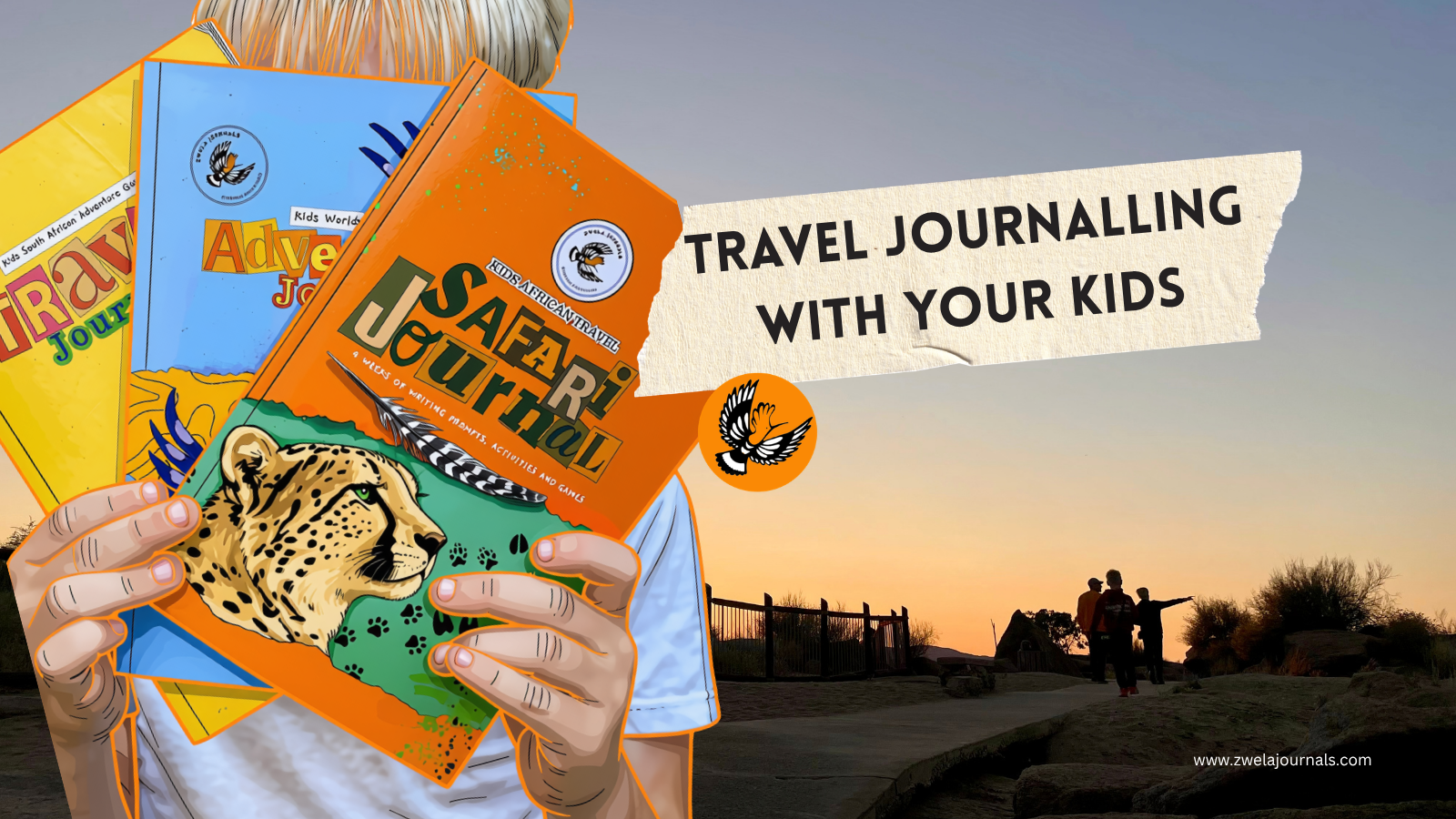
That’s why every page of a Zwela Journal is different. Each one combines travel inspiration, fascinating facts, questions, creative activities and space for children to record their own discoveries as they go.
Whether your family is heading out on an African safari, exploring South Africa or travelling further afield, there’s something new to notice on every adventure.
Because the best part isn’t just having somewhere to keep the memories. It’s everything children discover along the way.