Category: Travel Tips

  • Las Bardenas Reales by Campervan: Our Family Adventure in Spain’s Desert

    Las Bardenas Reales by Campervan: Our Family Adventure in Spain’s Desert

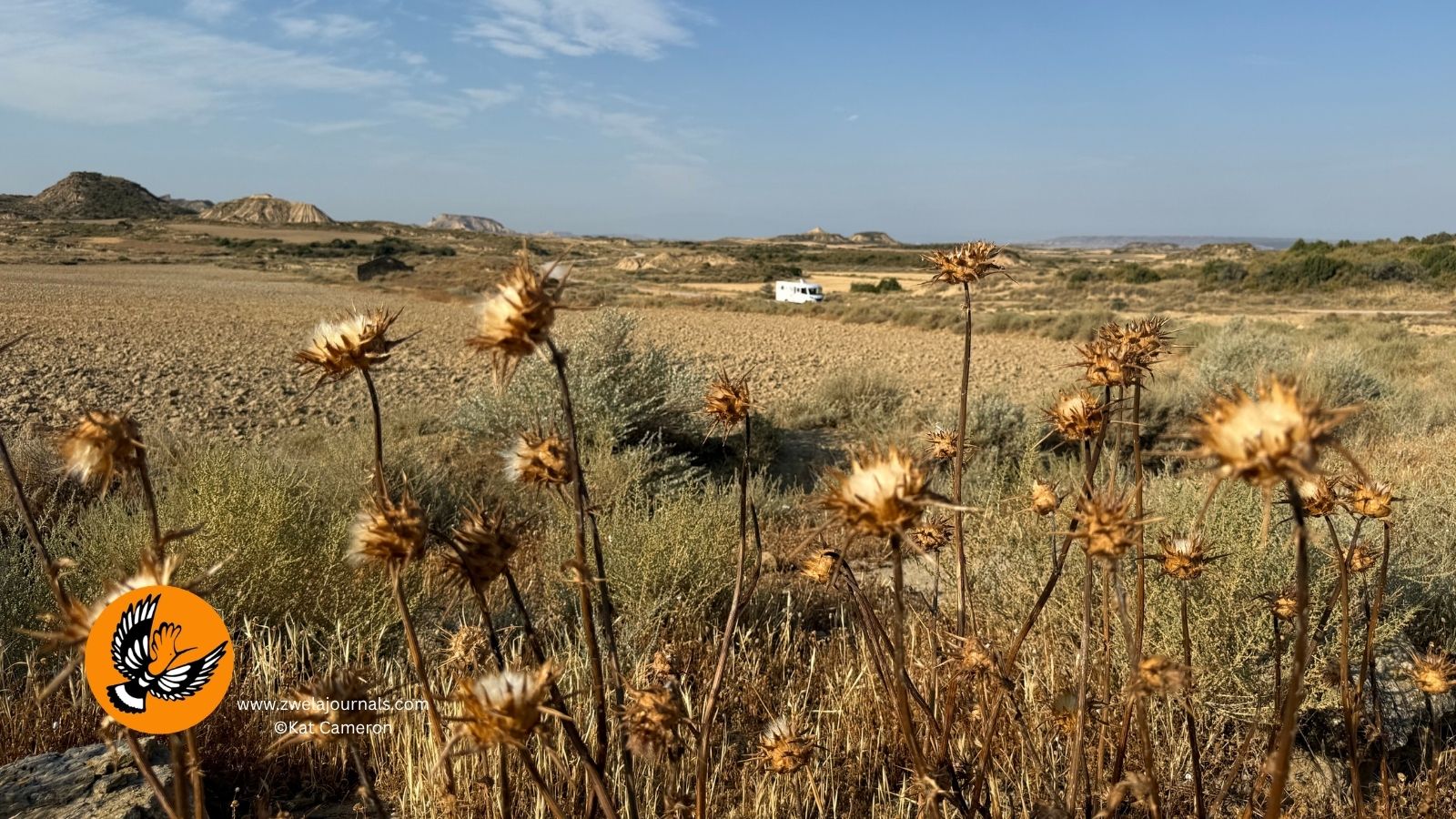
    The rocks look as if they have been painted with tiger stripes of red and gold, as the sun slowly sets over the Bardenas Reales. The wind gusts the grasses and dried weeds, as a flock of larks burst out of the brush, flying low over the road ahead. It’s quiet, apart from our rattling campervan, as we enter the natural park, and wind our way down further into the Bardenas Blancas. In the distance we can see the famous Castildetierra…  and as we traversed the plains, we felt like banditos at the end of a grand escapade! Come read our story, and discover what happened to us at our wild camping spot in Europe’s only desert and why it made a hilarious Adventure journal entry!! (or scroll to the end for the TLDR)

    Las Bardenas Reales by Campervan: Our Family Adventure in Spain’s Desert Landscape

    After ten days exploring Northern Spain by camper van, we were heading south from Santander towards our final stop before returning to Barcelona. We had been choosing stops that offered something interesting for everyone. Sometimes that meant landscapes, sometimes wildlife, a lot of fishing spots, and sometimes just somewhere that felt like an adventure. Bardenas Reales ticked many boxes: an unusual landscape, the chance to explore somewhere completely different, and, importantly for our family, some excellent birdwatching opportunities.

    Our route south took us first to Salto del Nervión, famous for being Spain’s highest waterfall, with an impressive drop of around 222 metres.

    When we visited in summer, the waterfall was completely dry. The viewpoint itself however, is spectacular. Standing at the edge of the limestone cliffs and looking down into the valley below is not for the faint-hearted, and even without the waterfall flowing, the scale of the landscape is incredible, and for me, somewhat vomit inducing!

    While it might sound disappointing to visit a waterfall with no water, the experience was still absolutely worth it. The walk  to the falls was beautiful, taking us through a much more forested landscape than we expected. We kept our eyes open for woodpeckers, and the karst limestone springs along the route were full of life, with frogs, toads and newts making the most of the water that remained.

    The real surprise, however, was above us.

    The cliffs attract soaring birds, and we were lucky enough to spot two different species of vulture. The Griffon Vultures were impressive as they circled overhead, but seeing an Egyptian Vulture was a real highlight. It was an unexpected wildlife encounter and a great start to what would become one of our favourite stops of the trip.

    From there, we continued south towards Navarra and the strange, otherworldly landscape of Bardenas Reales.

    Arriving at Bardenas Reales for Golden Hour

    We timed our arrival perfectly, reaching the park just before golden hour and sunset. We had read online that the park closes in the evening, but when we arrived, it didn’t really seem that way. There were still plenty of cars driving through the area, and photographers were setting up in the best locations to capture the last light hitting the rock formations.

    And honestly, we understood why. The colours changed constantly as the sun dropped lower, turning the landscape into something completely different every few minutes.

    Exploring Bardenas Reales by Campervan

    One of the questions we had before visiting was whether exploring Bardenas Reales by campervan would be practical. Our camper van is just over 7 metres long, so we weren’t exactly travelling in a small vehicle. Thankfully, it was absolutely fine.

    The park is relatively compact, and the main routes through Bardenas Blancas are easy enough to navigate, even in a larger campervan. The roads are mostly gravel, though, so it is definitely worth taking your time. The surface is not difficult, but it is bumpy and very rattly. Your van will be noisy. Everything inside the cupboards seemed determined to remind us that it was there!

    The slower pace actually suited the landscape though. This is not somewhere you want to rush through. Every corner brings another view, another strange rock formation, or another opportunity to stop and look.

    One of the unexpected advantages of exploring in a campervan was the height. Sitting higher than a normal car gave us a much better view across the plains, which was fantastic for spotting wildlife.

    And wildlife was one of the reasons we had chosen Bardenas Reales in the first place.

    Birdwatching in Spain’s Desert Landscape

    One of the great things about travelling as a family is that the things you initially think might appeal to only one person often end up becoming something everyone gets involved in. Our son had a few target birds he was hoping to find, and suddenly every drive through the desert became a reason to stop, scan the horizon and check the rocks.

    One of the speciality birds of the area is the Pin-tailed Sandgrouse, and we were lucky enough to spot one.

    The incredible thing was just how well camouflaged he was. Against the sandy colours of the landscape, he almost completely disappeared. Even when we knew exactly where he was, it was amazing how quickly he blended back into the surroundings.

    We also spotted lots of little Red-legged Partridges running around, often followed by tiny chicks. Watching them hurry across the tracks was one of those small moments that makes exploring slowly worthwhile. Of course, there was one bird we were really hoping to see: Owls.

    We had chosen Bardenas Reales partly because of the possibility of seeing Little Owls, but our first evening search didn’t produce anything.

    We would have better luck the next morning.

    Our Wild Camping Attempt in Bardenas Reales… and the Mosquito Apocalypse

    Throughout our trip through Spain, we had mostly been wild camping. We had used apps to find recommended overnight stops, mixed with plenty of Google Maps detective work and a bit of intuition. It does take some getting used to.

    In Spain, sleeping in your vehicle is generally permitted as long as you are not showing signs of “camping behaviour”. That means no chairs and tables outside, no awnings extended, no campfires, no towels or shoes left outside, and no taking over or obstructing an area. We had found some fantastic places this way.

    For this particular night, we found what looked like a beautiful spot with a backdrop of the striped hills, just outside the natural preserve of the Bardenas Reales. It was exactly the kind of place you imagine when you picture travelling by campervan.

    We had just parked, taken a tiny stroll around to check out the spot and started making dinner when the APOCALYPSE struck.

    Over a bazillion gazillion mosquitoes swarmed us. It was bonkers. They were bashing themselves against all of our mosquito nets, on every window and door. We couldn’t believe our eyes.

    And then they started getting through the netting.

    The ceiling was quickly covered in mosquitoes. We were swatting them like crazy, but they just kept coming. It was impossible to keep up. We hurriedly finished our dinner while battling mosquitoes until eventually we were completely inundated and hopelessly outnumbered.

    We gave in.

    Our beautiful wild camping spot was abandoned, and we headed off in search of somewhere else to sleep.

    The Unexpected Winner: Arguedas Camper Area

    Thankfully, we didn’t have far to go.

    We headed to the Área de Autocaravanas in Arguedas, and it turned out to be a fantastic place to spend the night.

    Although it was busy during the summer holidays, it was actually a brilliant overnight stop. It is free unless you want access to the swimming pool, and after our mosquito disaster, the most important thing was that it was completely mosquito-free. There was a lovely breeze when we visited, although I obviously can’t guarantee that will always be the case.

    The best part, though, was the view.

    The camper area looks towards the unique cave houses built into the sandy hills around Arguedas. These unusual homes are fascinating to explore and were another unexpected highlight for the kiddo.

    Looking back, this stop was actually better than our original wild camping plan in many ways. It was close to Bardenas Reales, easy, comfortable, and gave us a great base for our early start the next day.

    Later, we realised exactly why our original parking spot had been such a disaster.

    We had parked right next to a rice paddy. Mystery solved.

    In hindsight, arriving somewhere completely new at dusk is probably not the ideal time to find an overnight spot, but being adventurous is part of what makes travelling by campervan so much fun. Sometimes the places that go wrong become the stories you remember most.

    Sunrise in Bardenas Reales

    After a great night’s sleep (and a wonderfully level parking spot!), we were up before sunrise and headed back into Bardenas Reales.

    This time, we were almost completely alone. Again, there were no sign of any closed gates despite lots of online places saying the natural reserve only opened at a specific time.

    There were no crowds, no photographers, and no other vehicles exploring the park. Just us, the desert, and the slowly changing morning light. Watching a huge ball of orange fire rise above the rocky landscape was incredible. The strange formations that had looked dramatic the evening before now appeared completely different in the soft morning light.

    But we had one thing we were hoping to find: Little Owls.

    And this time, we were lucky. We spotted around four Little Owls perched on the ruins of old shepherds’ huts, perfectly silhouetted against the morning sky. It was one of those moments that makes travelling worth it. A bird we had never seen before, in a landscape we had never explored before, together as a family. Another amazing tick in our Adventure Journal.

    Slowly, we drove back through the desert in our home on wheels and began the final journey back towards Barcelona.

    Is Bardenas Reales Worth Visiting With Kids?

    Absolutely.

    For our family, Bardenas Reales worked because there was something for everyone. The landscape was fascinating, the camper van adventure made it feel like an expedition, and the wildlife turned every drive into a discovery.

    There are plenty of hikes and bike routes in the area, but during summer it is worth keeping walks short because it can get incredibly hot and there is very little shade. Some areas of the park are also sensitive nature reserves, protecting nesting Eagles, owls, vultures and other wildlife. These areas are often only accessible by hiking, and some distances may not be suitable for younger children.

    For us, simply driving around the park was the perfect way to explore. The height of the campervan gave us fantastic views and made birdwatching much easier.

    We would absolutely wild camp again during future travels through Spain. It remains one of our favourite ways to explore, especially because in many areas it is possible to do so responsibly. The important thing is always to leave places exactly as you found them. Don’t leave rubbish behind, and if you see litter that someone else has left, picking it up helps protect these beautiful places for everyone.

    Would we recommend one night in Bardenas Reales? Definitely.

    One night is enough to experience the magic, especially if you can enjoy both sunset and sunrise. If you have more time and want to hike, cycle or spend longer birdwatching, two nights would allow for a slower visit.

    For us, Bardenas Reales was the perfect final stop: a little bit wild, a little bit unpredictable, and full of the kind of family memories that make travelling by campervan so special.

    TLDR:

    Bardenas Reales Campervan Highlights: Quick Guide

    • Can you drive around Bardenas Reales in a campervan? Yes. Even a 7-metre campervan is fine; expect gravel roads and a bumpy ride.
    • Is Bardenas Reales worth visiting? Definitely. The landscapes and wildlife are incredible.
    • Is Bardenas Reales good with kids? Yes. Great for exploring, wildlife spotting and adventure.
    • Can you stay overnight inside Bardenas Reales? No. Stay nearby instead.
    • Where should you stay near Bardenas Reales? The Área de Autocaravanas in Arguedas is our recommendation, especially in summer, with a pool and easy access. Also try Cabanillas Area de Autocaravanas for shady camping.
    • Should you wild camp near Bardenas Reales? Yes in cooler months; in summer, beware of mosquitoes.
    • Is wild camping legal in Spain? Generally yes, if you are parked legally and not “camping”.
    • Is Bardenas Reales good for birdwatching? Yes. We spotted owls, vultures, sandgrouse and partridges.
    • How long do you need in Bardenas Reales? One night is enough; two gives you more time to explore.
    • Would we return? Absolutely. It was a highlight of our Spain campervan trip.
    • Take a Zwela Journal Adventure journal and learn all about desert adventures!

    Map of the Bardenas Reales

    Our route took us from Arguedas along the Bardenas Blanca road, past the rock formation known as the Castildetierra, and then we turned up via the Bardena Alta and exited at the top of the desert.


  • What to Pack for Sedona, Arizona, for Children: A Family Hiking Guide

    What to Pack for Sedona, Arizona, for Children: A Family Hiking Guide

    Packing for Sedona is not like packing for an ordinary family vacation. The red rocks may look warm, sunny, and simple from a photo, but the desert can be tricky.
    Mornings can feel cold, afternoons can feel hot, trails can be sandy one minute and rocky the next, and kids can go from excited to exhausted very quickly if they are not packed for the day.
    Sedona is one of the most magical places for kids to explore because every trail feels like a natural playground. There are red-rock bridges, secret caves, canyon paths, sacred pools, and wide-open desert views that make children feel as if they have stepped into an adventure story.
    But Sedona is still the desert. It is dry, sunny, rocky, and sometimes unpredictable. The right packing list can be the difference between a beautiful family hiking day and a hot, uncomfortable meltdown on the trail.’
    Here is exactly what to pack for Sedona, Arizona, for children, certain trails, and what parents should carry.

    What to Pack for Sedona, Arizona With Children

    The Essential Sedona Packing List for Kids

    Sun Gear

    Sun protection is the most important item on the packing list for children. Sedona has many exposed trails with limited shade, especially on the red rock hikes.
    You need
    • 50 SPF or higher
    • UV-blocking sunglasses
    • Wide-brimmed hats or a baseball cap
    • Lightweight sun shirts
    • Cooling towels for warmer months

    Light Layers

    Sedona weather can change quickly throughout the day. Light layers are the easiest way to keep kids comfortable.
    Pack lightweight T-shirts, shorts, hoodies, and a light fleece or jacket. The goal is to dress kids in layers they can peel off as the day warms up.
    What to put in the suitcase.
    • Lightweight long-sleeve layer
    • Short-sleeve base layer
    • Hoodie or fleece
    • Comfortable hiking shorts or leggings
    • Closed-toe hiking shoes
    • Hat and sunglasses

    Extra Socks

    Always pack more socks than you think you need. Sandy socks, sweaty socks, or wet socks can ruin a hike quickly for children. Sedona trails often have loose red dirt and sand, and once that gets into a child’s shoe, it can become uncomfortable fast.
    Pack at least one extra pair of socks in your day pack for each child. If you are doing more than one hike in a day, bring two.

    Hiking shoes

    Children should wear sturdy closed-toe shoes, trail runners, or kids’ hiking boots with strong tread. Good shoes are especially important for hikes like Cathedral Rock and Devil’s Bridge, where parts of the trail can feel steep or rocky.
    When I went, I wore my Hiking shoes, and I don’t think you could go without them. If you don’t bring them and opt for tennis shoes, there is a huge risk that you might get uncomfortable.
    You don’t want anyone getting hurt. I would recommend whatever shoe is the most durable.

    A Water Pack or CamelBak for Kids

    A water pack is one of the smartest things to bring when hiking in Sedona with kids. Children are more likely to drink water when it is right on their backs and easy to sip from while walking.
    Hydration is key when traveling in the desert, especially for kids. Children can become dehydrated faster than they realize. Their lips may feel dry, their skin may feel tight, and they may not notice they are thirsty until they are already tired.
    A CamelBak or child-sized hydration pack helps kids stay hydrated without needing to stop every few minutes. It also gives them a little responsibility on the trail, which can make the hike feel more exciting.

    The Zwella Adventure Journal

    A trip to Sedona is the kind of adventure kids will want to remember. The red rocks, desert plants, animal tracks, canyon trails, and magical-looking caves all give children something to notice and write about.
    That is why the Zwella Adventure Journal is such a helpful thing to pack for Sedona. It gives kids a place to record what they saw, how they felt, what they noticed, and what made the day special.
    Instead of the trip only living in a parent’s phone photos, children get to create their own memories of the adventure.
    After a hike, kids can use their journal to write about the trail, rate their day, draw the red rocks, or remember a funny moment from the hike. It also gives them something quiet and screen-free to do at restaurants, in the car, or back at the hotel after a long day outside.
    When thinking about what to pack for Sedona, Arizona, for children, the Zwella Adventure Journal is more than just an activity. It becomes a keepsake from the trip.

    Parent Day pack

    Parents should carry a day pack with the bigger family supplies. Kids can carry their own small water pack, but parents should carry the backup items.
    What should be in the pack?
    • Sunscreen
    • Extra water
    • Snacks
    • Small first aid kit
    • Trail map is provided
    • Zwella Adventure Journal, with a pen.
    • Tissues/wipes
    Snacks are especially important. Hiking in the desert takes energy, and children often need more snack breaks than adults expect.
    5 Kid-Friendly Sedona Hikes & What To Pack

    Top 5 hiking trails in Sedona

    Devils Bridge

    Devil’s Bridge is one of Sedona’s most famous hikes. It leads to a beautiful natural sandstone arch, and the views are unforgettable. The trail can feel exposed, sandy, and crowded, depending on when you go and where you start.
    This hike has a lot of sun exposure, so sun gear is very important.
    Parents should also be aware that the final section has natural rock steps and can feel steep for some children. Younger kids may need help and close supervision.

    Fay Canyon

    Fay Canyon is one of the better Sedona hikes for families because it is gentler than many of the steep red rock trails. It follows a canyon path and has more shade than some other Sedona hikes, making it a good option for kids who are new to hiking.
    Because Fay Canyon is a great trail for noticing details, it is a perfect place to bring the Zwella Adventure Journal. Kids can write about the canyon walls, desert plants, birds, rocks, and anything they spot along the way.
    Bring the journal and let kids slow down. Fay Canyon is not just about reaching the end. It is a great trail for observing, drawing, and turning the hike into a desert discovery walk.

    Cathedral Rock

    Cathedral Rock is one of the most iconic hikes in Sedona, but it is also one of the more challenging hikes for children. It is short, but it is steep. There are places where hikers may need to use their hands, and the rock can feel slick or intimidating.
    This is one of my personal favorite hikes in Sedona. It is challenging at times, so if you plan on bringing a little one, make sure they are a experienced hiker and feel comfortable. This hike is better for older kids, confident hikers, or families who are prepared to take it slowly.
    Do not bring a heavy backpack on this trail if you can avoid it. Because there are steep sections, parents should be able to move comfortably and keep their hands free when needed.
    Shoes matter most here. Do not let kids hike Cathedral Rock in slippery sneakers. Pack trail runners or hiking shoes with a strong grip.

    Seven Sacred Pools

    The Seven Sacred Pools are usually reached by hiking part of the Soldier Pass Trail. This is a beautiful area where natural pools sit in the red rock, especially after rain. There are different ways to access this trail, and some routes are longer than others, so families should look up their route before heading out.
    Some families may do a shorter hike just to the pools, while others may continue farther on Soldier Pass.
    Because there are different ways to access the trail, make sure you know your route before you go. If you are only hiking to the pools, your packing needs may be lighter. If you are continuing farther on Soldier Pass, bring more water and snacks.
    Pack a downloaded map and check your access point before leaving. This is one of those Sedona hikes where planning ahead helps avoid confusion.

    Bell Rock Pathway

    Bell Rock Pathway is one of the most popular kid-friendly hikes in Sedona because it gives families those classic red rock views without needing to do a difficult climb. The trail is wide, scenic, and easier to follow than some of Sedona’s more hidden trails, making it a great choice for children.
    Bell Rock is also one of Sedona’s most recognizable landmarks, so kids will feel like they are hiking toward something exciting the entire time. Families can walk part of the pathway, take photos, enjoy the views, and turn around whenever younger kids start getting tired.
    There is not a lot of shade on this trail, so it is best to hike earlier in the morning or later in the afternoon, especially during warmer months.
    Because Bell Rock is open and sunny, sun protection and water are the most important things to bring. If your children want to climb on any of the lower red rock sections, make sure they have shoes with a good grip and stay close to them.

    A Friendly Note About Hiking the Grand Canyon

    Many families visiting Sedona also dream about visiting the Grand Canyon. The Grand Canyon is absolutely worth seeing, but hiking it takes serious planning.
    If you only want to visit the rim, take photos, walk a short viewpoint trail, or enjoy a family-friendly day trip, you do not need to plan a year in advance.
    However, if you want to hike down into the Grand Canyon overnight, camp below the rim, stay at Phantom Ranch, or do a major rim-to-rim style hike, you need to plan far ahead.
    Phantom Ranch reservations are extremely competitive and are handled through a lottery about 15 months in advance. That means families often need to think more than a year ahead if they want to stay at the bottom of the canyon.
    Pack the Zwella Journal For Sedona

    What to Pack for Sedona, Arizona, for Children

    Sedona is one of the most beautiful places to explore with kids, but it is also a place where smart packing matters. The desert is sunny, dry, rocky, and full of surprises. Children need water, sun protection, sturdy shoes, extra socks, and layers that can change with the weather.
    Parents need a well-stocked day pack, a plan for each trail, and enough snacks and water to keep everyone comfortable.
    The best part is that Sedona gives kids a real sense of adventure. Every trail feels different. Devil’s Bridge feels bold and exciting. Fay Canyon feels peaceful and curious. Cathedral Rock feels challenging and powerful. Seven Sacred Pools feels magical after rain. Bell Rock Pathway feels like a classic Sedona adventure made easy for families.
    When you know what to pack for Sedona, Arizona, for children, you give your family the chance to enjoy the adventure instead of worrying about the details. Pack smart, start early, stay on the trail, drink more water than you think you need, and give your kids a way to remember it all.
    Sedona is not just a place to see. It is a place for children to explore, notice, wonder, and carry home in their own stories.
  • Botswana Travel with Kids: Meerkats, quad bikes and a night on the Makgadikgadi Pans, the #1 Adventure

    Botswana Travel with Kids: Meerkats, quad bikes and a night on the Makgadikgadi Pans, the #1 Adventure

    The adventure, followed by logistics & tips at the end.

    During our family self-drive trip through Botswana, we decided to splurge on the Planet Baobab meerkat and Makgadikgadi Pans overnight experience. It wasn’t cheap, and we spent a long time wondering whether it would be worth it.

    Spoiler alert: it absolutely was! This would become our the best Botswana travel with kids experience!

    adventures with kids in Botswana  Sitting on the dry earth, less than two feet from a family of meerkats as they dug up and devoured scorpion after scorpion, was not how I imagined spending my morning. If you’d ever asked me whether I would happily sit on the ground while scorpions were being pulled from the very earth beneath me, I would have laughed and said absolutely not. Yet there I was, completely captivated. The meerkats were finding scorpions everywhere! The landscape looked barren,  just dry grass and dusty earth stretching into the distance,  but beneath the surface was a hidden world teeming with life. It was a lesson in noticing. Looking around, I would never have guessed how many scorpions were living just a few digs below the ground.

    It after seeing the twentieth scorpions crunched down that I decided I wasn’t technically sitting *in* the earth, merely *on top* of it. And at the rate the meerkats were eating the scorpions, it would be incredibly bad luck if one escaped and wandered over to investigate me. Planet baobab meerkat experience with kids, family travel in Botswana    Our adventure began with an open 4×4 ride from Planet Baobab Campsite. Along the way, our guide stopped to tell us about the baobab trees scattered across the landscape. We drove on dusty roads, seeing hardly another vehicle, or person, with the wind in our hair and the growing excitement of the adventure ahead. Our first stop was to meet a mob of habituated meerkats. I’ll admit, I was initially hesitant by the words “habituated”. I don’t enjoy seeing wild animals fed or tamed for tourism, but thankfully, that wasn’t the case here. Habituated simply meant the meerkats were used to people being nearby and carried on with their lives completely unfazed by our presence. After a quick briefing on meerkat etiquette – don’t touch, don’t disturb, don’t make too much noise – we walked out onto the dry grassland.

    At first, we spotted just a few meerkats. Then more appeared, and more. They seemed to be everywhere. And they all seemed to be furiously digging. At first it was simply cute, until we realised what they were digging for. Scorpions, lots of scorpions.

    Adventure with kids activity Botswana, Planet Baobab sleep-out on the pan. self drive with kids in Botswana

    I lost count of how many were unearthed and promptly eaten within a few feet of where we were sitting. It was fascinating, slightly alarming, and completely unforgettable all at once. We spent about an hour with these incredible little animals before climbing back into the 4×4 and heading off to the next stage of our adventure. A short drive later, we arrived at a small village where a line of quad bikes was waiting for us. After a quick safety briefing, we set off across the Makgadikgadi Pans. And wow. We’ve travelled to some incredible places, but there is something very special about driving across one of the largest salt pans in the world. The space feels endless, the horizon stretches forever, and it genuinely feels as though you’ve driven into the middle of nowhere.

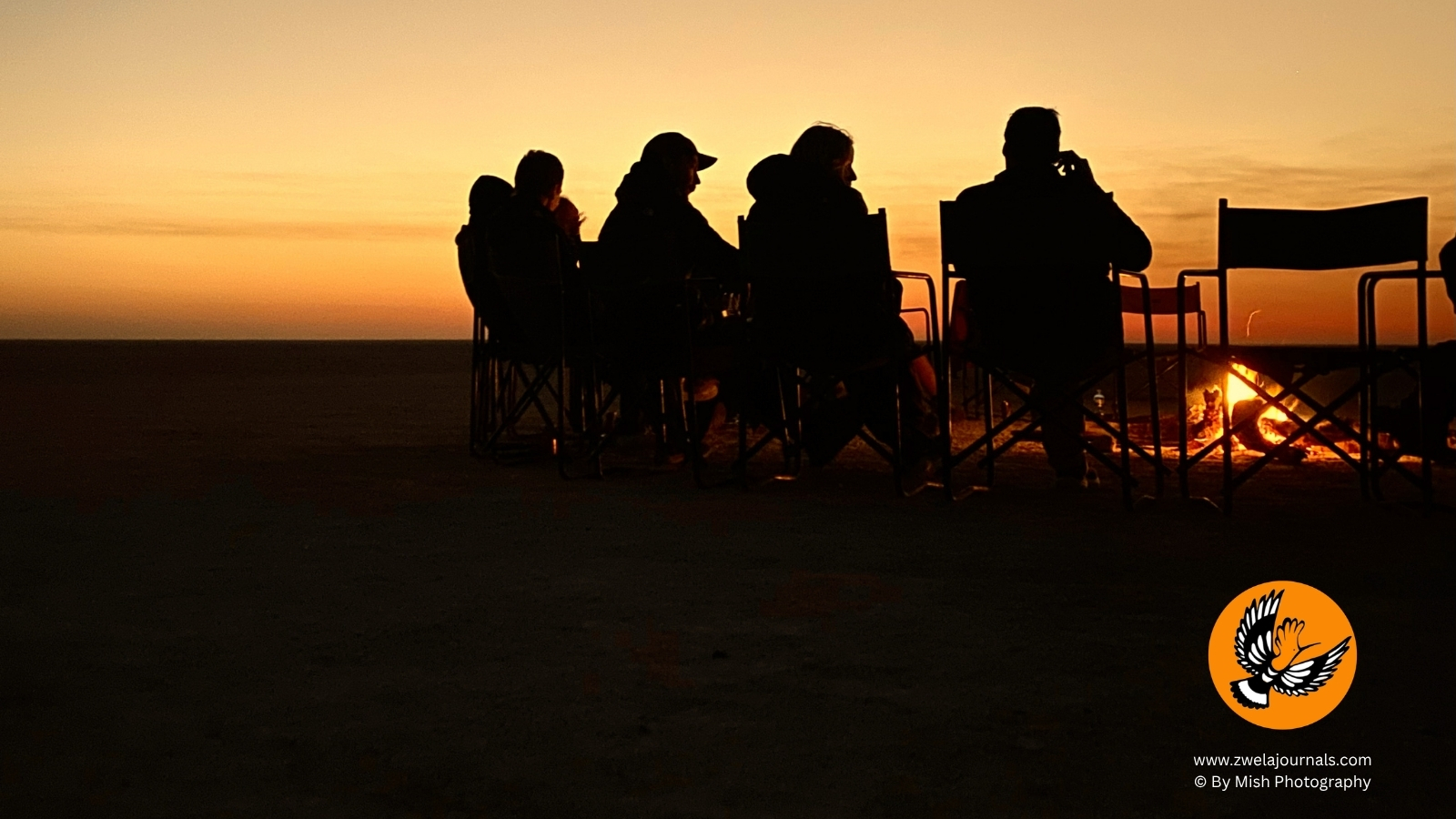
    quad biking salta pan botswana, family trip Africa, Travel with kids Africa, Safari with kids, Botswana self-drive, activities with kids We sped across the pan, taking it all in, with the occasionally mouthful of dust when the wind changed direction. We quickly learned the importance of keeping a healthy dust-distance from the bike in front. The feeling was exhilarating, freedom, open space, and adventure in every direction. By late afternoon we arrived at what was to be our camp for the evening. camp out with kids in botswana, self drive iin Botswana, family travel A simple canvas toilet stood off to one side, just four canvas walls, no roof, just views for miles. A fire was being lit, and a table was set for dinner. Our roll mats had been laid out around the edge of camp beneath the open sky. As we settled in with an ice-cold drink and chatted around the fire, the sun began to sink below the horizon. Dinner was a delicious three-course meal cooked in the middle of nowhere, somehow tasting even better because of where we were. sunset in botswana family safari  Then the stars appeared, and appeared, and didn’t stop appearing… With no light pollution for miles, the sky filled with more stars than we had ever seen. The Milky Way stretched overhead while the campfire crackled below. It was one of those moments where nobody reaches for a phone because everyone is simply taking it all in, and there was definitely no reception out in these parts.

    These are some of my best moments, a true disconnect where you phone merely becomes a camera. Being August, the night was chilly, but hot water bottles had been tucked into our beds – beds are a roll mat with sleep bag in one. They were super comfy and cozy, and under a blanket of stars we happily fell asleep. The next morning we woke to the sun rising over the pans. Fresh coffee was brewing, muffins were waiting, and one of the guides was strumming a guitar as the first light spread across the landscape. Honestly, I couldn’t have imagined a more perfect start to the day.

    After coffee we climbed back onto the quad bikes and made our way back across the pans to the village. Dust-covered and smiling, we transferred back into the 4×4 for the journey to Planet Baobab. A hot shower, a proper cooked breakfast, and a refreshing swim in the pool were waiting for us. The perfect ending to an unforgettable adventure.

    So, was it worth it? Without a doubt.

    This experience combined everything we love about family travel: wildlife, adventure, learning, wide-open spaces, and those magical moments that become family stories for years to come. Who knew that sitting on the ground watching meerkats eat scorpions would become one of our favourite family travel memories?

    It’s exactly the sort of unexpected moment that deserves a place in the kids travel journal – and it took pride and place in their Travel Journal! Journal entry alongside some excellent artwork of the scorpion buffet! The ultimate in Botswana travel with kids. As a family we realised that some of our best memories are made send out in nature, another favourite was our night of camping at Baines Baobabs, and if you find yourselves self-driving this amazing part of the world we highly recommend you add this to your itinerary! Two totally different experiences and both incredible!  

    Logistics & tips

    Getting There: Planet Baobab is located near Gweta in Botswana, on the edge of the Makgadikgadi salt pans. It is usually reached by road from Maun (about 2.5–3 hours’ drive) or from Nata (around 2 hours’ drive). The sleep-out experience departs from Planet Baobab’s main lodge.

    Bookings: Book directly with Planet Baobab

    Best Time to Visit: The best time for a sleep-out on the Makgadikgadi Pans is during the dry season (roughly May to October). Skies are clear, temperatures are cooler at night, and the vast salt pans are fully accessible. Full moon nights are especially magical, as the landscape glows silver and you can often see the Milky Way stretching across the sky.

    What to Pack:

    • Warm layers (it gets very cold at night, even after hot days)
    • Light, breathable clothing for daytime
    • Closed walking shoes or boots
    • A beanie or hat and warm socks for night
    • Sunscreen, sunglasses, and lip balm (the sun is strong)
    • Head torch or small flashlight
    • Camera for sunrise and sunset shots, the light is dreamy and the meerkats too cute!
    • A sense of adventure (essential!)
    • Zwela Travel Journal – to capture and reflect on the adventures

    Travel Tips:

    • The sleep-out experience is very remote –  no lights, and total silence.
    • Bring extra warm clothing for sleeping under the stars.
    • Go with an open mind, and ready for adventure! The stars here are some of the clearest!
    • Book in advance as it’s very popular.
    • If you are on the fence, don’t think twice, just book it! 🙂


  • Top 5 Family Friendly camps in Kruger National Park

    Top 5 Family Friendly camps in Kruger National Park

    Top 5 Rest Camps for Families in Kruger National Park

    I grew up hearing about Kruger from my mom. And she grew up right next door to the park. Tales of Bushbabies calling in the night, and early morning drives to visit the park for the day, picnic packed and binoculars at the ready…

    You never quite knew what you would see, and everyone waited with baited breath outside the gate. Each hoping for a glimpse of something exciting – the glowing of hyena eyes caught in the headlights, a pack of wild dog rushing down the road, a huge elephant crossing a river. Driving in as the sun rose was always thrilling. Every visit was different.

    So, when we finally went on holiday as a family to the park for the first time, it was a wild and exciting trip! Now years later, I have been lucky enough to visit many times, and have shared a love for the park with my son too… Ask him, and he will tell you that he would drop everything in a second to go back!

    But if you have never visited before, it can be a daunting task. Where do you stay? Which camps are the right ones for you? A family safari in Kruger National Park is one of South Africa’s most memorable holiday experiences. But choosing the right rest camp can make a huge difference to your trip.

    In this guide, we take a closer look at five of the best rest camps for families in Kruger National Park. And two bonus camps for those that want something a little different. Without further ado, our roundup includes:

    Skukuza Rest Camp
    Lower Sabie
    Satara
    Berg-en-Dahl
    Pretoriuskop

    The best family friendly camps in Kruger combine comfortable accommodation, swimming pools (our favorite!) for cooling off after game drives, good facilities, and easy access to some of Kruger’s best wildlife viewing areas. Our picks do all this and more. So let’s break it down, why are these Kruger Rest Camps the best?

    Best Kruger Restcamps for families


    1. Skukuza Rest Camp: Best Overall Family Camp

    Skukuza is the largest and most developed camp in Kruger National Park. It offers everything a family could need, including restaurants, shops, fuel stations, medical facilities, children’s play areas, and swimming pools. Skukuza is also close to the famed Skukuza golf course which has a wonderful restaurant that day visitors can visit. Nearby you will also find the Lake Panic bird hide, and the Plant Nursery, which stocks indigenous plants, a fantastic walkway where you can explore a wet land, and a play area for kids… for those who need to stretch legs, and not be stuck in a car for a long time, these spots make sticking around Skukuza an easy win! For first-time visitors, Skukuza is often the easiest and most convenient camp to choose.

    Best Gate to EnterPaul Kruger Gate (approximately 12 km away)
    Distance from Johannesburg – Approximately 420 km

    Accommodation

    • Family cottages
    • Guest houses
    • Bungalows
    • Camping facilities

    The Sabie River area around Skukuza is one of the most productive wildlife regions in the entire park, making it an excellent choice for families hoping to see the Big Five.

    2. Lower Sabie Rest Camp: Best for Wildlife Viewing

    Many experienced Kruger visitors consider Lower Sabie one of the best camps in the park. Overlooking the Sabie River, it offers spectacular views and some of the highest concentrations of wildlife in Kruger.

    Families often spot animals directly from the camp’s viewing areas, and the walkway along the river is exciting for kids to walk along in the evening with torches. Often elephants, buffalo and hippo can be seen along the river, and Sunset Dam 5 mins from camp is the perfect spot to end a game drive just before the gates to camp close.

    Best Gate to Enter – Crocodile Bridge Gate (approximately 29 km away)
    Distance from Johannesburg – Approximately 470 km

    Accommodation

    • Family cottages
    • Safari tents
    • Bungalows
    • Camping facilities

    This area is particularly well known for predator sightings, particularly leopard, making every game drive exciting. Make time to stop at the Nkulu Picnic spot for lunch or a break.

    3. Satara Rest Camp: Best for Big Cat Sightings

    If seeing lions is at the top of your family’s safari wish list, Satara should be high on your shortlist.

    Located in central Kruger, Satara is surrounded by open grasslands that attract large herds of grazing animals and the predators that follow them. The camp staff are incredibly friendly, and although it is not as big as Skukuza or Lower Sabie, the “old skool” charm of the camp makes it a popular stay. Book accommodation along the fence for incredible sunsets, and pack a UV torch to go exploring the trees and grass at night! You might find some exciting creatures! Our recommendation is to book a Park Sunset drive here, to explore what the park has to offer once the gates to camp close.

    Best Gate to Enter – Orpen Gate (approximately 48 km away) The drive from Orpen is particularly beautiful in summer.
    Distance from Johannesburg – Approximately 500 km

    Accommodation

    • Family units
    • Bungalows
    • Camping facilities

    Many visitors regard Satara as the best camp in Kruger for lion and cheetah sightings. The area has a typical savannah landscape, think grassy plains with zebra, impala, giraffe and of course – big cats!

    4. Berg-en-Dal Rest Camp: Best for Comfort and Convenience

    Our families favorite camp in Kruger. Its modern facilities, fantastic and large swimming pool, family accommodation, and excellent road network make it a popular choice for families who want a comfortable safari experience without driving deep into the park. The restaurant overlooks a dam, so you can enjoy a lunch while monkeys play in the trees nearby and hippos blow bubbles below. The camp also has a very nice walk along the fence, which is easy for kids. You can spot various antelope and even sometimes elephant! The camp is shaded and units are secluded, giving families privacy to enjoy their braais, while the restaurant serves a good meal too, but don’t expect it to be fast!

    Best Gate to Enter – Malelane Gate (approximately 12 km away)
    Distance from JohannesburgApproximately 380 km

    Accommodation

    • Family cottages
    • Chalets
    • Camping facilities

    The area is particularly well known for rhino sightings and scenic drives, especially through the hills surrounding camp.

    5. Pretoriuskop Rest Camp: Best for Camping Families

    Pretoriuskop is Kruger’s oldest rest camp and remains a favourite among families who enjoy camping and outdoor living. Set amongst large shady trees and rolling granite hills, the camp offers a relaxed atmosphere that feels very different from the busier camps further east.

    One of Pretoriuskop’s highlights is its beautiful swimming pool, complete with a rocky waterfall feature that children absolutely love.

    Best Gate to EnterNumbi Gate is closest (approximately 9 km away) but Phabeni Gate (approximately 24 km away) is the better choice, as there have been road safety issues outside on the roads to Numbi.
    Distance from Johannesburg – Approximately 400 km

    Accommodation

    • Family cottages
    • Guest houses
    • Bungalows
    • Camping facilities

    Pretoriuskop is ideal for families looking for a quieter camp with excellent camping facilities and plenty of space for children to explore.

    Top Kruger camps

    Bonus Camps for a Different Kruger Experience

    While the camps above are perfect for most families, Kruger also offers some lesser-known gems for travellers looking for something a little different.

    Punda Maria Rest Camp: Kruger’s Secret

    Located in the far north of the park, Punda Maria offers a quieter, slower-paced safari experience.

    This is the Kruger many repeat visitors fall in love with. The roads are less crowded, the landscapes are dramatically different, and birdlife is exceptional. It is not the camp you should choose as a first timer, however if you are wanting to expand your Kruger experience,  and see nature in a different way, try the north of the park. If your kids are budding avid birders, you could give this camp a try.  The nearby Pafuri region is widely regarded as one of the finest birding destinations in South Africa. And if you look very, VERY carefully, you might even spot the elusive Pel’s Fishing Owl, one of the big 6 birds!

    Best Gate to Enter – Punda Maria Gate
    Distance from Johannesburg – Approximately 565 km (around 6 to 7 hours by road, depending on traffic and stops). The camp itself is only about 8 km from the gate.

    Why Visit Punda Maria?

    • Swimming pool
    • Family accommodation
    • Camping facilities
    • Excellent birdwatching
    • Fewer crowds

    Punda Maria is perfect for families who enjoy nature, particularly birdwatching, photography, and exploring a quieter side of Kruger. There is easy access to Pafuri and the Luvuvhu River. Note that the northern parts of the park have fewer roads, as well as fewer animals. This is really the place to slow down and notice the little things (birds, bugs and rarities!) or the plant diversity. The north of the park boasts a incredible Fever Tree forests, as well as Baobabs.

    Bateleur Bushveld Camp: A True Back-to-Nature Experience

    If you want to experience Kruger at its most peaceful, try one of the bush camps. There are 5 in total, with Bateleur Bushveld Camp being the oldest. Unlike the larger rest camps, bush camps are small, intimate, and designed for visitors who want to immerse themselves in nature. There are no day visitors, no swimming pools, no large crowds, and no busy camp facilities, just wildness at its best!

    Come prepared: Bateleur Bushveld Camp lies deep within northern Kruger, and is not close to any gate. Take into account that you are required to drive slower in the park, so getting there becomes part of the adventure.

    One of the camp’s most popular features is its private hide overlooking a waterhole, where guests can quietly watch birds and wildlife throughout the day.

    Best Gate to Enter – Punda Maria Gate (Punda Maria Gate to Bateleur: about 125 km)
    Distance from Johannesburg – roughly 690 km

    Bateleur is ideal for travellers who want to disconnect from busy schedules and reconnect with nature, it’s an authentic bush camp, giving you a real taste of Kruger at its best. It’s often included in itineraries that traverse the park from North to South or vice versa. Located between the main rest camps Mopani and Shingwedzi. Rarer antelope are often spotted in it’s surrounds. 

    Top 5 Family Friendly camps in Kruger National Park

    Frequently Asked Questions

    Which Kruger rest camp is best for families?

    Skukuza is generally considered the best all-round family camp thanks to its facilities, accommodation options, swimming pools, and excellent wildlife viewing.

    Which Kruger camp has the best swimming pool?

    Many families rate Berg-en-Dahl’s swimming pool as one of the best in the park thanks to its size and shady surroundings.

    Which Kruger camp is best for seeing lions?

    Satara is widely regarded as the best camp for lion sightings due to the open grassland habitat surrounding the camp. However you have a pretty good chance of spotting many of the big 5 including lion in the southern parts of the park.

    Which Kruger camp is best for birdwatching?

    Punda Maria is one of the top birding destinations in Kruger National Park and offers easy access to the famous Pafuri region. But don’t forget to visit the bird hides in the Southern regions!

    Which Kruger camp has the fewest crowds?

    Punda Maria and Bateleur offer some of the quietest safari experiences in Kruger and are ideal for visitors looking to escape the busier southern camps. Do remember that there is more game in the southern regions, and you need to make the most of just enjoying the quietness of the bush too!

    What is the difference between a Rest Camp and a Bushveld Camp?

    Rest Camps offer facilities such as restaurants, shops, fuel stations, swimming pools, and camping areas. Bushveld Camps are smaller, self-catering camps designed for visitors seeking a more private and nature-focused experience.

    Kruger National Park Map

    TOP TIP: Visit the SAN Parks website to book your camp. It’s well worth booking in advance as more popular campsites get booked up fast, sometimes even a year in advance for those popular school holiday periods!

    Kruger National Park is one of South Africa’s top destinations for family safaris, wildlife viewing, camping, and birding experiences. Choosing the right rest camp is essential for making the most of your trip, especially when travelling with children.

    Families looking for the best family rest camps in Kruger National Park will find excellent options such as Skukuza, Lower Sabie, Satara, Berg-en-Dal, and Pretoriuskop. These camps offer family-friendly accommodation, swimming pools, restaurants, shops, and easy access to some of the best wildlife viewing areas in the park.

    For travellers planning a family safari in Kruger National Park, these main rest camps provide the perfect balance of comfort and adventure. Many of them also rank among the best Kruger camps with swimming pools, making them ideal for cooling off after long game drives.

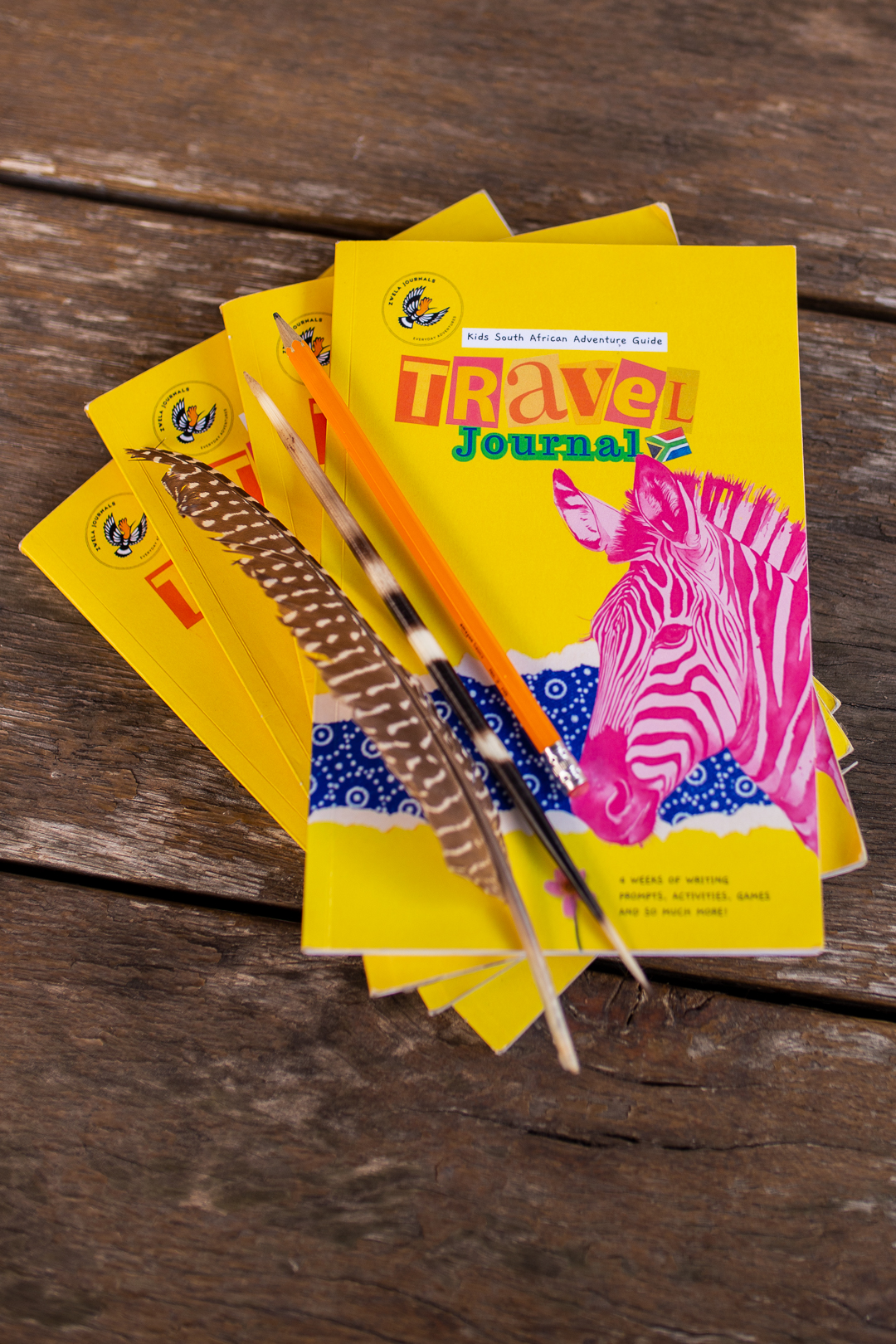
    We have a travel journal designed especially for kids and families travelling in Kruger Park. With guide, animal checklists, activities, journalling prompts and games, its great for long hours in the car between camps, around the campfire in the evening, or while sitting at the waterhole!

    Note: We self book and self drive in the park.

  • How to Pack Smart When Traveling with Kids in South Africa

    How to Pack Smart When Traveling with Kids in South Africa


    Discover how to pack smart when traveling with kids in South Africa. Learn how Zwela Journals and kids journaling can turn family travel and South Africa adventures into meaningful learning experiences

    The morning we zipped up the last suitcase, the kids were already bouncing around the living room, safari hats on, plastic binoculars dangling from their necks. Our family adventure to South Africa was about to begin.

    Cape Town’s bright coastlines, the bushveld of Addo, the sound of drums in the evening air, languages that dance, and animals we had only ever seen in picture books…all beckoned. And we were ready!

    But before the adventure came the packing.
    And packing with kids, as every parent knows, is its own journey.


    Start With the Story, Not the Suitcase

    When preparing for family travel South Africa, think less about packing things and more about preparing for experiences. Each item should support curiosity, comfort, and connection.

    Instead of packing everything “just in case,” we gathered as a family and imagined what we would do:

    • Watching penguins at Boulders Beach
    • Hiking partway up Table Mountain
    • Visiting bright, bustling craft markets
    • Listening to stories under big Southern Hemisphere stars
    • Visiting Addo Elephant Park on Safari

    Packing became planning.
    Planning became dreaming.


    The Adventure Backpack (Give Each Child Their Own)

    Every child gets a small backpack. Not heavy. Not overstuffed. Theirs to carry and manage.

    What to include:

    Item Purpose
    Lightweight water bottle Staying refreshed in warm sunshine
    Sun hat Essential in South Africa’s bright climate
    Small binoculars Makes every child feel like an explorer
    Non-melting snack Keeps moods steady between adventures
    Zwela Journals Sparks curiosity and memory-making

    Zwela Journals: Where Adventure Becomes Meaning

    This trip wasn’t just about seeing—it was about noticing.

    Zwela Journals are designed for travel learning for kids, offering simple prompts, drawing spaces, playful maps, and reflection activities so children can capture what they see, hear, feel, and learn.

    On our first day, sitting on a blanket overlooking the ocean, our daughter wrote:

    “My favorite thing was watching the penguins swim”

    Beside it, she drew three penguins (one wearing sunglasses).
    This wasn’t homework. It was discovery.

    Journaling helps kids make emotional, memorable connections and retell experiences in their own voice. Travel becomes less “Are we there yet?” and more “Did you see that?” and trust us, sharing these stories later with grandparents makes for awesome conversations back home.


    Clothing: Pack Less, Layer Smarter

    They tell you to avoid bright colours when going on Safari, but we’re here to tell you, it doesn’t really matter! Just remember that animals also have eyes, and they can see you, so if you don’t wan’t to stand out in the bush, neutrals are the way to go. No need to buy brand new outfits.

    South Africa’s climate shifts from warm days to cool breezes, especially near the coast. And while on Safari, days can be hot, while nights can be cold! The key is layering.

    Pack:

    • 3–4 mix-and-match outfits (think leggings that can be worn on their own, or double up under jeans for Night Drives, and colours that are versatile)
    • Comfortable walking shoes
    • A warm top for mornings and evenings
    • A light rain jacket (Cape Town weather loves surprises)
    • A squishable puffer jacket for early morning game drives or even for nights in the boma around the campfire.
    • Hat & sunglasses – the African sun is no joke!

    Avoid single-use outfits. Pack clothes that can be climbed in, splashed in, and explored in.


    A Small Medicine Kit for Flow and Ease

    Just the basics:

    • Plasters
    • Kids sunscreen
    • Antihistamine (new plants and bugs!)
    • Hand sanitizer for markets and road stops
    • Insect repellant

    This isn’t about worrying – it’s about keeping the adventure smooth.


    The Real Secret to Smart Packing

    You’re not packing to control the journey. You’re packing to join it. Kids don’t need perfect Safari outfits, matching containers, or ten kinds of toys and screens.
    They need room to wonder.

    And when they have a way to record that wonder, like a Zwela Journal, their experiences grow into stories they will remember long after the trip ends.


  • Baines Baobabs Camping in Nxai Pan | Family Adventure & Football on the Salt Pan

    Baines Baobabs Camping in Nxai Pan | Family Adventure & Football on the Salt Pan

    The adventure, followed by logistics & tips.

    Surrounded by endless views, the smell of adventure, and not a person in sight for miles – it is amazing what being out in nature can do. The kids don’t even think to ask for a screen, they are off finding sticks, inventing games, exploring. These are my favourite kind of days, these travels my favourite kind of journeys. And this trip was all of these. It might sound cheesy, but this was soul food. These moments are our happy place, and I find myself dreaming back to this trip, especially our night in Nxai Pan.

    To say it exceeded expectations is an understatement.

    We arrived at the gate of Nxai Pan National Park with a mix of excitement and nerves. After our days in the Khwai region of the Okavango Delta we had properly tested out our 4×4 driving skills on sandy tracks, yet we still felt some trepidation, from comments I had read from previous travellers, the road to Baines Baobabs has a reputation as one of the sandiest in Botswana. But the adventure and the promise of a night under the stars on the edge of the pan was irresistible.

    We had booked our campsite nearly a year in advance. In Botswana, the best spots require early planning, especially in high season. And we were right in the middle of it, mid‑August, and kids school holidays. Nxai Pan only has three campsites; Site 1, 2, and  3, we had been allocated Site 2. On arrival at the park entrance, we received a brief orientation: take all your rubbish with you, leave the site as you found it, and respect the bush. This little chat just got us even more excited!!!

    The drive in offered its own highlights. Sandy roads yes but after Khwai it wasn’t too bad. We spotted antelope, a secretary bird, a kori bustard, and a variety of smaller beautiful birdlife as we navigated the sandy track. By the time we finally arrived at the start of Nxai Pan, our excitement was through the roof. Driving along the edge of the pan, we passed the famous Baines Baobabs. We had a sunrise date planned with them, so we didn’t stop, instead continuing to Site 2. The campsites are spaced so that you don’t see another soul.

    Our site was etched between two wise, giant baobabs perched on the edge of the pan. The bucket shower didn’t work, and the long-drop toilet made you cross your legs, but none of it mattered. The setting was beyond incredible. There was no sound or light pollution, just the sky burning orange and pink behind the baobabs, and the soft sounds of the bush around us. It was the perfect backdrop for our evening braai. We cooked, the kids journaled under the watchful gaze of the baobabs, and we sat around the campfire watching the sun dip below the horizon before heading to bed under a sky full of stars.

    Morning arrived softly. We woke to the pre-dawn bird twitter of the bush, the two ancient baobabs still standing guard in the early morning glow. We packed up early and drove the short distance over to the Baines Baobab cluster for breakfast. Named after the explorer and artist Thomas Baines, who painted them in 1862, these trees have stood here for centuries, quietly witnessing life unfold around them.

    Coffee brewed off the back of our 4×4´s as the first light highlighted every crease and curve of the ancient bark. We wandered quietly between the trees, feeling small in their presence. The sheer energy of the place kept us silent, even the kids. After exploring, breakfast, and coffee, an impromptu football game started. The pitch? The endless expanse of the salt pan. It was a game of sheer joy (and energy burning before our days drive) set in the most unforgettable setting. Magic doesn’t do it justice.

    Two essentials we ALWAYS travel with as a family: a football and Zwela Travel Journal.

    Logistics & tips

    Getting There:
    Baines Baobabs lie within Nxai Pan National Park, Botswana. The turn-off is along the A3 highway between Maun and Nata. From the main park entrance gate, it’s roughly 17 km to the turn-off to the pan, then another 12–14 km of sandy track to reach the baobabs and the campsites. The road can be soft in sections, especially late in the dry season, but with a 4×4 and deflated tyres, it’s very doable. Take it slow, enjoy the drive, and soak up the sense of space.

    Bookings:
    There are only three campsites at Baines Baobabs (Sites 1, 2 and 3), managed by Xomae Group. Each site is completely private, you won’t see another vehicle or person once you arrive. These campsites book up far in advance, especially during high season (June–October), so it’s worth planning early. You can book directly through xomaesites.com or alternatively we used Botswana Footprints – they are a booking agents for all Botswana bookings. This made the process easy and smooth.

    Facilities:
    Facilities are simple and rustic, a long-drop toilet, a bucket shower (sometimes working, sometimes not), and a braai/ fire pit. You’ll need to bring all your own water for drinking, cooking, and washing, as well as firewood or charcoal. There’s no water, electricity or fuel available anywhere nearby, so stock up before entering the park.

    Best Time to Visit:
    The dry season (May–October) is the easiest time to access the area. Roads are firmer, and the skies are crystal clear, perfect for sunrise and sunset light over the pans. During the wet season (December–March), the pans often flood, turning the tracks muddy and, at times, impassable.

    What to Pack:

    • Plenty of water and fuel – there are no supplies once inside the park
    • Food and snacks for self-catering
    • Firewood or charcoal for your braai
    • Football – ideal for a kick-about on the pan
    • Zwela Travel Journal – to capture and reflect on the adventures
    • Camera for sunrise and sunset shots, the light is dreamy
    • Binoculars for spotting antelope and birdlife on the drive in

    Travel Tips:

    • Leave no trace – take all rubbish with you, including biodegradable waste.
    • Make use of sunrise and sunset – the light is extraordinary and worth every bump of the drive.
    • Stay the night – this is many times suggested as just a day trip to see Baines Baobabs, but waking up in the first light of dawn and exploring it without anyone there is one of those moments that stays with you. It’s totally worth the overnight! And I think I would go as far to say, necessary!

  • Top 10 Family-Friendly Destinations in South Africa for the Summer Holidays

    Top 10 Family-Friendly Destinations in South Africa for the Summer Holidays

    South Africa is a dream playground for families, from coastlines to bush, mountains to dunes. Whether you’re a South African family planning a summer holiday or visiting from abroad, you’ll find beaches, wildlife, culture and curious little corners that spark discovery in kids. Below are ten of our top 10 Family-Friendly Destinations in South Africa – each with a special local highlight or off-the-beaten-path gem to make your trip unforgettable.

    1. Cape Town & the Cape Peninsula

    Cape Town blends dramatic scenery with beach days and city fun. Kids love the cable car up Table Mountain, picnics in Kirstenbosch Gardens, and the penguins at Boulders Beach… but the peninsula is full of other exciting wonders too.

    Local highlight: Imhoff Farm in Kommetjie is a charming farmstead with camel rides, a small animal park, artisan shops, and a kids’ farmyard. For calm paddling and rock-pool exploration, head to the nearby Miller’s Point tidal pool near Simon’s Town (arrive early for best parking and to avoid baboon activity), and discover the secret tidal slide!

    2. The Garden Route

    This spectacular coastline stretches from Mossel Bay to Storms River, with lagoons, forest trails, and beach stops perfect for families. The Garden Route mixes gentle water activities, forest walks, and active adventures that suit kids of all ages.

    Local highlight (stay suggestion): Stay at Wilderness Ebb & Flow Rest Camp, where you can canoe on the Touw River, float among birdlife, and enjoy a peaceful base for family days out.

    Local highlight (hike): For a memorable outing, take the Storms River / Tsitsikamma waterfall trails. There are family-friendly short walks to waterfalls and pools around Storms River Village that are perfect for little explorers (choose shorter routes when travelling with small children).

    3. Kruger National Park

    A family safari opens a child’s imagination and there’s nothing quite like listening to the bush at dusk, spotting impala (1000s) and hopefully a big sighting or two. Kruger also has family-friendly rest camps, guided activities, and educational exhibits that are great with kids.

    Local highlight: Visit the Letaba Elephant Hall for interactive exhibits about elephants and conservation. Also stop by the Skukuza indigenous plant nursery (ask at camp reception for directions). It provides an opportunity to learn about local flora and you can find kids play area, and picnic spot. This is an off the beaten spot, and often quiet (except for the monkeys) – a good place to run around and burn off some energy before heading back to the car.

    4. Durban & the KwaZulu-Natal Coast (including uMhlanga)

    Durban’s warm Indian Ocean and lively beachfront promenade make for an easy family escape. Beyond the beach are calm dune-forests and small reserves that are surprisingly wild and rewarding to explore. Right in the city you can visit the Kenneth Stainbank Nature Reserve, or the Botanical Gardens. Near the uShaka Marine World, you can ride a gondola and see the baby Hammerhead Shark rearing ground.

    Local highlight: A short drive away, uMhlanga and the uMhlanga Lagoon Nature Reserve offer peaceful wetland and dune-forest walks where you may spot the tiny and elusive blue duiker (one of Africa’s smallest antelope species – the size of a house cat or small dog!!). Move quietly and early for the best chance of sightings in the shaded forest paths.

    5. Drakensberg & Golden Gate region

    The Drakensberg is all about mountain air, waterfalls, and wide outdoor spaces where kids can run, climb and learn. Nearby Golden Gate Highlands National Park offers dramatic sandstone scenery and paleontological attractions.

    Local highlight: Visit the Kgodumodumo Dinosaur Interpretation Centre in the Golden Gate area to learn about Ledumahadi mafube, see life-sized models and enjoy interactive displays. While exploring the region, you might also hear fascinating local stories about some natural oddities (including tales of enormous earthworms). For more quirky facts and kid-friendly fun, check out our Zwela South Africa Kids Adventure Guide Travel Journal.

    6. Addo Elephant National Park & the Sundays River (Alexandria dunes)

    Addo is an easy, malaria-free option for family safaris, with great wildlife sightings and a relaxed feel. Nearby, the Sundays River Estuary and Alexandria dune fields add adventures of a different kind to your itinerary.

    Local highlight: Book a Sundays River cruise and combine it with dune activities on the Alexandria dunes (sandboarding / sand sledding). The mix of a calm river cruise with high-dune play makes for an unforgettable family day.

    7. Pilanesberg National Park & Sun City (North-West)

    Just a few hours from Johannesburg, Pilanesberg offers malaria-free safari experiences, wildlife viewing hides, and family-friendly lodges, while nearby Sun City provides waterpark thrills and activities for kids.

    Local highlight: Sit at the Mankwe photographic hide at Mankwe Dam to quietly watch hippos, birds and wildlife up close… Shhhhh, a calm, magical wildlife moment for little ones.

    Local tip – Elephant safety: Elephants should always be given right of way and plenty of space. Never get out of your car near an elephant – they may appear calm but can be unpredictable and powerful. Keep windows up if advised, teach kids to be quiet near wildlife, and always follow your guide or ranger’s instructions.

    8. The West Coast & Langebaan Lagoon (including Namaqualand)

    The West Coast pairs gentle lagoon paddles with rugged hinterlands. In spring (typically peaking late August–September). the landscape explodes with colour during Namaqualand’s wildflower season, turning scrub and veld into carpets of blooms: a spectacular sight for families.

    Local highlight: Explore Kraalbaai at West Coast National Park — a calm lagoon with shallow waters ideal for children to paddle, and spot flamingos and Ostriches!

    Top family seafood pick: For a memorable family meal near Langebaan, try Die Strandloper — an open-air, rustic seafood experience on the coast (book ahead; great atmosphere for families, come hungry!).

    9. The Cederberg

    The Cederberg’s sandstone formations, starry skies, and ancient rock art make it a wonderful outdoor classroom for kids who love to hike, climb and camp.

    Local highlight: Visit the Stadsaal Caves in the Matjiesrivier Nature Reserve to view San rock art and dramatic cave formations. The area is ideal for short family hikes and peaceful campsite nights.

    Camping tips for families: Choose campsites with clean ablutions, bring a comfortable family tent and warm bedding (nights can be cold), pack layers for temperature swings, secure food from wildlife, and plan short, fun hikes suited to younger legs.

    10. The Karoo (including Mountain Zebra National Park & quirky towns)

    The Karoo is vast, mysterious, and utterly South African. A place of long forgotten roads, starry skies, and small towns full of character. Families can explore Camdeboo’s Valley of Desolation, and browse colourful padstals for homemade treats and crafts along the way. The vast landscapes of the Karoo are something to see!

    Local highlight: Take a night drive in Mountain Zebra National Park – guided evening drives give families a chance to spot some of South Africa’s elusive nocturnal species (the “Shy 5” such as aardvarks, porcupines and springhares) under the Karoo sky. By day, visit the Owl House in Nieu-Bethesda and stop at roadside padstals for jam, preserves and friendly local interactions.


    From Miller’s Point tidal pools to Namaqualand flower carpets, dinosaur exhibits and dune sledding, South Africa is overflowing with family moments waiting to be noticed and recorded. If you’d like your kids to remember the small wonders… from the first animal sighting, the odd insect, to the taste of a local treat – our Zwela Travel Journals are perfect companions for capturing curiosity, gratitude and discovery.

  • Welcome to Zwela: Inspiring Kids to Explore South Africa Through Journaling

    Welcome to Zwela: Inspiring Kids to Explore South Africa Through Journaling

    At Zwela, we believe that every journey, whether a weekend away or a big family adventure, has the power to teach, connect, and inspire. Our mission is to help children see the world with curiosity and joy, using journaling as a tool to capture their unique experiences and perspectives.

    Why We Created Zwela

    Zwela was born out of a simple question: how can we help kids engage more deeply with the world around them? As parents who love to explore, we wanted to find ways to make travel meaningful for our children… not just about the destination, but about reflection, creativity, and learning.
    That’s how the Zwela Journals was created: to encourage kids to notice, draw, write, and remember the moments that make each trip special.

    The Magic of Travel Through a Child’s Eyes

    Traveling with kids in South Africa offers endless opportunities, from discovering wildlife in Kruger National Park, to feeling the sea breeze in Cape Town, or exploring the markets of Durban. Children experience these moments differently; they’re naturally curious, imaginative, and open.
    By journaling, kids learn to make sense of their adventures. It helps them build memories that last long after the trip ends. And South Africa was the place that has inspired Zwela’s first travel journal.

    Why Journaling Matters

    Journaling isn’t just about writing; it’s about reflection. For children, it:

    • Strengthens observation and storytelling skills
    • Builds confidence in self-expression
    • Encourages gratitude and mindfulness
    • Creates lasting keepsakes of family memories

    Join the Journey

    Follow along as we celebrate family travel, creativity, and connection. And if you’d like to make your next trip more meaningful, explore our Zwela Travel Journal for Kids to South Africa, the perfect companion for young explorers.