
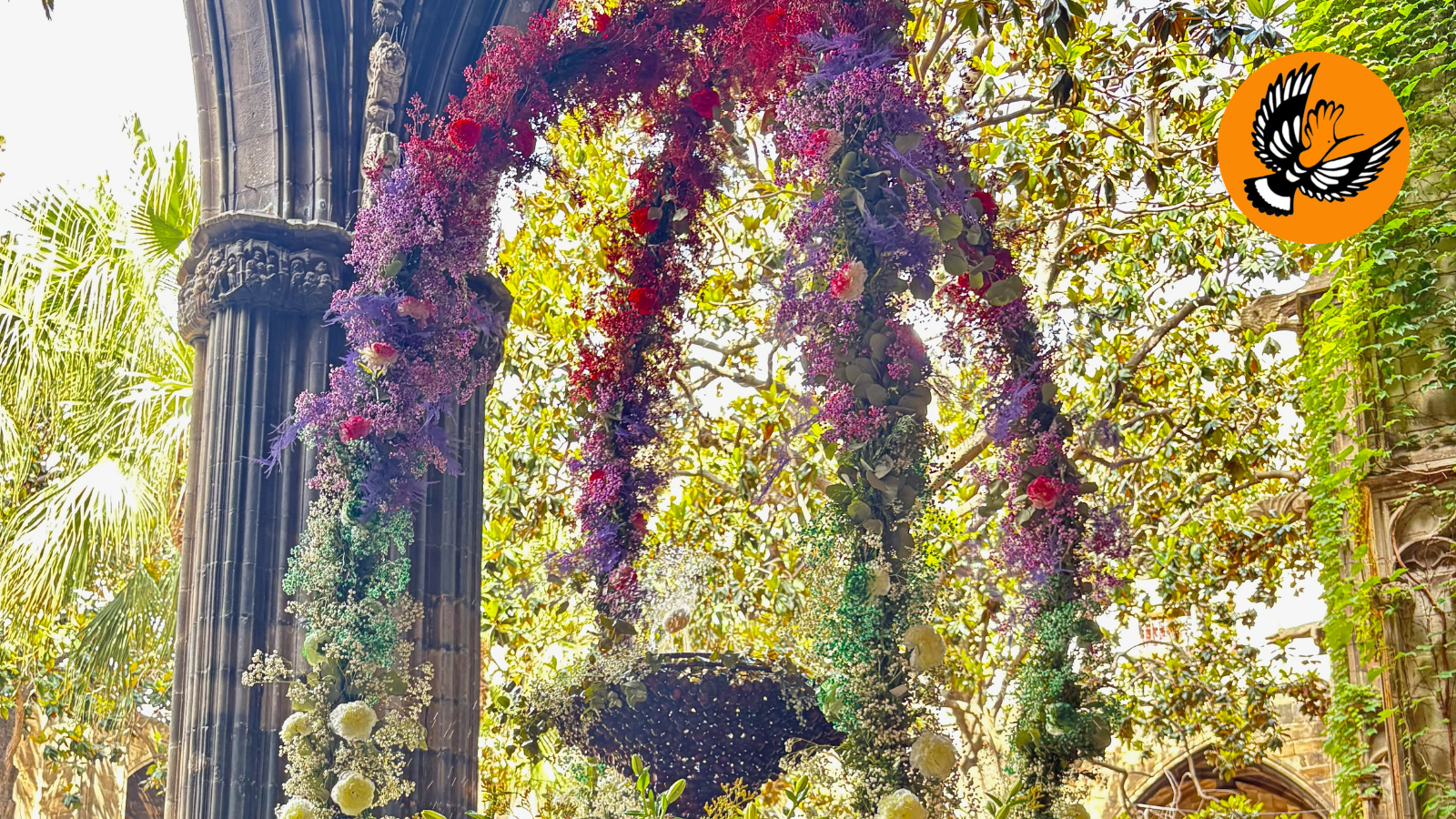
Know about Ou com balla before visiting Barcelona in late May or early June, because this centuries-old Catalan tradition is one of the city’s most magical hidden celebrations.
On a warm day in late May or early June, if you find yourself wandering the Gothic Quarter of Barcelona. You will find yourself at a magical sight that only happens once a year, of an egg, balancing and dancing above a stream of water that is decorated with breathtaking flowers. It feels like you have uncovered an enchanted relic in a lost ruin that was once left behind by the queen herself.
To an outsider, it looks as though it is just another easter tradition, but it has a much deeper meaning than that. A tradition that goes back centuries of celebration, which was first documented in 1440.
Ou com balla, Barcelona’s famous “dancing egg” tradition, is one of those celebrations that makes you stop for a moment and marvel with others at something as small as a dancing egg.
This is what you need to know about Ou Com Balla before going and visiting it.

What to Know About Ou Com Balla
Ou com balla, which means “the dancing egg” in Catalan, is a centuries-old tradition celebrated around the Feast of Corpus Christi. You simply place a hollow egg on top of a stream of water and watch it dance above the lush spring flowers.
Over time, the custom spread beyond Barcelona and is now seen in different villages across Catalonia. Catching this sight in the Gothic Quarter feels especially meaningful because the narrow streets, old buildings, and flower-filled courtyards make the whole experience feel like stepping into an enchanted garden.
This festival brings people together to remember the small things in life. It connects the natives and the tourists to the rich history of Barcelona. Reminding us all that there is a beauty to falling in that you never really fall, since you always find yourself right back up.
The History of the dancing egg
The exact origin of Ou com balla is not completely clear, which is why it is so fascinating. There are many stories and interpretations of how it began.
One claims that someone noticed an eggshell balancing perfectly on a stream of a fountain. Ever since, the simple sight has grown into a yearly tradition. Another interpretation connects the dancing egg to religion, since it is celebrated around Corpus Christi. In this view, the tradition represents the Eucharist, with the egg symbolizing the body of Christ.
I find the seasonal meaning to be the most true. Eggs have long been connected to fertility, rebirth, and creation. Flowers represent spring, growth, and renewal. Together, the egg and flowers become a beacon symbolizing the end of spring and the beginning of summer. The tradition feels like a celebration of life returning, changing, and continuing.
After watching this tradition for the first time in person. I believe this tradition to be about appreciating the rebirth of something new. People from all over the world come to watch an egg dance on water. It doesn’t matter what religion they believe in; they are there to marvel at the idea of change being beautiful.
Even though people may explain its meaning in different ways, that is part of the beauty of Ou com balla; it is up to you to decide the meaning.

Where to See Ou com balla in Barcelona
The most famous place to see the dancing egg in Barcelona is at the Cathedral of Barcelona, where the cloister fountain is decorated with flowers and cherries. The Cathedral serves as the birthplace of Ou Com Balla, and it is one of the most meaningful places to experience it.
These were my favorite viewing spots.
- Palau del Lloctinent
- Casa de l’Ardiaca
- Front de Sant Jordi (Barcelona Cathedral)
- Museu Fredric Marés
The great thing about these 4 spots is that they are all within walking distance of each other.
There is a map of all the spots in Barcelona where Ou com balla is celebrated.
The trick to beating the crowds is to go right when they open, which for most is 9:30, but try to get there before so you are the first one there. It is also Barcelona, so there will be people viewing it regardless of the time. Try to go on the first day it opens, which is on Thursdays because many people want to witness it on Sunday.
This year, I was lucky enough that it rained on the first day, and it scared many of the groups away. So if it does rain the day you want to see the egg, don’t be alarmed. The egg is still dancing, the flowers are still beautiful, and the rain almost makes the whole tradition feel even more magical.

Ou com balla is one of Barcelona’s most unique traditions because it is both simple and meaningful. It has history, religious symbolism, seasonal beauty, and a little bit of mystery. Whether you see it as a celebration of Corpus Christi, a symbol of rebirth, or just a beautiful spring tradition, it is something worth experiencing.
In a city as busy and full of movement as Barcelona, Ou com balla gives people a reason to pause. It reminds us that even the smallest traditions can carry centuries of meaning. And sometimes, the most memorable moments come from the simplest things: flowers, water, and an egg dancing in the middle of it all.