Is South Africa safe for families? It is almost always the first question parents ask, usually before anyone has looked at a single itinerary, and it deserves a straight answer rather than a comforting one.
The short version is yes, with conditions. South Africa has a real crime problem and pretending otherwise helps nobody. It also has excellent private healthcare, good main roads, a mature tourism industry and a set of family experiences that very few countries can match. Both things are true at the same time.
What separates a stressful trip from a wonderful one is rarely luck. It is a handful of decisions made before you arrive, and a few habits that become automatic within about two days on the ground.
The short answer, and what it actually depends on
The crime that makes international headlines is heavily concentrated in specific areas that visitors have no reason to go to. Family itineraries do not naturally pass through them.
Where families do run into trouble, it is almost always one of three things: driving somewhere they should not have driven, leaving something visible in a car, or walking somewhere after dark that a local would not have walked. All three are avoidable, and none of them require you to travel nervously.
It is also worth knowing that the picture varies enormously by city. In Cape Town’s coastal suburbs, walking to dinner is completely normal and you will see other families doing it. In Johannesburg, most people take an Uber everywhere and simply do not walk between places, and visitors are wise to do the same. Neither fact should put you off either city. They just call for different habits.
Driving is where most of the risk sits
Self-driving is the best way to see South Africa with children, and the main roads are genuinely good. The risk is not the driving itself. It is a small number of specific situations, and they are well documented.
- Smash-and-grab is the most common incident tourists meet. Keep windows up and doors locked in traffic. Put every bag in the boot before you set off, never at a traffic light. A phone on the passenger seat is the single most reported cause.
- Do not blindly follow your satnav. This is the advice locals repeat most often. The fastest route is not always the safest one, and navigation apps will happily route you through areas no local would drive through. Sense-check the route before you set off, and if a road looks wrong, it probably is.
- Do not stop for strangers. Feigned breakdowns and objects thrown at cars are known tactics. If someone flags you down, drive to a petrol station and call for help from there.
- Arrive before dark. The most useful rule in the whole guide, and it happens to suit tired children as well.
- Ask your car hire company or accommodation about the airport run. Some specific airport approach roads have a poor reputation and your host will name them without hesitation.
Petrol stations are all attended, so you stay in the car while someone fills up, checks your tyres and takes a card payment. It is one of the small pleasures of driving here.
Rural distances deserve their own mention. On a Karoo run, petrol stations can be a very long way apart and phone signal disappears for stretches, so fill up whenever you pass one and tell your accommodation roughly when to expect you. The same caution applies to the mountain roads on the Panorama Route up towards Kruger. Allow far more time than the map suggests, because you will want to stop at Bourke’s Luck Potholes and the waterfalls around Sabie and Graskop, and rushing a mountain pass in fading light is exactly what you are trying to avoid.
If you are not comfortable driving, do not drive
This is worth saying plainly, because a lot of families force themselves into a hire car on a first trip and spend the holiday tense.
You do not have to. Almost every guesthouse, hotel and lodge can arrange a private transfer or put you in touch with a driver they use regularly, and the rates are far more reasonable than most European visitors expect. For a first trip, hiring a driver for the longer legs and self-driving only the easy scenic stretches is an excellent compromise.
In the cities, Uber and Bolt both work well, they are inexpensive, and using them is exactly what locals do. For longer routes, a small guided road trip with a reputable operator takes the navigation question off the table entirely and usually comes with someone who knows which viewpoint is worth stopping at.
Whichever way you go, check reviews properly rather than glancing at a star rating. Read the recent ones, read the negative ones, and look for operators with a real trading history and a proper booking process. Check too that the version of an activity you are booking actually suits your children’s ages. The Cango Caves near Oudtshoorn are a good example: the standard heritage tour is easy and fascinating, while the adventure tour involves genuinely tight squeezes that are no fun at all for a young or claustrophobic child.
Choosing where to stay, and asking when you are unsure
Where you stay does more for your family’s safety than anything else on the planning list.
Look for secure off-street parking rather than kerbside, especially with a car full of luggage. Look for places that are well lit and in areas where other people are out in the evening. Read the reviews with an eye for how guests describe walking around at night, because travellers are usually candid about it.
Then use the best safety resource you have, which is the people who live there. Ask your host directly which streets are fine to walk and which are not, whether it is sensible to walk to that restaurant or better to take an Uber, and where to park at the beach. South Africans are refreshingly straightforward about this and will tell you plainly rather than worrying about scaring you off. Ask every time you arrive somewhere new.
Blend in, and keep it low key
The most repeated piece of local advice is the simplest: do not advertise that you are a tourist.
That means no camera slung around your neck, no over-ear headphones while walking, and phones in pockets rather than in hands. Leave good jewellery at home. Carry one card and a little cash rather than everything you own. Use ATMs inside shopping centres, and never accept help from a stranger at a cash machine, however friendly.
None of this is unique to South Africa. It is the same behaviour that serves you well in Barcelona or Rome, applied a bit more consistently. Children pick it up quickly and, handled lightly, it does not make them anxious.
Health, water and mosquitoes
Tap water is safe to drink in the major cities and towns. In remote rural areas, bottled water is the sensible default.
Private healthcare is excellent, with good private hospitals in every major city. Comprehensive travel insurance is essential, because private care is not free and you will want the option of using it without thinking about the bill.
Malaria worries most parents, and the answer is simpler than it sounds. Large parts of the country are entirely malaria-free, including the whole of the Cape, the Karoo, the Eastern Cape reserves, the Waterberg, Pilanesberg and Madikwe. If you would rather not have antimalarials in the picture at all, there is no shortage of choice.
The Lowveld around Kruger is a malaria area with seasonal variation, so speak to a travel clinic well ahead if you are heading that way. Either way, pack a good repellent and long sleeves for evenings.
The sun is stronger than northern visitors expect. High-factor sun cream, hats and proper shade in the middle of the day matter more here than they do at home.
Safety on safari
Safari is often the part parents feel least certain about, and it is genuinely among the safest and most rewarding things you will do.
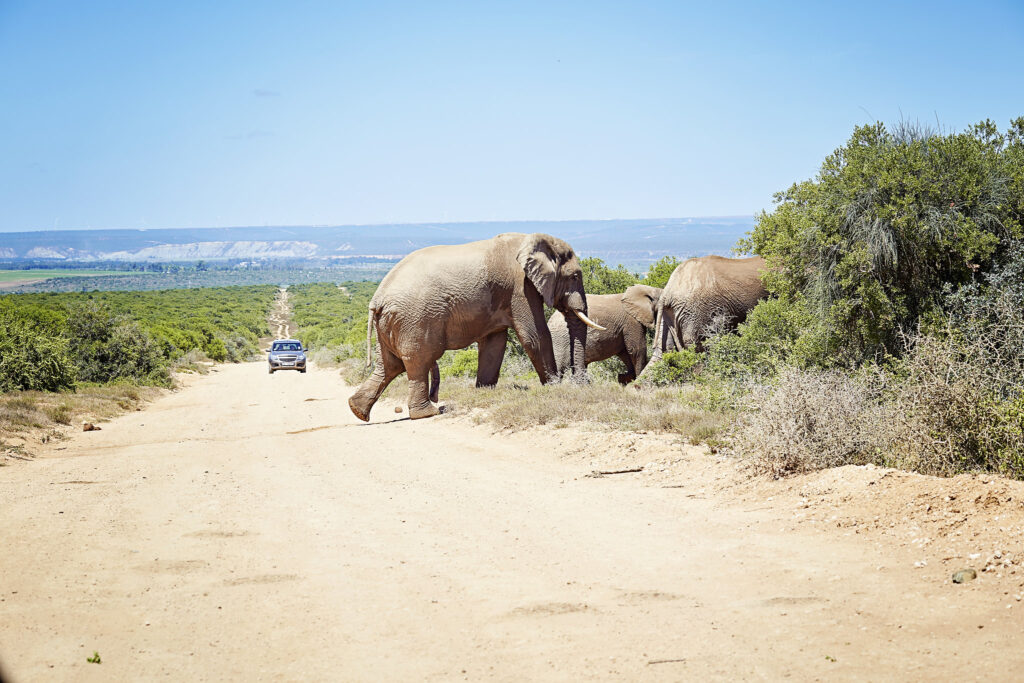
The rules are few and not negotiable. Stay in the vehicle unless a guide says otherwise. Arms and heads inside, nobody standing up, voices low near animals, and out of the car only at designated viewpoints and rest camps.
Guided drives are excellent with children because someone else is watching the road, the animals and your family all at once, which means you actually get to look. Many lodges run shorter drives for younger children and plenty have minimum age limits, so check before booking.
At rest camps, keep food inside and zipped away. Monkeys and baboons are clever, persistent and entirely uninterested in your feelings on the matter. Never feed them, and make sure children know not to either.
Cliff paths, mountains and water
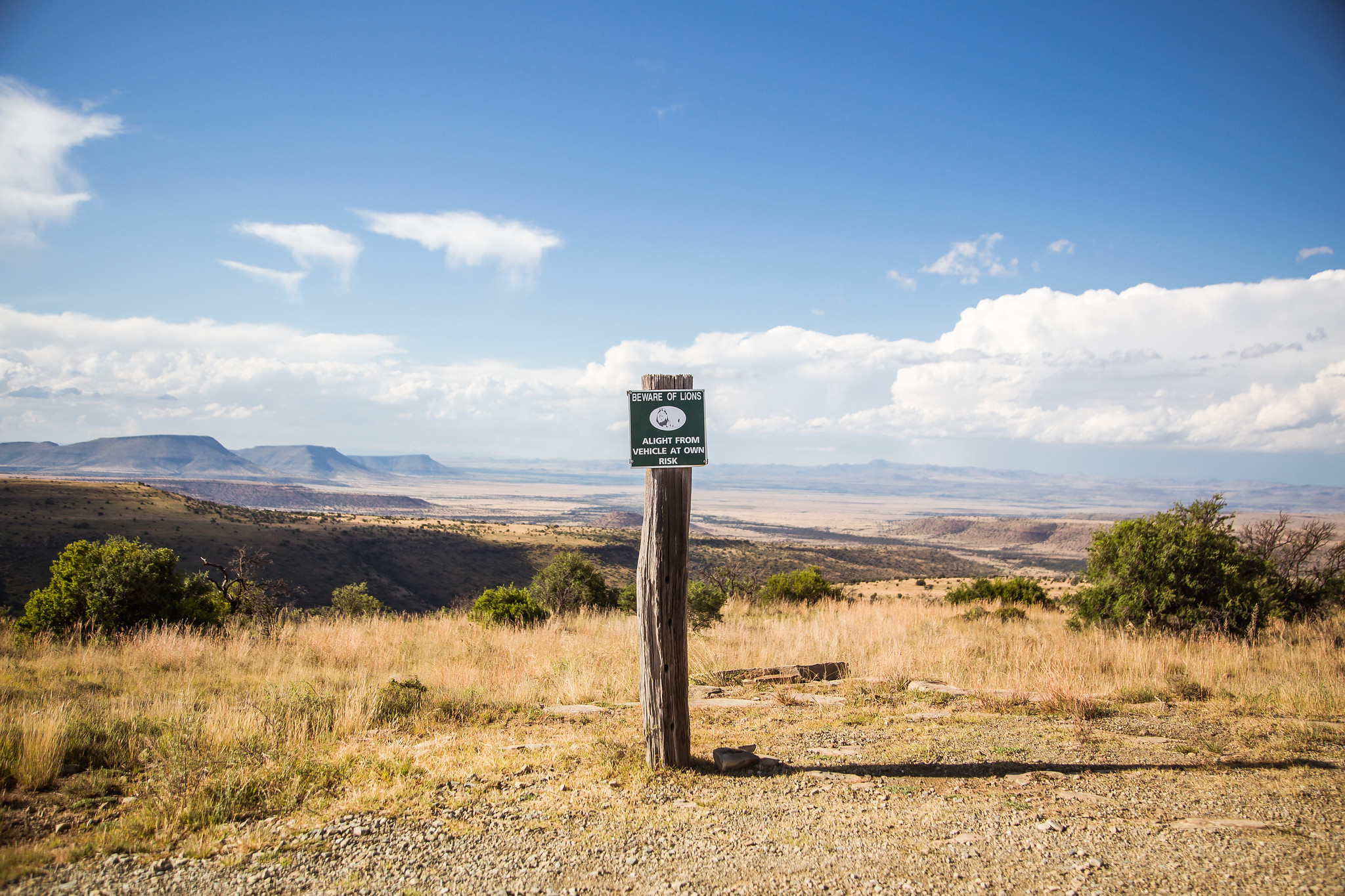
A good deal of the physical risk on a South African family trip is not crime at all. It is the landscape, which is bigger and considerably less fenced than most European visitors are used to.
Viewpoints are the clearest example. On the Panorama Route, spots like God’s Window and the Blyde River Canyon have low walls or none at all, with long drops immediately behind them. Hold onto small children properly, and skip a viewpoint altogether if the mist is in, because you will see nothing and the paths turn slippery. The same goes for the whale-watching cliff path at Hermanus, which is unfenced in stretches. Keep children on the inside and you can walk it happily for hours between roughly June and December, with southern right whales close enough below to hear.
In the Drakensberg the hazard is weather rather than height. Mountain conditions turn fast, mist comes down with little warning and summer afternoons bring thunderstorms. Tell someone your route before you set off, carry layers even in January, and turn back early rather than late.
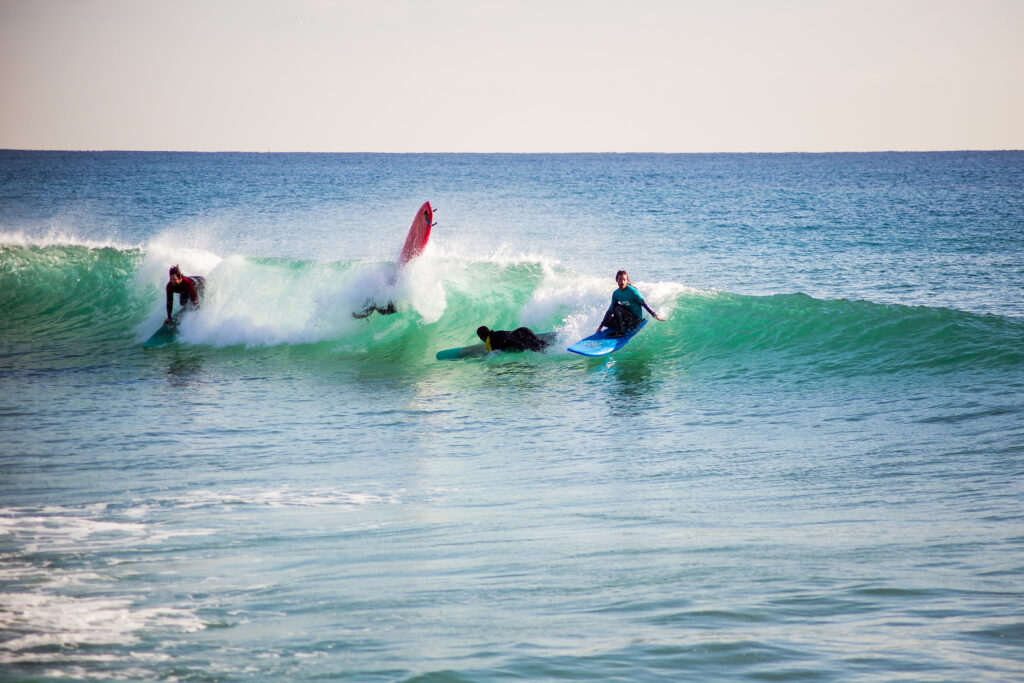
The coast is gentler but has rules of its own. Rip currents are the real hazard on most beaches. Swim where there are lifeguards and swim between the flags. Blue Flag status is a reliable shortcut to well-managed beaches, and tidal pools are dotted along both coastlines and ideal for younger swimmers. For a day by the sea with no swimming involved at all, the penguin colony at Stony Point in Betty’s Bay is boardwalks the whole way round and a fraction of the crowds of the better-known colony.
Water temperature varies more than people realise. The Atlantic side of the Cape is beautiful and around 12 to 15 degrees, cold enough that children last minutes rather than hours. The False Bay side is considerably warmer. Up on the KwaZulu-Natal coast, the villages north and south of Durban have genuinely warm Indian Ocean swimming, and the main beaches there are protected by shark nets and monitored by lifeguards.
On the Cape beaches, shark spotters use a flag system to signal conditions. Take notice of what the flags say and ask a lifeguard if you are unsure. Watch out for bluebottles too, which wash up in numbers after an onshore wind and sting sharply.
If something does go wrong
Save these before you land:
- 112 from any mobile, the general emergency number
- 10111 for police
- 10177 for ambulance
Keep a photo of everyone’s passport on your phone and a copy in your email. Note your insurance policy number somewhere you can reach without a laptop.
If you are ever confronted, hand over the phone or the bag immediately and without argument. Possessions are replaceable, and every South African will give you exactly the same advice.
One more practicality: load shedding, the scheduled power cuts that still affect parts of the country. Most accommodation has a backup system, but ask when you book, and a head torch in the bag is never wasted.
Our honest view
South Africa is not a country you need to brace yourself for. It is a country you arrive in with your eyes open, which is a different thing entirely, and the adjustment takes about two days.
What families get in return is enormous, and far more of it sits off the obvious route than most first-time visitors expect. Whales close enough to hear from a cliff path. Penguins on a boardwalk. Ostriches in Oudtshoorn and trout streams at Dullstroom. Craft studios and cheese farms strung along the Midlands Meander, with the Nelson Mandela Capture Site waiting quietly at the end of it. Fossils in a Karoo riverbed and a sky over Sutherland so dark that children see the Milky Way properly for the first time. Eleven official languages, and nobody finding that remarkable.
Children notice all of it, and more sharply than adults do. Giving them somewhere to put those observations, whether that is a journal, a pocket full of shells or a page of scribbled animal names, is how a trip becomes something they still hold years later.
Take note of the little things, celebrate the big things. South Africa hands children plenty of both.
If you are still shaping the trip, our complete family travel guide to South Africa covers routes and itineraries, and our ten favourite family destinations is a good place to find somewhere less obvious. When you reach the suitcase stage, how to pack smart when travelling with kids in South Africa will save you a few arguments.
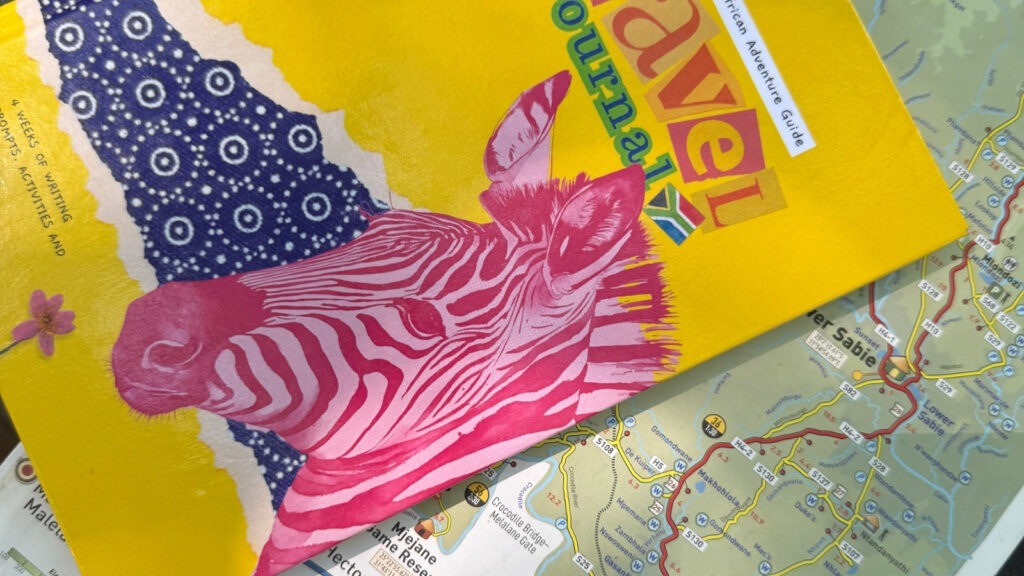
And to help children hold onto what they see, our South African Travel Journal gives them somewhere to gather the animals, the words and the small discoveries as the trip happens. There are more ideas on our Kids Travel Resources page.