Category: South Africa

  • What to Write in a Travel Journal: 20 Prompts Kids Can Use Again and Again

    What to Write in a Travel Journal: 20 Prompts Kids Can Use Again and Again

    Hand a child a blank journal at the end of a long travelling day and watch what happens. They stare at the page, write “today was fun”, and close it.

    It is not that they have nothing to say. It is that “write about your day” is far too big a question, and a blank page is intimidating at any age.

    The usual fix is a spotting list: find a dung beetle, find a padstal, tick them off. That works for about three days, and then it is finished. You cannot find your first padstal twice.

    What lasts is a different kind of question, and there are twenty of them below.


    Why the same question works again and again

    Ask a child “what could you hear when everyone stopped talking?” on a game drive at six in the morning and you get lions calling, doves, a hyena somewhere, people whispering.

    Ask exactly the same question four days later on a beach and you get surf, wind, gulls, kids shouting in the distance. Ask it on a mountain path and you get almost nothing at all, which is its own answer.

    One question, three completely different days, and a child who has started comparing them without being told to. That is the whole trick. Questions about the senses never run out, because the senses meet something new everywhere you take them.

    They also work for any age. A seven-year-old answers “what did today smell like?” in three words and a twelve-year-old writes a paragraph, and both of them have properly noticed something.

    What to Write in a Travel Journal: 20 Prompts Kids Can Use Again and Again

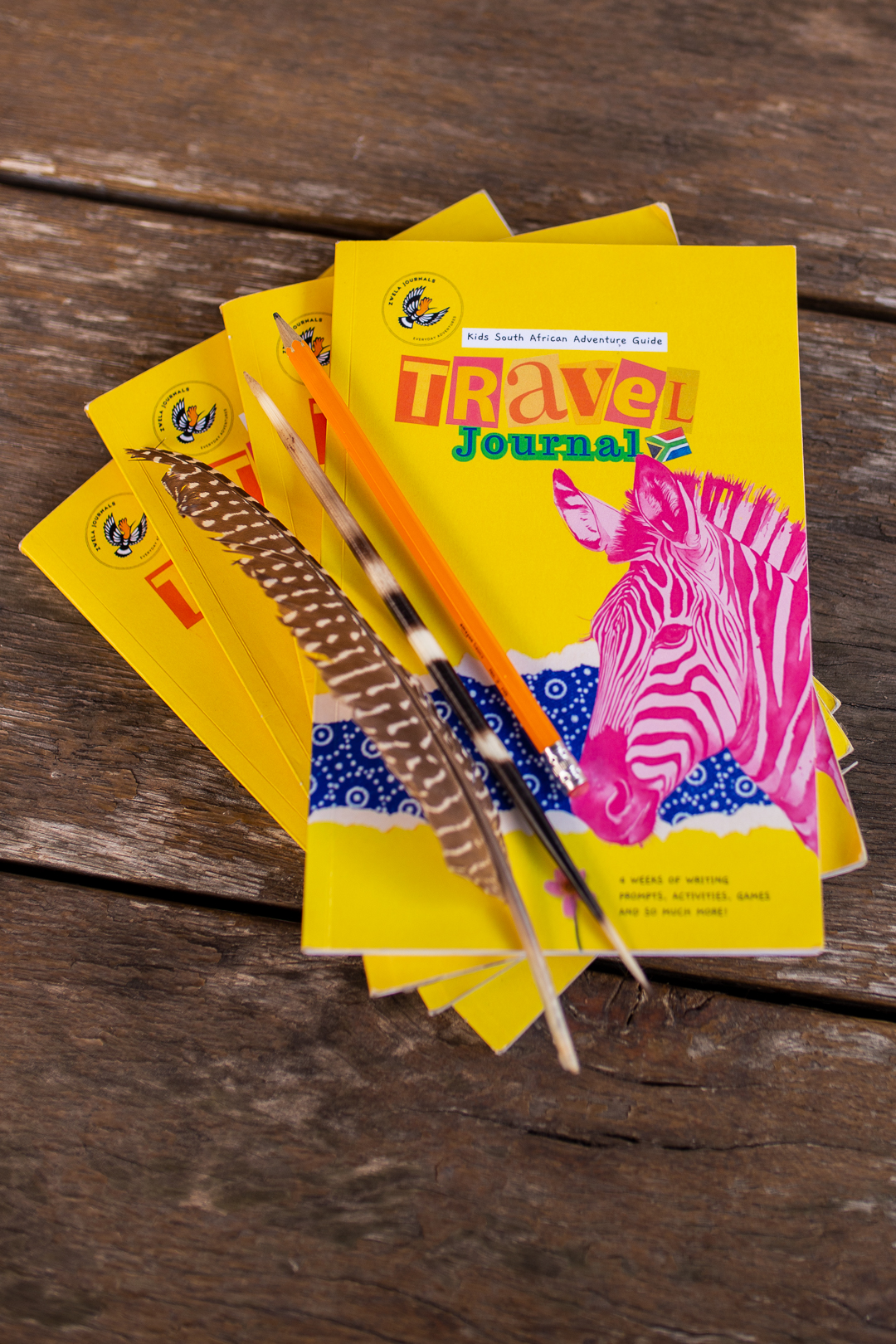
    Each one comes with the sort of answer it tends to produce in South Africa, though that is only a hint. The point is that they work anywhere you go. Head to our Kids Travel Resources section to download a list of 30 questions in printable format, that you can print and tuck into their journal… and grab a Zwela Journal while you are at it, its these kind of prompts that make our journals stand out from the rest!

    1. What could you hear when everyone stopped talking? The best question on this list. Lions before dawn, surf, wind in a fever tree, absolutely nothing.
    2. What did today smell like? Dust after rain, woodsmoke from a braai, salt, sun cream, hot tar.
    3. What was the smallest living thing you saw? A dung beetle, an ant lion pit, a gecko on a wall, a beetle in the tent.
    4. What was the furthest thing you could see? A mountain nobody could name, a storm coming across the Karoo, a ship.
    5. What colour was the ground today? It genuinely changes: red, grey, gold, white sand, black rock.
    6. What woke you up? A bird you could not identify, the person next door, a baboon on the roof, an alarm at half past four.
    7. Something you touched that you have never touched before. Kelp, an elephant footprint, a thorn, water far colder than expected.
    8. Was today hot, cold, wet, dusty, or all four? On a South African road trip it is often all four before lunch.
    9. Something you tasted for the first time, and an honest verdict. Biltong, rooibos, a koeksister, something on the braai nobody could name.
    10. What was moving that nobody else noticed? Trains children to look rather than be shown.
    11. A word you heard today that you did not understand. Write it down the way it sounded, then find out what it means.
    12. What was the loudest thing today? Often not what anyone expects.
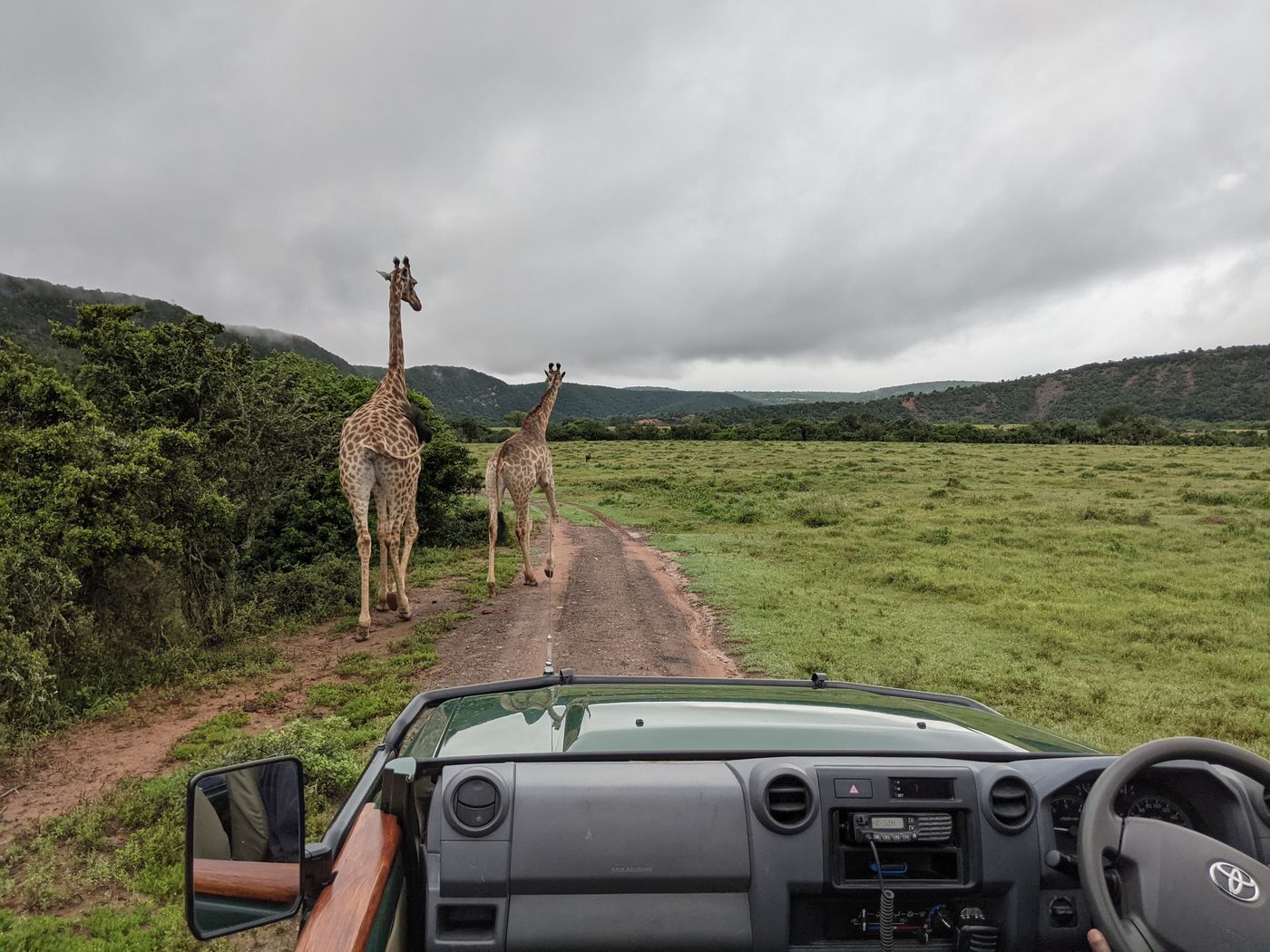
    13. Draw one thing exactly the size it looked from where you were standing. A giraffe from fifty metres is smaller than children think, and they enjoy being wrong about it.
    14. What did the water feel like? Two oceans, a tidal pool, a hotel pool, a river. All different, all worth recording.
    15. What surprised you today? The one that produces the answers you never see coming.
    16. What was the best five minutes of today? Better than asking about the best day, because five minutes is a real memory rather than a summary.
    17. Who did you meet, and what did they tell you? Guides, the person who filled the car, a child on a beach.
    18. What would you tell someone at home about first? Reveals what actually landed, which is rarely the expensive part.
    19. What do you want to see again tomorrow? Turns the journal forwards instead of only backwards.
    20. What are you grateful for today? Ask it every single night. It is the one that changes how children look at the whole trip.


    How to use them

    A few things make the difference between something a child uses and something abandoned on day three.

    Ask two or three, not twenty. Pick a couple in the morning so they spend the day gathering answers, and one at night. A list produced at bedtime is a test. A question produced at breakfast is a treasure hunt.

    Repeat them deliberately. The same question in the bush, at the coast and in a city is the point, not a failure of imagination. Comparing the three answers is where the noticing actually happens.

    Let drawings count. A bad sketch of a dung beetle is a perfectly valid answer, and children who cannot yet write fluently should not be shut out of this.

    Do it in the middle of the day. On safari especially, the hot hours between drives are the natural moment. Everyone is sitting down, nothing is happening, and the morning is still fresh.

    Answer them yourself too. Children write far more when the adults are writing as well, and your answers will be different from theirs, which they find fascinating.

    Child writing in a Zwela South African travel journal

    A good question is only half of it

    Here is the part that catches families out. A question tells a child what to notice. It does not tell them where the answer goes.

    A blank notebook does not solve that, because a blank page is exactly the problem we started with. Loose paper gets lost by day four. A note on somebody’s phone is not theirs and will never be read again.

    What children need is somewhere the question has already been asked, so all they have to do is answer it, and somewhere the answers stay in order so that six months later the whole trip is still sitting there in sequence.

    What is inside the South African Travel Journal

    This is the reason we made ours, and it is built around one trip to one country rather than being a general-purpose diary.

    It runs to 126 full-colour pages, for ages seven to twelve, in paperback or hardcover.

    • Maps and dreams. South African maps to plan the journey on, and bucket-list pages that run from Cape Town to Kruger.
    • Guides and discoveries. The landscapes, from beach to bush to mountain, the Big Five and the wildlife beyond it, and pages on the food, the culture and the languages.
    • Prompts and reflection. Four weeks of prompted journal pages with a daily gratitude check-in, and room for drawings, doodles and photographs.
    • Checklists. Wildlife lists made for ticking off from a moving car, which is the bit children reach for first.
    • Games and play. Road-trip games, mazes, code-breaking puzzles, scavenger hunts and colouring pages, for the long drives and the hot afternoons.

    That last part matters more than it sounds. Children will not carry three separate things, and they will not fill in a journal that is only a journal. It has to earn its place in the bag on the days when nobody feels like writing, which is why ours is a travel guide, an activity book and a keepsake at the same time.

    Our honest view

    Children do not forget a trip because it was not memorable. They forget it because nobody gave them a way to hold onto it while it was happening, and an unrecorded holiday compresses very fast into “we saw elephants”.

    Start with three of the questions above. Ask them tomorrow, ask the same three again next week somewhere completely different, and let your child hear how differently they answer.

    Take note of the little things, celebrate the big things. The little things are what the senses catch, and they are almost always the ones children still have years later.

    You can see the whole journal on our South African Travel Journal page.

    If you are still planning the trip itself, our complete family travel guide to South Africa covers the route, our month-by-month guide covers the timing, and safari with kids is where these questions do their best work.

  • Safari with Kids: What to Expect and How to Make the Most of It

    Safari with Kids: What to Expect and How to Make the Most of It

    In our guide to Safari with Kids: What to Expect and How to Make the Most of It, we look at what safari is like in South Africa.

    A safari is the thing children remember for the rest of their lives, and it is also the thing most likely to test them. Long drives, early starts, hours of looking at nothing in particular, and a firm rule about staying in the vehicle.

    None of that is a reason to leave them at home. It just means a safari with children is a slightly different animal to a safari without them, and it repays a bit of thought before you go.

    This is about the experience rather than the destination: what a safari day actually looks like, what ages suit it, how to handle the long gaps between sightings, and what turns a child from a passenger into someone who is genuinely looking.

    What a safari day actually looks like

    The rhythm surprises most first-timers, and it is worth explaining to children in advance so nobody feels ambushed.

    You are woken somewhere between half past four and half past five. Camp gates open between about half past four and six depending on the season, and the first hour after opening is the best of the whole day, so the aim is to be sitting at the gate before it lifts rather than rolling up an hour later. There is coffee and a rusk, and then you are out.

    The morning drive runs two to three hours with children. Longer is a mistake. Back by half past nine or so for a large breakfast, and then the middle of the day belongs to everybody, because it is hot and the animals are lying in the shade.

    The afternoon drive leaves around four, runs until dusk, and usually stops somewhere with a view for a drink and a snack while the sun goes down. Then dinner, and children who have been awake since five fall asleep at the table. That is a good day, not a failed one.

    Two full drives a day is a lot for a small child. There is no rule that says you must do both, and skipping a morning drive to swim instead is a perfectly reasonable decision that will improve everyone’s week.


    What age is a good age?

    There is no single right answer, but there are patterns, and the honest version is more useful than the encouraging one.

    Under four. Difficult, and not because of danger. Three hours strapped in with no getting out and a requirement to be quiet near animals is a lot to ask of a two-year-old. It can be done, and self-driving makes it far more manageable, because you set your own length and can turn round whenever you like.

    Four to six. Workable with shorter drives and low expectations. Elephants and giraffes land beautifully at this age. Anything requiring patience does not.

    Seven to eleven. The sweet spot. Old enough to sit still, look through binoculars, take in facts and hold onto them, and young enough to find all of it genuinely thrilling. If you get to choose when to take them, take them now.

    Twelve and up. Excellent, and this is the age where photography or birding can take hold and turn into something they carry on with at home.

    One practical point that catches families out: many private lodges set minimum ages for shared game drives, commonly six or eight, and some go higher. Most will take younger children if you book a private vehicle, which costs more. National parks have no such limit if you are in your own car, which is a large part of why self-driving suits families with small children.

    The honest problem, and how to solve it

    Here is what the brochures leave out. Between sightings, there can be forty minutes of bush. Then some impala. Then more bush, and more impala.

    Adults are fine with this because the landscape is enough. Children are not, and by the fourth impala the questions start being about lunch. This is the single biggest reason safaris go flat with children, and it is entirely fixable.

    The fix is to stop treating them as passengers. A child who is watching is bored. A child who is looking for something is not, and the difference between those two states is small and easy to create.

    • Give every child their own binoculars. Not one pair between them, which causes more arguments than it solves. They do not need to be good. A light, small pair suits little hands far better than a heavy adult set they cannot hold steady.
    • Put each child in charge of something. One is the bird spotter, one watches the left-hand side, one calls out every time the vehicle crosses a dry riverbed. Rotate it between drives.
    • Use the sightings board. Most rest camps keep a board where visitors pin what they saw and where, and it is the best thing in camp for a child. They can check it before a drive, plan a route around it, and add their own sightings when they get back. It turns the whole day into something with a beginning and an end.
    • Keep a running list. Everything seen, in order, written down as it happens. It settles the “have we seen more than yesterday” question that children love asking.
    • Let them ask the guide directly. Guides are used to it and are usually delighted, and a child who has asked their own question listens to the answer far more closely than one who overheard yours.
    • Give them a Zwela Journal. With checklists and activities, kids can find loads of interesting things to pass the time between animal spotting.


    Self-drive or guided?

    These are genuinely different experiences with children, and the right answer usually involves a bit of both.

    Self-driving gives you control, which with young children is worth a great deal. You go when they are ready, you stop when someone needs the loo, you turn round when the mood has gone, and everyone is warm, contained and behind closed windows. It costs a fraction of a guided drive and it means the family car becomes a small mobile hide with snacks in it.

    It also gives you the picnic sites and the hides, which matter more with children than anyone expects. National parks have designated spots where you are allowed out of the car, some with braai facilities and a kettle, and hides built at waterholes where you can sit quietly and watch things come to drink. For a child who has been stuck in a car for two hours, a hide is a revelation.

    The trade-off is that you will see less. You are driving, so you cannot look properly. You do not have the radio network that guides use to share sightings, you cannot leave the road, and you do not have someone who knows which tree that leopard uses.

    Guided drives flip all of that. A good guide finds things you would drive straight past, explains what you are looking at, and in a private reserve can go off-road to follow something. Open vehicles put you properly in the landscape, and night drives with a spotlight are a completely different world that self-drivers never see.

    The trade-offs are the fixed schedule, the minimum ages, the fact that you cannot leave early, and the cold. An open vehicle at half past five in June is genuinely freezing, whatever the daytime temperature suggests.

    For most families, the best answer is to self-drive most of the trip and book one or two guided drives, ideally including a sunset drive. You get the freedom and the expertise, and the guided drives feel like an event rather than a routine.

    The middle of the day is not wasted time

    Every safari itinerary has a hole in the middle of it, roughly ten in the morning until four in the afternoon, when it is too hot for the animals and therefore too hot for you. Families arrive expecting this to be the boring part. It is usually the part children like best.

    Most national park rest camps have a swimming pool, and a pool after a five o’clock start is worth more than another hour of looking for lions. Many camps also run a junior ranger programme, a proper activity kit that gets children learning to identify tracks, dung, birds and trees, and it holds their attention far longer than you would guess.

    Then there are the hides, which are open all day and cost nothing. Sitting still in a hide for half an hour with binoculars is the closest most children get to actually watching wildlife rather than glimpsing it from a moving car.

    Card games, filling in a Travel journal, the sightings board, the camp shop, a nap. None of it is filler. It is what makes the early starts survivable, and skipping it is the most common mistake families make.

    Elephants gathering at a waterhole on a family safari in South Africa

    What to take in the vehicle

    Small list, and each item earns its place:

    • Binoculars for every child. The single best thing you can hand them.
    • Layers. It can be four degrees at dawn and twenty-eight by ten in the morning. A beanie and gloves in winter are not an overreaction on an open vehicle.
    • A cool box with more snacks and water than you think. Three hours is a long time, and picnic sites are not always where you want them.
    • A change of clothes. Spills, dust and the occasional small disaster.
    • A Zwela journal and pencils. Pencils rather than pens, which leak in the heat and roll under seats.
    • A simple field guide, bird checklist or animal cards so children can find things themselves rather than asking what everything is.
    • An offline park map. Signal inside the parks is patchy to non-existent.
    • Sun cream, hats and sunglasses for the afternoon. The low sun on a game drive burns shoulders and the backs of necks.
    • Wet wipes, for reasons that will become obvious.

    Leave the drone at home. Flying one in a South African national park is illegal, and rangers take a dim view.

    The things nobody warns you about

    A handful of practicalities that catch families out, none of them serious and all of them easier if you know in advance.

    On a guided drive, there are no toilet stops. You get out only where the guide says it is safe, which may be once in three hours. Everybody goes before you leave, including the adults who insist they are fine. Self-driving is the opposite, with picnic sites and camps dotted through the park, which is another quiet argument for doing it yourself with small children.

    Gate times are real. Camps close their gates at a fixed hour and being late means a fine, so build in far more time than the distance suggests. Speed limits inside the parks are low and properly enforced, and on the smaller gravel roads you will average less than thirty kilometres an hour. A fifty-kilometre drive can genuinely take two hours.

    Some drives are blank. You will have a morning where you see almost nothing. That is not bad luck or a bad guide, that is what wild animals are. Say so to children beforehand and the blank drive stops being a disappointment, also you will be never short of birds… sometimes its interesting to just stop the car, open the windows and see what you can spot with binoculars… even in winter, it can be surprising what may be hiding in an otherwise “empty” patch of bush!

    Good sightings get crowded. A leopard in a popular park can gather fifteen cars. It is worth telling children why everyone is being patient and quiet.

    Three or four days is plenty. Safari fatigue is real, and it arrives faster in children. Two or three nights in the bush, then something completely different, works far better than a week of game drives. Nobody regrets leaving while they still want more.

    Teaching them to look properly

    The Big Five is a useful hook and a terrible way to spend a week. Chasing five animals makes everything else feel like filler, which is exactly backwards.

    The children who love safari most are the ones who learn to read the place rather than tick it off, and that is easier to teach than it sounds.

    Show them tracks in the sand at the edge of the road and let them decide what came past in the night. Point out the oxpeckers riding on a buffalo and ask why the buffalo puts up with it. Listen for the alarm calls of monkeys and francolins, which tell you a predator is somewhere nearby long before you see it. Look up when a vulture circles.

    Then there are the Little Five, which every guide knows and most visitors have never heard of: the elephant shrew, the ant lion, the rhino beetle, the buffalo weaver and the leopard tortoise. Finding all five is much harder than finding the Big Five, and children adore the fact that the grown-ups will probably lose. Add to that the Shy Five, the Ugly Five… and you have a much more fun spotting list… what 5 would you make?

    Birds are the other secret. South Africa has hundreds of species and there is always one in view, which means there is never truly nothing to see. A child who has decided to find a lilac-breasted roller has something to look for over the entire drive.

    Holding onto it afterwards

    Safari produces more than children can hold. Three days in, the individual sightings blur, and by the time they are home the whole thing has compressed into “we saw elephants”.

    The middle of the day is what saves that. It is the natural moment to write down what happened that morning while it is still sharp: what they saw, what it was doing, what the guide said, what the tracks looked like.

    It does not need to be neat or long. A list of animals with a bad drawing next to each one is worth more in ten years than any photograph you take, because it is theirs.


    Our honest view

    Safari with children asks more of you than most holidays. The starts are brutal, the drives are long, and there will be an afternoon when somebody cries about a giraffe.

    It also does something almost nothing else does. Children who have watched a herd of elephants cross a road in front of them, close enough to hear, do not think about animals the same way afterwards. It rearranges something.

    Go with lower expectations than the brochures suggest. Keep the drives short. Give every child a pair of binoculars and something to look for. Let the middle of the day be genuinely lazy, and leave the bush while everyone still wants one more drive. Then let them tell you what they saw, in their own words, before it fades.

    Take note of the little things, celebrate the big things. On safari, the little things are usually the ones they remember.

    Zwela South African Travel Journal and pencils laid out ready for a safari

    Safari with Kids: What to Expect and How to Make the Most of It…

    For when to go, our month-by-month guide explains why the dry winter months give you the best game viewing of the year. Our honest guide to safety with children covers the rules in the vehicle and around camp, and if you are heading for the best-known park, our five favourite family camps in Kruger is the place to start. For the wider trip, try our complete family travel guide to South Africa.

    And to give children somewhere to gather the animals, the tracks and the small discoveries while they are still fresh, our South African Travel Journal is built for exactly that. There are more ideas on our Kids Travel Resources page.

  • The Best Time to Visit South Africa with Kids

    The Best Time to Visit South Africa with Kids

    There is no bad time to visit South Africa with children. There are only trade-offs, and once you know what they are, choosing your month becomes straightforward.

    The country runs several climates at once. While Cape Town is having a wet winter, the bush up north is having its finest game-viewing weeks of the year and the Durban coast is warm enough to swim. That sounds complicated, and it is actually the opposite: it means whenever you can travel, somewhere in South Africa is at its best.

    What follows is what each season genuinely feels like with children in tow, a month-by-month view, and how to time a trip around wildlife rather than weather.

    The short answer, if you want one

    April to May and September to October are the sweet spots for most families. You get mild days, thin crowds, good rates and, in the bush, some of the best wildlife viewing of the year. If someone made you pick a single month, take April.

    If beaches are the whole point of the trip, come between December and March and accept that December is expensive and busy. If safari is the priority, come between May and September. If the budget is the deciding factor, come in winter.

    One thing worth knowing before you go further, because it changes family travel completely: there is no jet lag. South Africa sits on the same time band as most of Europe, an hour or two ahead of the UK depending on the season. Overnight flights land in the morning and children step off ready for breakfast rather than three days of chaos. Very few long-haul destinations offer that.

    One country, several climates

    The seasons are flipped from the northern hemisphere. Summer runs December to February, autumn March to May, winter June to August and spring September to November. Christmas is a beach holiday here.

    Beyond that, the country does not have one climate, it has about four, and they do not line up:

    • The Cape has a Mediterranean pattern: dry, hot summers and wet, cool winters. Rain falls in June and July.
    • The bush and the northern half are the exact reverse: rain falls in summer as afternoon thunderstorms, and winter is bone dry.
    • The KwaZulu-Natal coast is subtropical, humid in summer and mild and dry in winter, when the sea is still warm enough to swim.
    • The interior, the Karoo and the Drakensberg swing hard between hot days and genuinely cold nights, in some places with frost and snow.

    This is why “when should we go” has no single answer, and why a trip that combines two regions can hand you two different seasons in a fortnight.


    Summer, December to February

    Long, hot, bright days and the sun up until nearly nine in the evening, which is a gift when you have children who wake early and want to swim after supper.

    This is the Cape at its best for beach days, with warm, dry weather and everything open. The catch is wind. The south-easter blows hard through high summer and can flatten a beach plan without warning, so keep a wind-sheltered alternative in your back pocket and check the forecast the night before rather than the week before.

    December into mid-January is also when the entire country goes on holiday. Coastal towns fill up, accommodation prices climb steeply and popular restaurants need booking. Come in February instead and you get nearly identical weather with a fraction of the crowds and considerably better rates.

    Up in the bush, summer is hot and humid with dramatic afternoon storms. The bush is thick and green, which makes animals harder to spot, but it is also when the baby animals arrive and the migrant birds are back. It is the more beautiful season and the harder one for game viewing.


    Autumn, March to May

    Ask South Africans when to visit and a lot of them will say autumn.

    The summer wind drops, the light turns golden, the sea is still warm from summer and the crowds have gone home. March and April in the Cape are close to perfect for families: warm enough for the beach, cool enough to walk up things, and calm enough to actually enjoy a meal outside.

    In the bush, autumn is the turn. The rains ease off, the grass starts thinning and the animals become steadily easier to find. By May the dry season is properly underway and game viewing is very good indeed, without the winter cold snap on early morning drives.

    Prices sit at their most reasonable outside the Easter fortnight, which is a South African school holiday and does get busy. Work around it and autumn is arguably the best value of the year.

    Winter, June to August

    Winter splits the country neatly in half, and this is where families often make the wrong assumption.

    The Cape is wet. Not endlessly, but June and July bring genuine storms, and a fortnight in Cape Town in July is a gamble. What you get in exchange is a green, dramatic, half-empty city at the lowest prices of the year, with fires lit, whales arriving and mountains under cloud. Some people prefer it enormously.

    Meanwhile the bush is having its finest hour. The vegetation has died back, the waterholes have shrunk, and animals gather where the water is. This is the best game viewing of the year, by a wide margin, and it is also when malaria risk in the Lowveld is at its lowest. Pack properly for it: days are mild and pleasant, but a game drive leaving at half past five in June is genuinely cold, and lodges hand out blankets for a reason.

    The other winter answer is the KwaZulu-Natal coast, which barely notices the season. The villages north and south of Durban stay mild and dry, and the sea holds around twenty-one degrees, warmer than the Cape manages in February.


    Spring, September to November

    Spring is the season that gets overlooked, and for families it may be the most rewarding of the lot.

    September and October bring warming days, settled weather and, on the West Coast and up into Namaqualand, one of the strangest sights in the natural world: hundreds of kilometres of dry scrub erupting into carpets of wildflowers for a few short weeks. It is entirely weather-dependent and impossible to book in advance, which is part of the appeal.

    The whales are at their peak too. Southern right whales come in close along the Cape coast to calve, and from a cliff path at Hermanus you can watch them without a boat, a wetsuit or a single rand spent.

    In the bush, the dry season holds through September before the first rains arrive in October and November. Late spring brings the newborns, the migrant birds and greening grass, with viewing still good before the vegetation thickens up.

    Crowds stay light apart from the short school holiday around late September, and rates stay reasonable right up until December.

    A month-by-month view

    If you are timing it around wildlife

    Weather is the usual way to choose a month. Wildlife is the better one, because most of it only happens in a window, and children remember the animal far longer than they remember the sunshine.

    • Whales, June to December. Southern right whales along the Cape coast, peaking in September and October, and watchable from land.
    • Wildflowers, August to September. The West Coast and Namaqualand, weather-dependent and worth chasing.
    • The sardine run, June and July. Millions of fish moving up the KwaZulu-Natal coast, pursued by everything that eats them.
    • Turtle nesting, November to February. Loggerheads and leatherbacks on the northern KwaZulu-Natal beaches, with hatchlings following into March.
    • Newborn animals, November to January. The rains bring the calving season, and the bush fills with wobbly legs.
    • Best general game viewing, May to September. Thin bush, thirsty animals, short odds.

    Birds gathering at a waterhole at sunset in South Africa

    School holidays, crowds and cost

    South African school holidays matter more to your trip than the weather does, because they decide whether you are sharing the beach with the whole country.

    There are four, and the dates shift a little each year, so check before you commit:

    • Mid-December to mid-January. The big one. Coastal towns are full, prices peak and popular places book out months ahead.
    • Around Easter. Roughly a fortnight, busy but manageable.
    • Late June into July. The winter break, which is when the bush gets busy rather than the coast.
    • Late September into early October. Short and much gentler.

    Northern hemisphere school holidays add their own pressure in July and August, which lands squarely on the safari lodges. If your own school calendar ties you to summer, aim for the Cape and the coast rather than the bush, or book the bush a long way ahead.

    The genuine bargains sit in May and November, the two months either side of the busy blocks, when the weather is still good almost everywhere and nobody else has worked it out.

    Our honest view

    Most families overthink this. South Africa is generous with its weather, and the difference between a good month and a slightly better one is far smaller than the difference between rushing a trip and giving it room to breathe.

    If you have a free choice, go in April or in October. If you do not, go anyway, and shape the trip around what that season does well. Come in July and put the bush at the centre of it. Come in December and build it around water. Come in September and go and find the whales.

    What children remember is rarely the temperature. It is the morning the mist lifted off a waterhole, the afternoon the wind was too strong to swim so everyone ate chips in the car instead, the first time they saw a whale roll over from a cliff path. Those things happen in every month of the year.

    Take note of the little things, celebrate the big things. South Africa hands children plenty of both, whenever you arrive.

    The Best Time to Visit South Africa with Kids…

    Once you have picked your season, our complete family travel guide to South Africa will help you shape the route, and our honest guide to travelling safely with children covers the practical side. For somewhere to actually go, try our ten favourite family destinations, and when the suitcase comes out, how to pack smart when travelling with kids in South Africa is worth five minutes.

    And to help children hold onto the season they travelled in, our South African Travel Journal gives them somewhere to gather the animals, the weather and the small discoveries as they happen. There are more ideas on our Kids Travel Resources page.

  • Is South Africa Safe for Families? A Parent’s Guide

    Is South Africa Safe for Families? A Parent’s Guide

    Is South Africa safe for families? It is almost always the first question parents ask, usually before anyone has looked at a single itinerary, and it deserves a straight answer rather than a comforting one.

    The short version is yes, with conditions. South Africa has a real crime problem and pretending otherwise helps nobody. It also has excellent private healthcare, good main roads, a mature tourism industry and a set of family experiences that very few countries can match. Both things are true at the same time.

    What separates a stressful trip from a wonderful one is rarely luck. It is a handful of decisions made before you arrive, and a few habits that become automatic within about two days on the ground.

    Is South Africa Safe for Families? A Parent’s Guide

    The short answer, and what it actually depends on

    The crime that makes international headlines is heavily concentrated in specific areas that visitors have no reason to go to. Family itineraries do not naturally pass through them.

    Where families do run into trouble, it is almost always one of three things: driving somewhere they should not have driven, leaving something visible in a car, or walking somewhere after dark that a local would not have walked. All three are avoidable, and none of them require you to travel nervously.

    It is also worth knowing that the picture varies enormously by city. In Cape Town’s coastal suburbs, walking to dinner is completely normal and you will see other families doing it. In Johannesburg, most people take an Uber everywhere and simply do not walk between places, and visitors are wise to do the same. Neither fact should put you off either city. They just call for different habits.

    Driving is where most of the risk sits

    Self-driving is the best way to see South Africa with children, and the main roads are genuinely good. The risk is not the driving itself. It is a small number of specific situations, and they are well documented.

    • Smash-and-grab is the most common incident tourists meet. Keep windows up and doors locked in traffic. Put every bag in the boot before you set off, never at a traffic light. A phone on the passenger seat is the single most reported cause.
    • Do not blindly follow your satnav. This is the advice locals repeat most often. The fastest route is not always the safest one, and navigation apps will happily route you through areas no local would drive through. Sense-check the route before you set off, and if a road looks wrong, it probably is.
    • Do not stop for strangers. Feigned breakdowns and objects thrown at cars are known tactics. If someone flags you down, drive to a petrol station and call for help from there.
    • Arrive before dark. The most useful rule in the whole guide, and it happens to suit tired children as well.
    • Ask your car hire company or accommodation about the airport run. Some specific airport approach roads have a poor reputation and your host will name them without hesitation.

    Petrol stations are all attended, so you stay in the car while someone fills up, checks your tyres and takes a card payment. It is one of the small pleasures of driving here.

    Rural distances deserve their own mention. On a Karoo run, petrol stations can be a very long way apart and phone signal disappears for stretches, so fill up whenever you pass one and tell your accommodation roughly when to expect you. The same caution applies to the mountain roads on the Panorama Route up towards Kruger. Allow far more time than the map suggests, because you will want to stop at Bourke’s Luck Potholes and the waterfalls around Sabie and Graskop, and rushing a mountain pass in fading light is exactly what you are trying to avoid.

    Family self-driving safely in South Africa and stopping at a roadside farm stall

    If you are not comfortable driving, do not drive

    This is worth saying plainly, because a lot of families force themselves into a hire car on a first trip and spend the holiday tense.

    You do not have to. Almost every guesthouse, hotel and lodge can arrange a private transfer or put you in touch with a driver they use regularly, and the rates are far more reasonable than most European visitors expect. For a first trip, hiring a driver for the longer legs and self-driving only the easy scenic stretches is an excellent compromise.

    In the cities, Uber and Bolt both work well, they are inexpensive, and using them is exactly what locals do. For longer routes, a small guided road trip with a reputable operator takes the navigation question off the table entirely and usually comes with someone who knows which viewpoint is worth stopping at.

    Whichever way you go, check reviews properly rather than glancing at a star rating. Read the recent ones, read the negative ones, and look for operators with a real trading history and a proper booking process. Check too that the version of an activity you are booking actually suits your children’s ages. The Cango Caves near Oudtshoorn are a good example: the standard heritage tour is easy and fascinating, while the adventure tour involves genuinely tight squeezes that are no fun at all for a young or claustrophobic child.

    Choosing where to stay, and asking when you are unsure

    Where you stay does more for your family’s safety than anything else on the planning list.

    Look for secure off-street parking rather than kerbside, especially with a car full of luggage. Look for places that are well lit and in areas where other people are out in the evening. Read the reviews with an eye for how guests describe walking around at night, because travellers are usually candid about it.

    Then use the best safety resource you have, which is the people who live there. Ask your host directly which streets are fine to walk and which are not, whether it is sensible to walk to that restaurant or better to take an Uber, and where to park at the beach. South Africans are refreshingly straightforward about this and will tell you plainly rather than worrying about scaring you off. Ask every time you arrive somewhere new.

    Blend in, and keep it low key

    The most repeated piece of local advice is the simplest: do not advertise that you are a tourist.

    That means no camera slung around your neck, no over-ear headphones while walking, and phones in pockets rather than in hands. Leave good jewellery at home. Carry one card and a little cash rather than everything you own. Use ATMs inside shopping centres, and never accept help from a stranger at a cash machine, however friendly.

    None of this is unique to South Africa. It is the same behaviour that serves you well in Barcelona or Rome, applied a bit more consistently. Children pick it up quickly and, handled lightly, it does not make them anxious.

    Health, water and mosquitoes

    Tap water is safe to drink in the major cities and towns. In remote rural areas, bottled water is the sensible default.

    Private healthcare is excellent, with good private hospitals in every major city. Comprehensive travel insurance is essential, because private care is not free and you will want the option of using it without thinking about the bill.

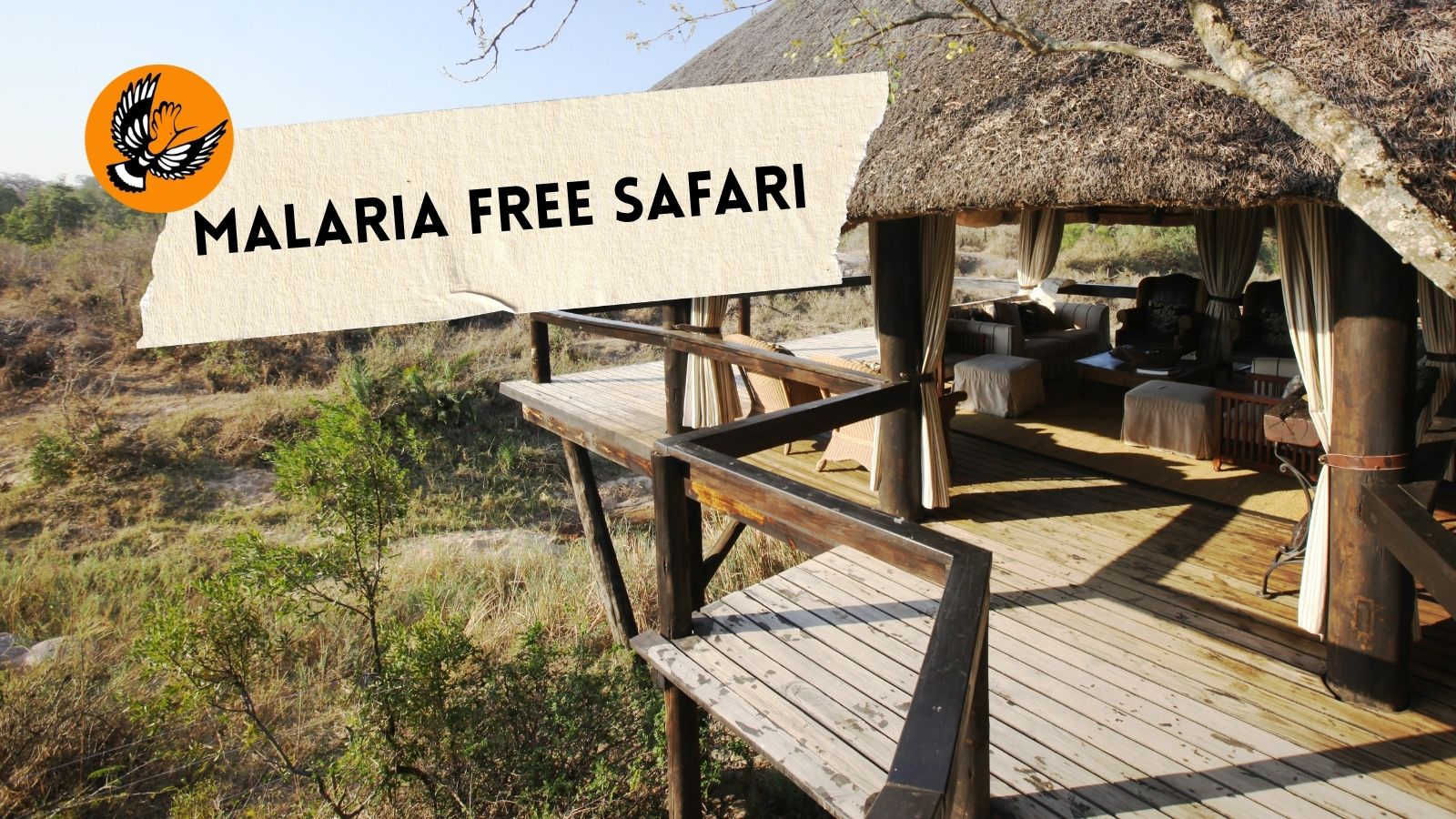
    Malaria worries most parents, and the answer is simpler than it sounds. Large parts of the country are entirely malaria-free, including the whole of the Cape, the Karoo, the Eastern Cape reserves, the Waterberg, Pilanesberg and Madikwe. If you would rather not have antimalarials in the picture at all, there is no shortage of choice.

    The Lowveld around Kruger is a malaria area with seasonal variation, so speak to a travel clinic well ahead if you are heading that way. Either way, pack a good repellent and long sleeves for evenings.

    The sun is stronger than northern visitors expect. High-factor sun cream, hats and proper shade in the middle of the day matter more here than they do at home.

    Safety on safari

    Safari is often the part parents feel least certain about, and it is genuinely among the safest and most rewarding things you will do.

    The rules are few and not negotiable. Stay in the vehicle unless a guide says otherwise. Arms and heads inside, nobody standing up, voices low near animals, and out of the car only at designated viewpoints and rest camps.

    Guided drives are excellent with children because someone else is watching the road, the animals and your family all at once, which means you actually get to look. Many lodges run shorter drives for younger children and plenty have minimum age limits, so check before booking.

    At rest camps, keep food inside and zipped away. Monkeys and baboons are clever, persistent and entirely uninterested in your feelings on the matter. Never feed them, and make sure children know not to either.

    Wildlife warning sign in a South African national park

    Cliff paths, mountains and water

    A good deal of the physical risk on a South African family trip is not crime at all. It is the landscape, which is bigger and considerably less fenced than most European visitors are used to.

    Viewpoints are the clearest example. On the Panorama Route, spots like God’s Window and the Blyde River Canyon have low walls or none at all, with long drops immediately behind them. Hold onto small children properly, and skip a viewpoint altogether if the mist is in, because you will see nothing and the paths turn slippery. The same goes for the whale-watching cliff path at Hermanus, which is unfenced in stretches. Keep children on the inside and you can walk it happily for hours between roughly June and December, with southern right whales close enough below to hear.

    In the Drakensberg the hazard is weather rather than height. Mountain conditions turn fast, mist comes down with little warning and summer afternoons bring thunderstorms. Tell someone your route before you set off, carry layers even in January, and turn back early rather than late.

    The coast is gentler but has rules of its own. Rip currents are the real hazard on most beaches. Swim where there are lifeguards and swim between the flags. Blue Flag status is a reliable shortcut to well-managed beaches, and tidal pools are dotted along both coastlines and ideal for younger swimmers. For a day by the sea with no swimming involved at all, the penguin colony at Stony Point in Betty’s Bay is boardwalks the whole way round and a fraction of the crowds of the better-known colony.

    Water temperature varies more than people realise. The Atlantic side of the Cape is beautiful and around 12 to 15 degrees, cold enough that children last minutes rather than hours. The False Bay side is considerably warmer. Up on the KwaZulu-Natal coast, the villages north and south of Durban have genuinely warm Indian Ocean swimming, and the main beaches there are protected by shark nets and monitored by lifeguards.

    On the Cape beaches, shark spotters use a flag system to signal conditions. Take notice of what the flags say and ask a lifeguard if you are unsure. Watch out for bluebottles too, which wash up in numbers after an onshore wind and sting sharply.

    Children swimming safely at a South African beach

    If something does go wrong

    Save these before you land:

    • 112 from any mobile, the general emergency number
    • 10111 for police
    • 10177 for ambulance

    Keep a photo of everyone’s passport on your phone and a copy in your email. Note your insurance policy number somewhere you can reach without a laptop.

    If you are ever confronted, hand over the phone or the bag immediately and without argument. Possessions are replaceable, and every South African will give you exactly the same advice.

    One more practicality: load shedding, the scheduled power cuts that still affect parts of the country. Most accommodation has a backup system, but ask when you book, and a head torch in the bag is never wasted.

    Our honest view

    South Africa is not a country you need to brace yourself for. It is a country you arrive in with your eyes open, which is a different thing entirely, and the adjustment takes about two days.

    What families get in return is enormous, and far more of it sits off the obvious route than most first-time visitors expect. Whales close enough to hear from a cliff path. Penguins on a boardwalk. Ostriches in Oudtshoorn and trout streams at Dullstroom. Craft studios and cheese farms strung along the Midlands Meander, with the Nelson Mandela Capture Site waiting quietly at the end of it. Fossils in a Karoo riverbed and a sky over Sutherland so dark that children see the Milky Way properly for the first time. Eleven official languages, and nobody finding that remarkable.

    Children notice all of it, and more sharply than adults do. Giving them somewhere to put those observations, whether that is a journal, a pocket full of shells or a page of scribbled animal names, is how a trip becomes something they still hold years later.

    Take note of the little things, celebrate the big things. South Africa hands children plenty of both.

    If you are still shaping the trip, our complete family travel guide to South Africa covers routes and itineraries, and our ten favourite family destinations is a good place to find somewhere less obvious. When you reach the suitcase stage, how to pack smart when travelling with kids in South Africa will save you a few arguments.

    And to help children hold onto what they see, our South African Travel Journal gives them somewhere to gather the animals, the words and the small discoveries as the trip happens. There are more ideas on our Kids Travel Resources page.

  • Complete Family Travel Guide to South Africa

    Complete Family Travel Guide to South Africa

    Planning a family trip to South Africa can feel huge at first, but that is exactly why it is such a rewarding destination. South Africa is one of the best places in the world for families who want a mix of beach days, mountain views, wildlife, road trips, and small-town charm.

    From Cape Town to the Garden Route and the safari regions, South Africa gives you a huge range of experiences in one trip. Whether your family loves adventure, wildlife, or slow, scenic travel, there is a route here that works beautifully.

    In this guide, we look at the best places to stay, how to split your itinerary, and where to stop along the way so your family trip feels exciting without becoming exhausting.

    Choosing the right base in Cape Town

    For families, Cape Town is one of the easiest cities to enjoy with children because it combines beaches, outdoor activities, and easy access to nature. The best area to stay depends on your travel style.

    If you want a beachy holiday, Camps Bay or Muizenberg are great options. If you want something central and more practical, Green Point or the Waterfront area is convenient for transport and restaurants. Families who want a quieter, leafy base may prefer Constantia or the suburbs closer to the mountains.

    For many families, a Cape Town stay of 3 to 5 nights is a perfect start, especially if you want time for a beach day, a mountain outing, and a relaxed city break before heading out on the Garden Route or safari route.

    Road trip through South Africa with family

    The Garden Route: where to stop and what to enjoy

    The Garden Route is one of the most popular family road trips in South Africa, and for good reason. It combines forests, beaches, lagoons, mountain roads, and charming towns, making it ideal for families who want a scenic and relaxed journey.

    Some of the best stops include Knysna, Wilderness, and Plettenberg Bay. These towns are wonderful places to break up a drive and spend a night or two. Knysna is a great base for families who want a classic Garden Route atmosphere, while Wilderness is a lovely stop for nature, beaches, and easy walking routes. Plettenberg Bay is perfect for families who want a more beach-focused stop with a relaxed coastal feel.

    On the way, one of the best things to do is stop at a padstal or farm stall. These are little roadside gems where you can sample local treats, stock up on fresh fruit, homemade jams, baked goods, and country-style food. They are small, personal, and often some of the most memorable stops on a South African road trip.

    These little stops add so much personality to a family trip. They slow the journey down, give children a chance to stretch their legs, and introduce the family to the flavours and atmosphere of the region in a way that a big supermarket never could.

    South Africa road trip food and farm stall stop

    How long does the drive take?

    One of the most useful things to know when planning your route is the travel time between the major stops. Cape Town to Knysna is roughly 5 to 6 hours by road, depending on how often you stop. The drive to Wilderness or Plettenberg Bay takes a bit longer, and a trip all the way to Addo is much longer still.

    That is why many families break up the route with an overnight stop in Knysna, Wilderness, or Plettenberg Bay. It makes the journey far more manageable and gives you a chance to enjoy the Garden Route properly instead of rushing through it.

    If you are travelling from Cape Town to Addo, a full-day drive is possible, but it is usually more enjoyable to break it up. This is one of the best ways to travel with children without causing long, exhausting driving days.

    Where to go beyond the obvious tourist stops

    South Africa is full of places that feel more personal and less crowded than the most famous destinations. If you want a more local, less touristy feel, consider some of the smaller parks and reserves.

    For example, Mountain Zebra National Park is a lovely option for families who want a smaller park experience and a slightly different wildlife feel. It is known for fascinating animals such as the aardvark and aardwolf, offering a quieter and more intimate safari feel.

    For families who want a nature-filled adventure stop with a beautiful setting, the 7km paddle to Whiskey Creek Cabins up the Keurbooms River is a fantastic option. It is a great reminder that South Africa is not only about big national parks; it is also about smaller reserves, scenic river routes, and peaceful local escapes.

    South Africa map with family travel route
    Looking for a family-friendly way to document your adventure? Check out our South Africa Travel Journal and browse our Travel Resources for more planning ideas and family travel inspiration.

    Safari choices: Addo, Kruger, and the Eastern Cape

    When it comes to South African safari experiences, there are a few very different ways to do it depending on your priorities, how much time you have, and whether malaria is a concern.

    Addo Elephant Park is one of the best family-friendly safari choices in South Africa because it is a malaria-free area and is particularly well known for its elephants. Families often love Addo because it feels accessible and easy to enjoy without the same level of extra planning as a malaria area.

    Kruger National Park is the classic big five destination. It is a dream for families who want a classic safari experience, but it is a malaria area and is often best for travellers who are happy to plan for it properly. Many families choose Kruger because of the sheer variety of wildlife, the self-drive options, and the fact that family-friendly lodges can take care of much of the logistics.

    You can also choose a lodge inside the park or in one of the private concession areas, where food, game drives, and safari activities are often all arranged for you. For families who want a more relaxed safari trip, this can be a fantastic option. It also allows you to focus on enjoying the experience rather than managing every detail on your own.

    Complete Family Travel Guide to South AfricaFor a shorter trip, some families also choose to fly from Port Elizabeth to Kruger rather than driving, which can save time and help keep the journey more comfortable for children.

    How to build your trip

    A great South Africa family itinerary usually combines a few key experiences rather than trying to do everything. A typical route might look like this:

    • Start in Cape Town for city, beach, and mountain time
    • Drive or travel along the Garden Route with stops in Knysna, Wilderness, and Plettenberg Bay
    • Break up the journey with family-friendly overnight stops
    • Head to Addo for a malaria-free safari and elephant experience
    • Or continue north to Kruger for a more iconic big five safari

    This gives families a mix of landscapes, road-trip charm, and unforgettable wildlife moments without the trip feeling rushed.

    Why it is worth travelling this way

    The best South Africa trips often feel less like a checklist and more like a series of personal moments: a beach picnic, a stop at a farm stall, a wildlife sighting on a sunset drive, a slow lunch in a small seaside town, or a quiet family walk in a nature reserve.

    That is what makes South Africa such a rewarding family destination. It offers not only world-class wildlife and beaches, but also the kind of local, memorable travel experiences that families talk about for years.

    Family safari trip to Addo, South Africa

    For many families, the best experiences are not just the big attractions. They are the small moments in between: a coffee stop, an unexpected wildlife sighting, a scenic drive, and a relaxed evening in a family-friendly lodge or guesthouse.

    South Africa is a destination where the details matter. A little planning goes a long way, and when you build your trip around the right balance of places and pace, it becomes a family adventure that feels both exciting and realistic.

    Looking for a family-friendly way to document your adventure? Check out our South Africa Travel Journal and browse our Travel Resources for more planning ideas and family travel inspiration.