
The adventure, followed by logistics & tips.
Surrounded by endless views, the smell of adventure, and not a person in sight for miles, it is amazing what being out in nature can do. The kids don’t even think to ask for a screen, they are off finding sticks, inventing games, and exploring. These are my favourite kind of days, these travels are my favourite kind of journeys. And this trip had it all. It might sound cheesy, but this was soul food. I find myself dreaming back to this trip often, especially our night in Nxai Pan. And we almost didnt include it due to comments about the road being back, and the drive long.
To say it exceeded expectations is an understatement.

We arrived at the gate of Nxai Pan National Park with a mix of excitement and nerves. After our days in the Khwai region of the Okavango Delta we had properly tested out our 4×4 driving skills on sandy tracks, yet we still felt some trepidation, from comments I had read from previous travellers, the road to Baines Baobabs has a reputation as one of the sandiest in Botswana. But the adventure and the promise of a night under the stars on the edge of the pan was irresistible.
We had booked our campsite nearly a year in advance. In Botswana, the best spots require early planning, especially in high season. And we were right in the middle of it, mid‑August, and kids school holidays. Nxai Pan only has three campsites; Site 1, 2, and 3, we had been allocated Site 2. On arrival at the park entrance, we received a brief orientation: take all your rubbish with you, leave the site as you found it, and respect the bush. This little chat just got us even more excited!!!
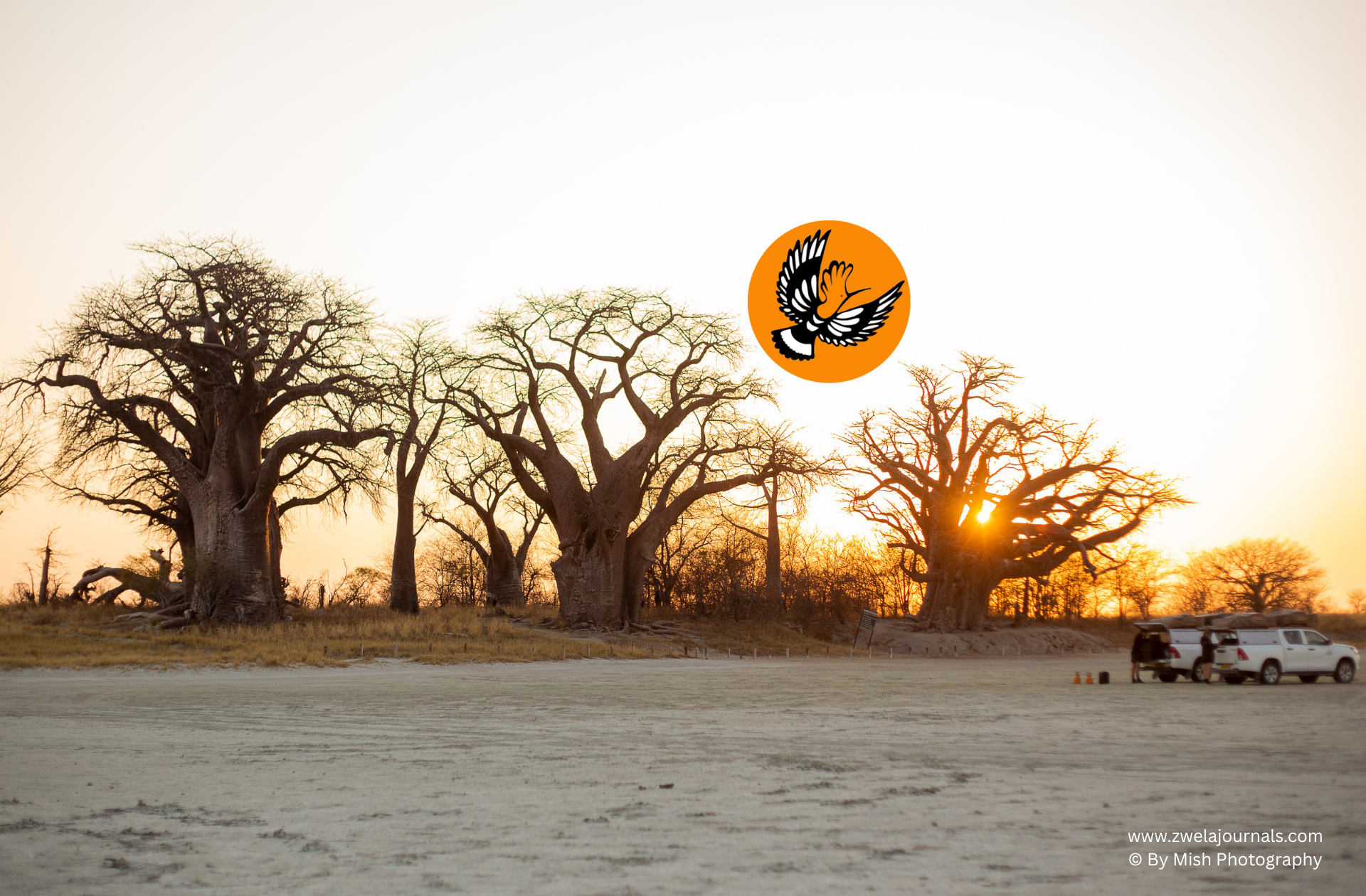
The drive in offered its own highlights. Sandy roads yes but after Khwai it wasn’t too bad. We spotted antelope, a secretary bird, a kori bustard, and a variety of smaller beautiful birdlife as we navigated the sandy track. By the time we finally arrived at the start of Nxai Pan, our excitement was through the roof. Driving along the edge of the pan, we passed the famous Baines Baobabs. We had a sunrise date planned with them, so we didn’t stop, instead continuing to Site 2. The campsites are spaced so that you don’t see another soul.

Our site was etched between two wise, giant baobabs perched on the edge of the pan. The bucket shower didn’t work, and the long-drop toilet made you cross your legs, but none of it mattered. The setting was beyond incredible. There was no sound or light pollution, just the sky burning orange and pink behind the baobabs, and the soft sounds of the bush around us. It was the perfect backdrop for our evening braai. But first up a game of football on the vast pan, i mean with a setting like this it would be rude not to! Returning to camp with good appetites, we cooked, the kids journaled under the watchful gaze of the baobabs, and we sat around the campfire watching the sun dip below the horizon before heading to bed under a sky full of stars.
Morning arrived softly. We woke to the pre-dawn bird twitter of the bush, the two ancient baobabs still standing guard in the early morning glow. It was magical. We packed up early and drove the short distance over to the Baines Baobab cluster for breakfast. Named after the explorer and artist Thomas Baines, who painted them in 1862, these trees have stood here for centuries, quietly witnessing life unfold around them.
Coffee brewed off the back of our 4×4´s as the first light highlighted every crease and curve of the ancient bark. We wandered quietly between the trees, feeling small in their presence. The sheer energy of the place kept us silent, even the kids. It was just us and these wise old trees. After exploring, breakfast, and coffee, an impromptu football game started. It was a game of sheer joy (and energy burning before our days drive) set in the most unforgettable setting. I feel i am over using the word “magic” here, and magic doesn’t even do it justice.
Two essentials we ALWAYS travel with as a family: a football and Zwela Travel Journal.

Logistics & tips
Getting There:
Baines Baobabs lie within Nxai Pan National Park, Botswana. The turn-off is along the A3 highway between Maun and Nata. From the main park entrance gate, it’s roughly 17 km to the turn-off to the pan, then another 12–14 km of sandy track to reach the baobabs and the campsites. The road can be soft in sections, especially late in the dry season, but with a 4×4 and deflated tyres, it’s very doable. Take it slow, enjoy the drive, and soak up the sense of space.
Bookings:
There are only three campsites at Baines Baobabs (Sites 1, 2 and 3), managed by Xomae Group. Each site is completely private, you won’t see another vehicle or person once you arrive. These campsites book up far in advance, especially during high season (June–October), so it’s worth planning early. You can book directly through xomaesites.com or alternatively we used Botswana Footprints – they are a booking agents for all Botswana bookings. This made the process easy and smooth.
Facilities:
Facilities are simple and rustic, a long-drop toilet, a bucket shower (sometimes working, sometimes not), and a braai/ fire pit. You’ll need to bring all your own water for drinking, cooking, and washing, as well as firewood or charcoal. There’s no water, electricity or fuel available anywhere nearby, so stock up before entering the park.
Best Time to Visit:
The dry season (May–October) is the easiest time to access the area. Roads are firmer, and the skies are crystal clear, perfect for sunrise and sunset light over the pans. During the wet season (December–March), the pans often flood, turning the tracks muddy and, at times, impassable.
What to Pack:
- Plenty of water and fuel – there are no supplies once inside the park
- Food and snacks for self-catering
- Firewood or charcoal for your braai
- Football – ideal for a kick-about on the pan
- Zwela Travel Journal – to capture and reflect on the adventures
- Camera for sunrise and sunset shots, the light is dreamy
- Binoculars for spotting antelope and birdlife on the drive in
Travel Tips:
- Leave no trace – take all rubbish with you, including biodegradable waste.
- Make use of sunrise and sunset – the light is extraordinary and worth every bump of the drive.
- Stay the night – this is many times suggested as just a day trip to see Baines Baobabs, but waking up in the first light of dawn and exploring it without anyone there is one of those moments that stays with you. It’s totally worth the overnight! And I think I would go as far to say, necessary!
