
The first time you try to book a South African national park, the website hands you a list of words nobody has explained. Rest camp. Bushveld camp. Satellite camp. Perimeter bungalow. Safari tent, two-bed, no kitchen, communal ablutions.
You pick one, hope for the best, and find out what you actually booked when you arrive.
Having grown up visiting SANParks and staying at numerous camps inside and outside the parks, this is our local insider guide to how SANParks camps work: what to book and what to expect with kids. We explain what the camp types actually mean, what the words on the booking page are really telling you, how the booking system works, and what to choose if you are doing it for the first time with children.
Why staying inside the park is worth the trouble
You can stay outside a national park in a lodge with better beds, a nicer pool and a proper wine list. Plenty of families do, and it is sometimes easier.
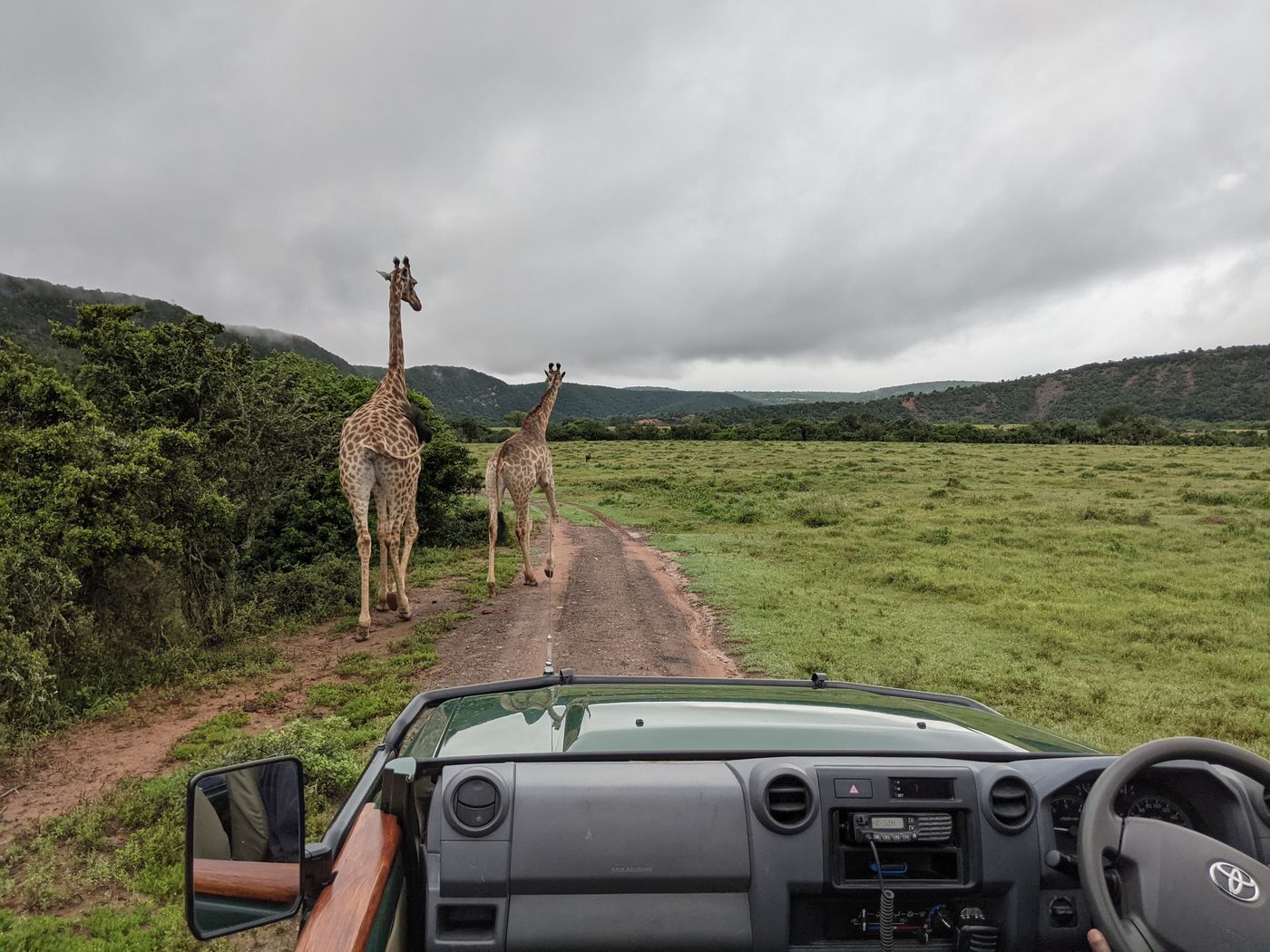
What you give up is the two hours either side of the day. The park gates open at first light and close at dusk, and if you are sleeping outside them you are considered a day visitor to the park, and spend the golden hours of the morning sitting in a queue at the gate rather than watching a hyena trot down the middle of the road.
Staying inside means you are already there. You wake up, put the kettle on, and drive out into an empty park. In the evening you get the last of the light while everyone else is heading for the exit. These two windows are when the animals in the park are most active. Camp gates also open before the actual park gates open.
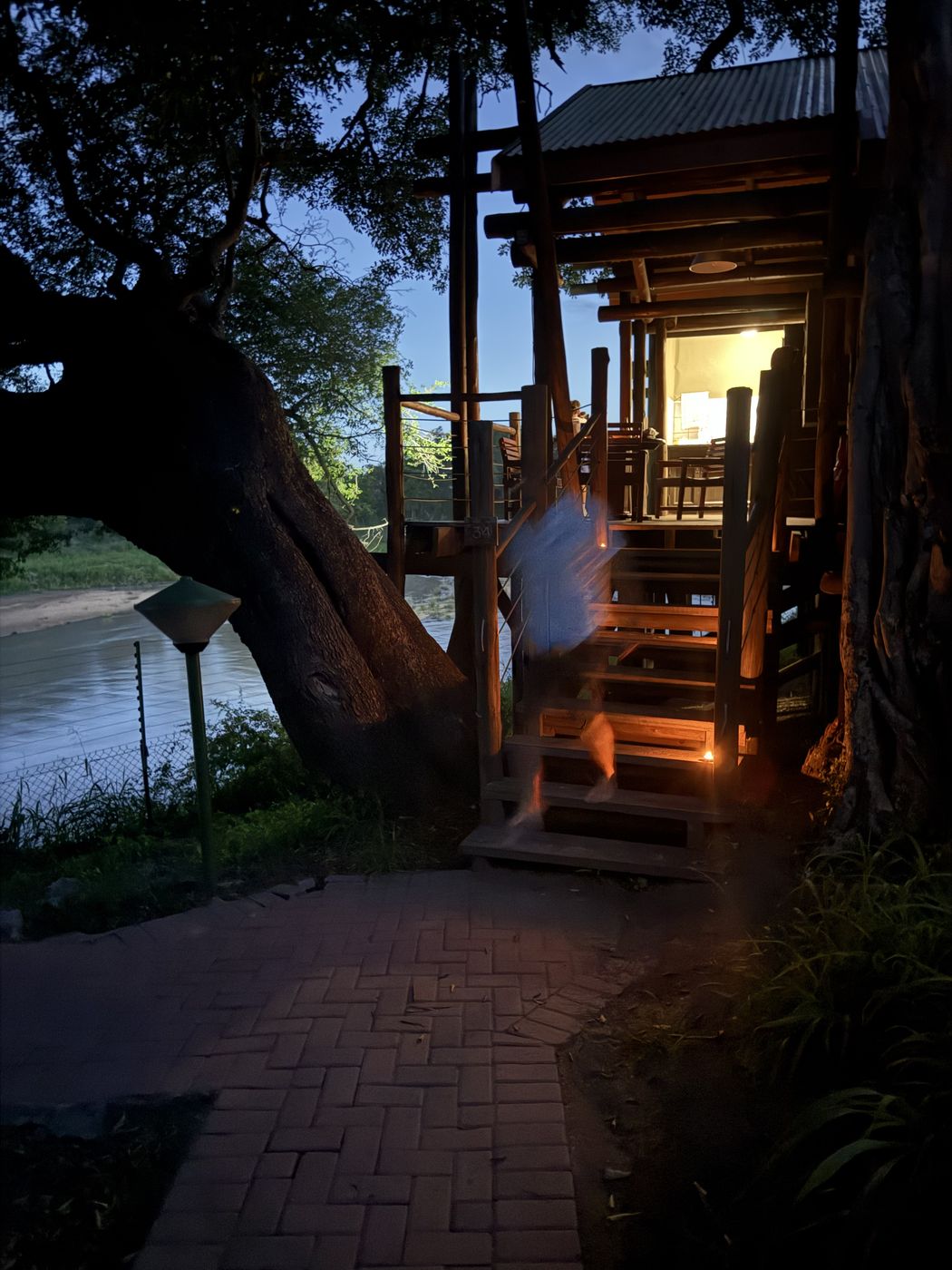
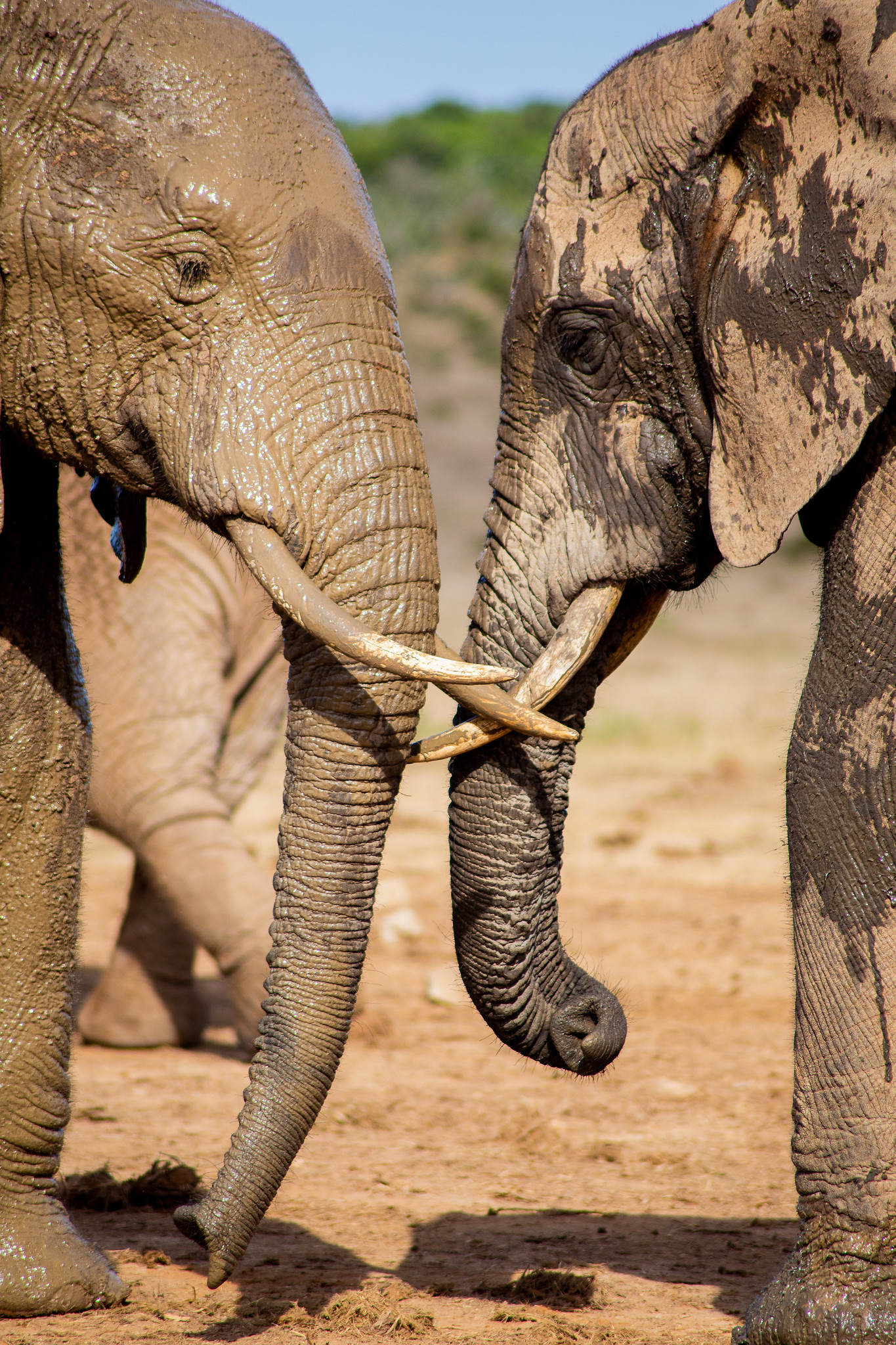
Then there is the camp itself after dark, which is a completely separate pleasure. You are behind a fence, but the fence is the only thing between you and the bush. Children who have heard hyenas whooping outside a camp fence at ten at night do not forget it.
The four kinds of camp
Every SANParks camp falls into one of four categories, and the category matters far more than the individual camp name.
Main rest camps. The full-service ones. Shop, restaurant or cafeteria, fuel, communal kitchens, laundry, a swimming pool at most of them, reception, and often a hide or a viewing deck. These are the ones to book with young children, because when a plan collapses there is always somewhere to buy milk and somewhere to swim. Kruger has twelve of them.
Bushveld camps. Smaller, quieter, and much more remote. No shop, no restaurant, no fuel, no day visitors, and often roads that only guests may use. Every unit has its own kitchen and bathroom, so you are self-sufficient by design. Wonderful, and completely unforgiving if you forget something, because the nearest shop can be two hours away. Kruger has five.
Satellite camps. Rustic and attached to a main camp, where you check in first. Expect no shop, no pool. Quiet camps which can be something wonderful if you want a full nature experience, but perhaps not if you are first-timers.
Bush lodges. Booked whole, by one group, with nobody else in the camp. Expensive per night, but split across two or three families it becomes surprisingly reasonable, and having a camp entirely to yourselves with children is a particular kind of luxury.
Decoding the accommodation names
Within the camps, the unit names follow their own logic, and this is where most booking mistakes happen.
- Campsite. A patch of ground for your own tent or caravan, with shared ablution blocks and usually a power point.
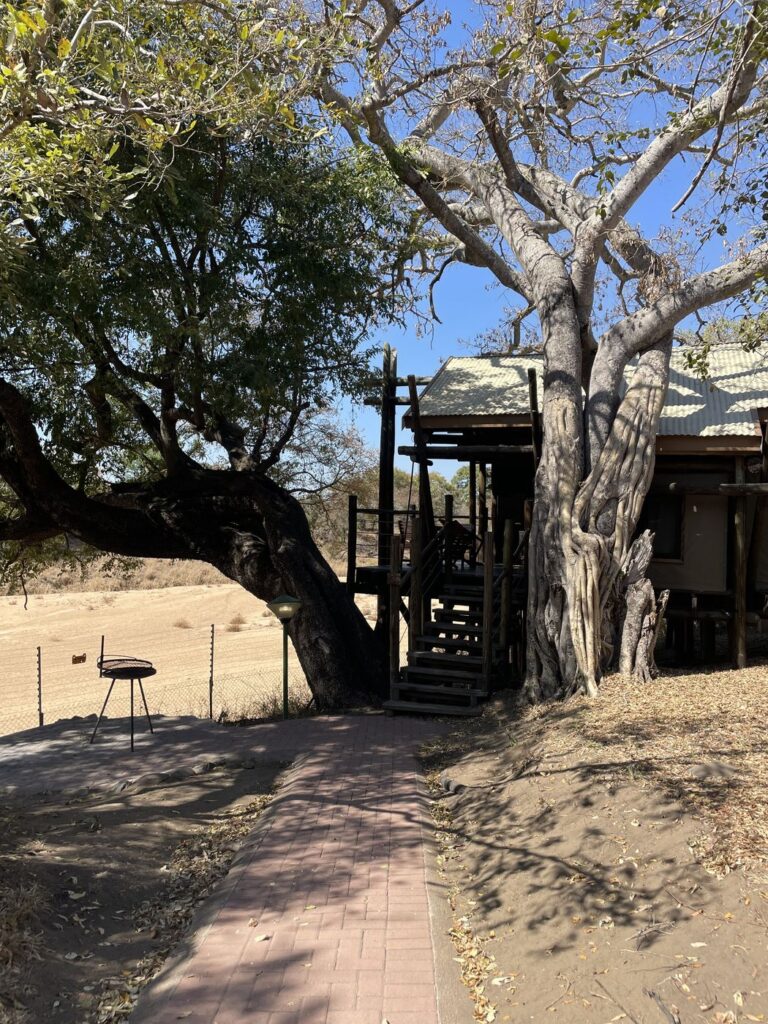
- Safari tent. A permanent canvas tent on a base, with real beds. Often the best value in the whole system, and children love them.
- Hut. The most basic solid unit. Beds and not much else, generally with shared kitchen and bathroom facilities.
- Bungalow. The standard workhorse. Ensuite bathroom, sometimes a kitchenette, sometimes only a fridge and a kettle.
- Chalet or cottage. Larger, with a proper kitchen and usually more than one room. What most families want.
- Guest house. The biggest units, several bedrooms, good for two families travelling together.
The unit names are not consistent across every park, which is genuinely annoying. Read the unit description rather than trusting the label. Use the map when in doubt. The SANParks website can be a bit confusing when booking. It won’t show pictures of your actual unit, but rather the “type” of unit, so bear in mind that you will get an approximation.
The four words that decide your holiday
These appear in the small print and they matter more than the photographs.
“Communal ablutions.” No bathroom in your unit. You walk to a shared block, in the dark, past whatever is in the camp. Fine for confident older children, a genuine problem at two in the morning with a four-year-old. This is the single most common booking regret we hear. Note that many of the safari tents are this type of accommodation.
“No kitchen.” It means exactly that. You may get a fridge, a kettle and a braai (fire barbecue) outside, and nothing else. In a main camp there is a communal kitchen, so it works. In a camp without one, you are cooking over fire for every meal, which is either the holiday you wanted or a shock.
“Perimeter.” The unit sits on the fence line, looking out into the bush rather than onto the car park. It costs a little more and it is worth every rand. Sitting on your own veranda at dusk watching whatever wanders past is most of the reason to be there. Book perimeter if it exists.
“Two-bed.” Two beds, not two bedrooms. Families get caught by this constantly. Note that the park will not allow more than two people in a two-bed unit. Frustrating if you wanted to book that perimeter tent, but there are three of you!
One more thing nobody mentions: nearly every unit has a braai outside and there is nowhere to grill indoors. If your family does not want to cook over fire every night, book somewhere with a restaurant.
How booking actually works
This is the part that catches everyone, and it is a system rather than a queue.
Accommodation opens eleven months in advance, and the eleventh month is released on the first working day of each calendar month. So if you want the following July, you are booking on the first working day of August, and you want to be logged in and ready when it opens rather than browsing at lunchtime.
For the popular combinations, and family units in the well-known camps in South African school holidays are the most popular of all, that first morning is genuinely the difference between getting what you want and taking what is left.
A few things that help:
- Create your account and log in beforehand. Do not spend the first four minutes typing your address.
- Know your second and third choices. Have the camp names written down. Hesitating loses the unit.
- Book the accommodation first and the route afterwards. Availability decides your itinerary, not the other way round.
- Check back for cancellations. Plans change constantly and units reappear, often weeks before the date. Persistence genuinely works here.
- Consider the shoulder months. Outside South African school holidays, much of this pressure simply disappears.
If you are travelling outside the local holidays and the school run allows it, most of the above stops being a problem entirely.
In larger parks you should be able to find accommodation, you just might not get your first choice. Sometimes reversing the order of camps you want, or swapping your itinerary around, gives you more flexibility in booking the camps you want to stay at.
Read about our favourite Kruger camps for families here.
Conservation fees and the Wild Card
Two separate charges catch people out, because your accommodation booking is not the whole cost.
A daily conservation fee is charged per person, per day, for every day you are inside a park. It is not included in your accommodation, and it is charged at different rates for South African citizens, SADC residents and international visitors, so what a friend paid may not be what you pay.
The Wild Card is an annual membership that waives those daily fees. There are individual, couple and family versions, and separate options for international visitors. The maths is simple enough to do in your head: work out the daily fee for your family, multiply by the number of days you will spend inside parks across the whole year, and compare.
For a family doing a week in a park, it is usually close. For a family doing a week in a park plus a few days somewhere else, plus a table mountain or a coastal park later in the trip, it usually pays for itself comfortably. It also covers more than twenty parks, so it quietly encourages you to visit the smaller ones, which is how we ended up somewhere we had never heard of and loved.
Rates change every year, so check the current figures rather than trusting a number in a blog post, including this one.
Gate times, and the fine that is not a bluff
Camp gates and park gates open and close at set times that change with the season, roughly from half past five in summer to half past six in winter, closing at dusk.
Being late is a fine, not a telling off. It is recorded against your booking and it is enforced, and every regular visitor has a story about a sighting that nearly cost them.
The practical consequence is that you must plan your driving day backwards from the gate time, and then add a large margin. Speed limits inside the parks are low, the gravel roads are slower than you think, and the whole point is to stop for things. A fifty-kilometre drive can genuinely take two hours, and it should.
Our rule after one uncomfortably close call: whatever time you think you need to leave, leave forty minutes earlier. You will see more on the way back anyway, because that is when the light is good.
Game drives and bush walks, and how to book them
Operators do exist who will book a SANParks camp for you and provide a guide and a vehicle. You pay for all of it, the guide’s bed and meals included, and it is a perfectly good way to travel if you want the parks without doing the driving. Self-driving in your own vehicle, however, gives you far more flexibility. You decide the routes and the itinerary.
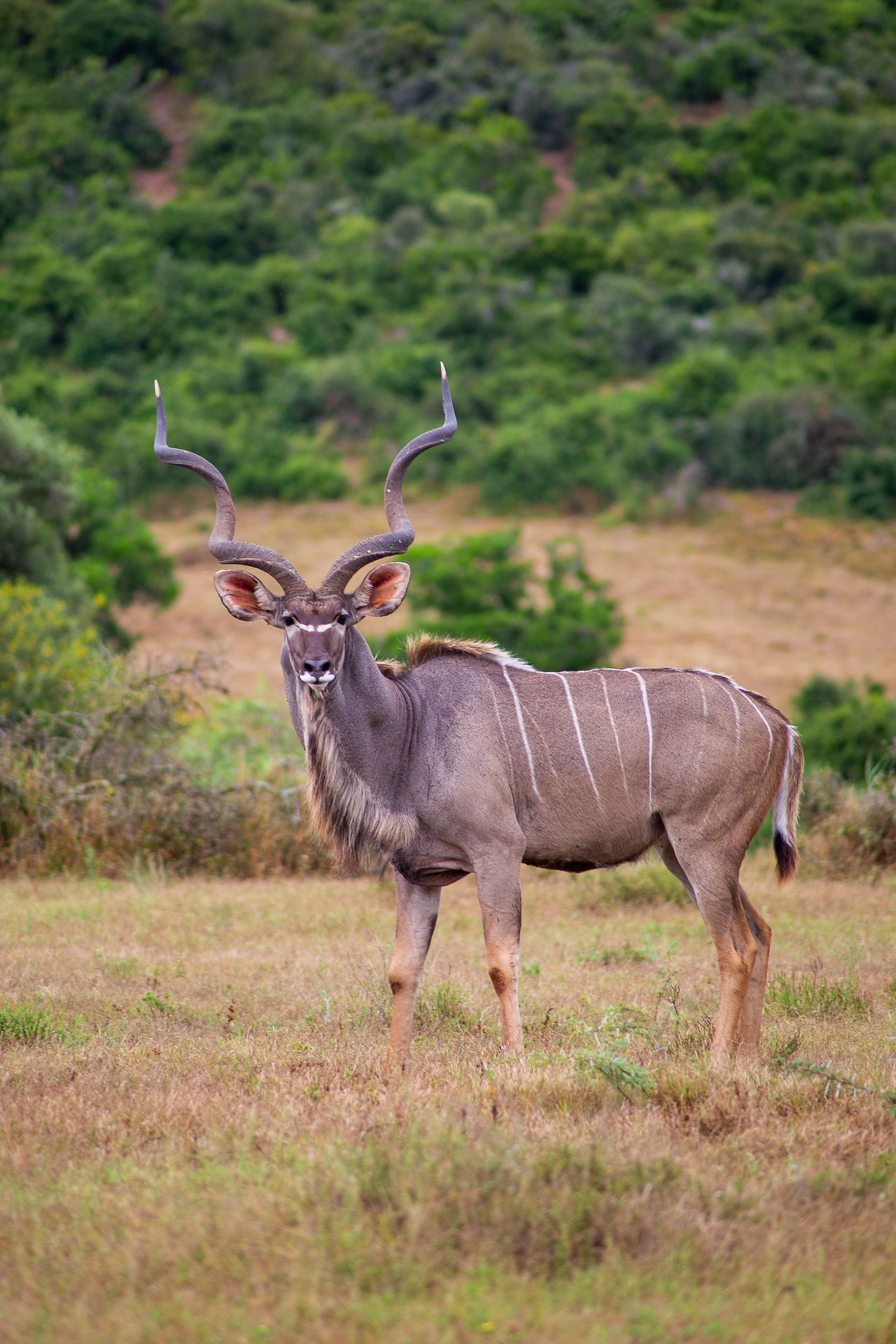
You can still book guided drives, run by SANParks guides in their open safari vehicles. And here is what most people miss: you book those on the same website, at the same time as your accommodation. Leave it until you arrive and the good slots will have gone.
- Sunrise and morning drives. Out before the public gates open, which is the best light of the day.
- Sunset drives. These leave before dusk and return well after the time you would otherwise have to be back.
- Night drives. An open vehicle with a spotlight, heading out into the dark – discovering all that the park has to offer after the sun goes down.
- Guided bush walks. On foot, with two armed guides, early in the morning.
The sunset and night drives are the reason to sleep inside the park. Both are out after the public gates have closed, so they are effectively only available to people staying in a camp. If you are booked into a lodge outside the gate, or visiting for the day, this is the part of the park you do not get to see. It is a completely different place after dark, and a thrilling one at that!
The age limits are not the same for everything, and this catches families out. Guided walks are twelve and over, which rules out most families with young children. Night drives in Kruger are six and over. Daytime drives are generally open to all ages. Limits vary between parks, so check when you book rather than assuming.
A few things we have learned the hard way:
- Take a blanket in winter. SANParks do not always provide them, unlike the private lodges, and an open vehicle at six in the morning in June is properly cold.
- Take your own snacks and drinks. Nothing is provided.
- Take your own binoculars and camera. One pair of binoculars per child, because sharing causes more arguments than it solves.
- Sit near the front if you want to talk to the guide. They have done hundreds of these drives. Children who ask their own questions get far more out of it than children who listen to yours.
- Guides vary, as in any job. Some are extraordinary. All of them know more than you do, so ask.
One last thing worth saying: the smaller parks often run the best drives. Mountain Zebra National Park go genuinely out of their way, and with fewer vehicles and fewer people you get a guide’s full attention in a way the busiest camps cannot match.
What to book if it is your first time with children
If you take nothing else from this, take these.
Book a main rest camp. The shop, the pool and the restaurant are not luxuries with children, they are what rescues a difficult afternoon.
Book a unit with its own bathroom. Whatever you save on communal ablutions you will pay back in the small hours.
Pay the extra for perimeter if it is offered. It is the difference between a room and a view of the bush.
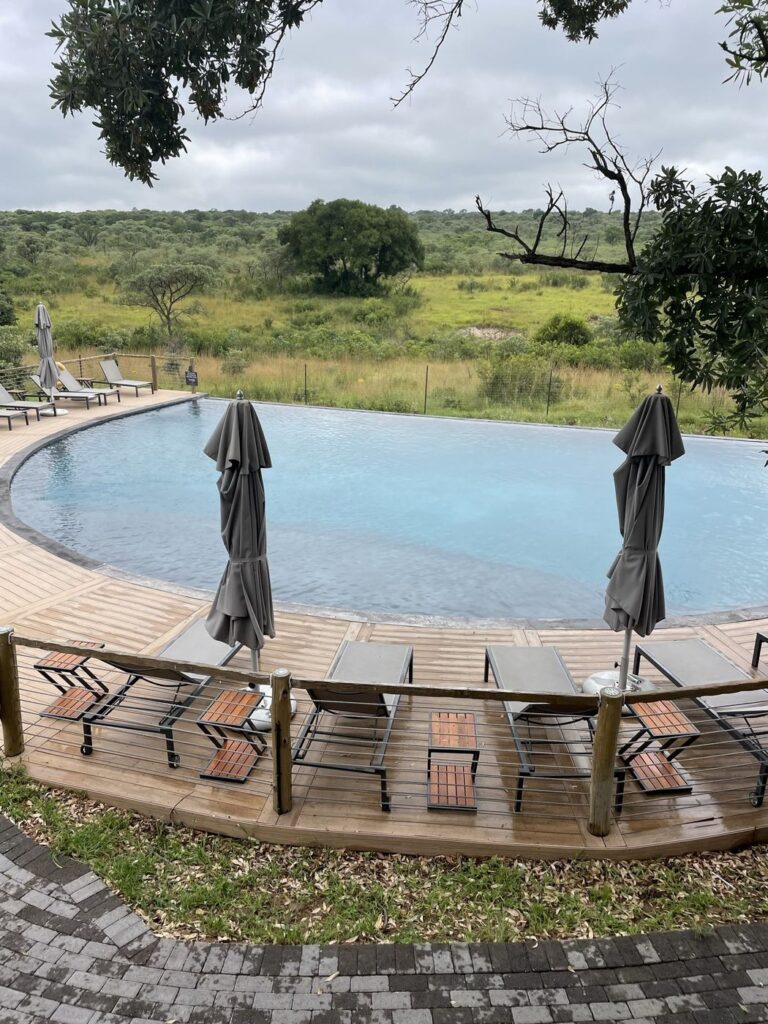
Book a camp with a pool. Not every camp (not even every main camp) has one. The hot middle of the day is long, and a pool turns the dead hours into the part children remember.
Stay at least two nights in each camp. This gives you time to slow down. Two nights also means that one day is spent travelling between camps and one day is spent enjoying the area around the camp.
Two or three nights inside a park is plenty before doing something completely different. Safari fatigue arrives faster in children than anyone expects. Of course if you had to ask us, we could spend ages in the bigger parks, this really gives you the chance to stop and start noticing the rhythms of the bushveld.
Once you have the accommodation right, the days themselves take care of themselves. We have written separately about what a safari day actually looks like with children, including the long hot middle of it, which is where camp life earns its keep.
Let’s talk about luxury camps inside SANParks
In some of the SANParks you can find luxury accommodation inside the parks. These are either located in concessions or run in partnerships with SANParks. The concessions are private game reserves attached to the national parks, allowing game to move freely. There are no fences, and if you are in the National Parks you may spot private roads. These often lead into the concession areas or to private lodges. Visitors who are not checked into these lodges cannot enter these roads.
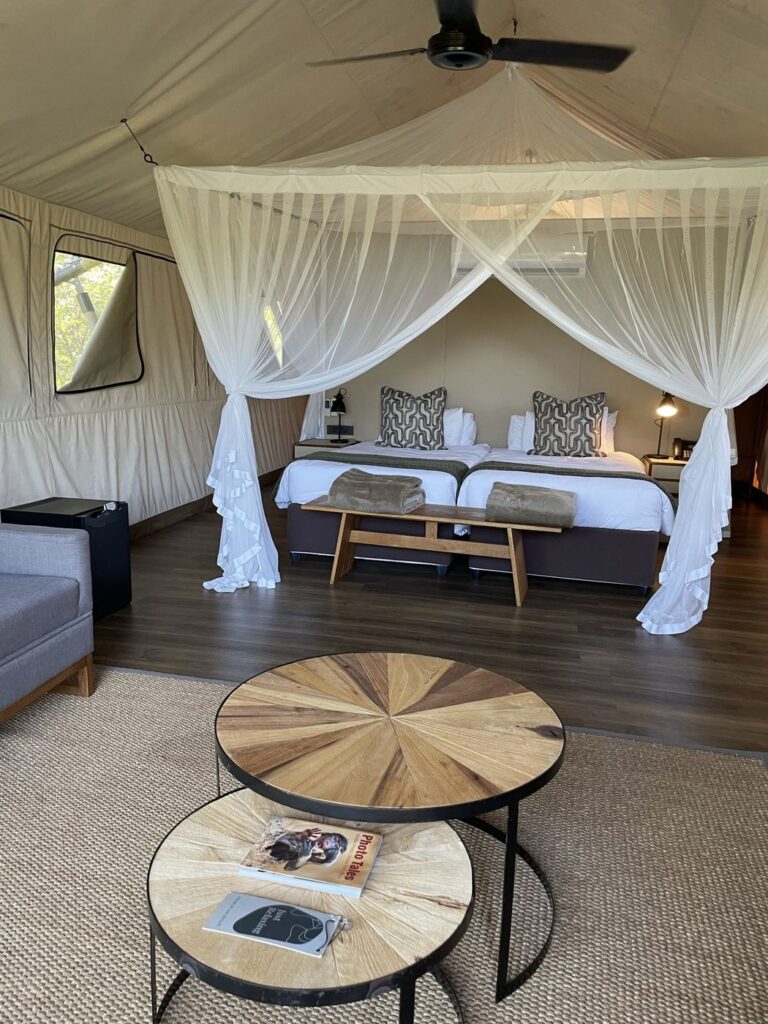
In Kruger, for example, Mdluli Safari Lodge is a luxury tented camp well suited to children, located in the southern section of the park in an area well known for rhino. It is a unique community-led project, and it delivers an Instagram-worthy safari experience.
If you are looking for the full once-in-a-lifetime bucket list safari, look for a lodge that is within a concession or attached to one of the national parks. These offer the full experience: fully inclusive, fully catered, with drivers and guides, no self-driving, and most importantly you do not have to wait for gate times! If there is a leopard nearby, the guides might let you know and take you to see it. The experiences are often custom built around you, offering you a dream safari that regular SANParks camps cannot emulate. Note that many of these camps are also unfenced, so do check beforehand whether children are allowed. They offer the best of both worlds, luxury and wildlife!
However, if you haven’t the budget for this, don’t despair. Visiting a South African national park is an experience in itself, and you can enjoy a truly extraordinary wildlife experience on a shoestring. Self-drive camping in a tent is magical too!
Our honest view
SANParks camps are not luxury and they are not trying to be. The furniture is functional, the walls are thin, and something will be broken. What you are paying for is the location, and the location is unmatched by anything at any price outside the fence. The cost of a SANParks camp is also well below the cost of a luxury camp outside the park, so if your trip is about experiencing the wildlife and the South African bush, and not about the quality of the sheets, then this is an economic way to experience safari with your family. It’s not cheap, but it also will not break your bank account.
You cannot buy the sound of a camp at four in the morning. You cannot buy a child pointing a spotlight through a fence at dusk watching a hyena work its way along the outside of it, or the moment a family of warthogs trots straight through your braai area as though you were not there.
Book the main camp, pay for the perimeter unit, get the bathroom, arrive well before the gate closes, and let the rest go.
Take note of the little things, celebrate the big things. Inside a national park, the little things happen about four metres from where you are sitting.
For where to stay specifically, our guide to the best family camps in Kruger goes camp by camp. For when to go, our month-by-month guide explains why the dry winter months give the best game viewing of the year, and our honest guide to safety with children covers the rules around camp.
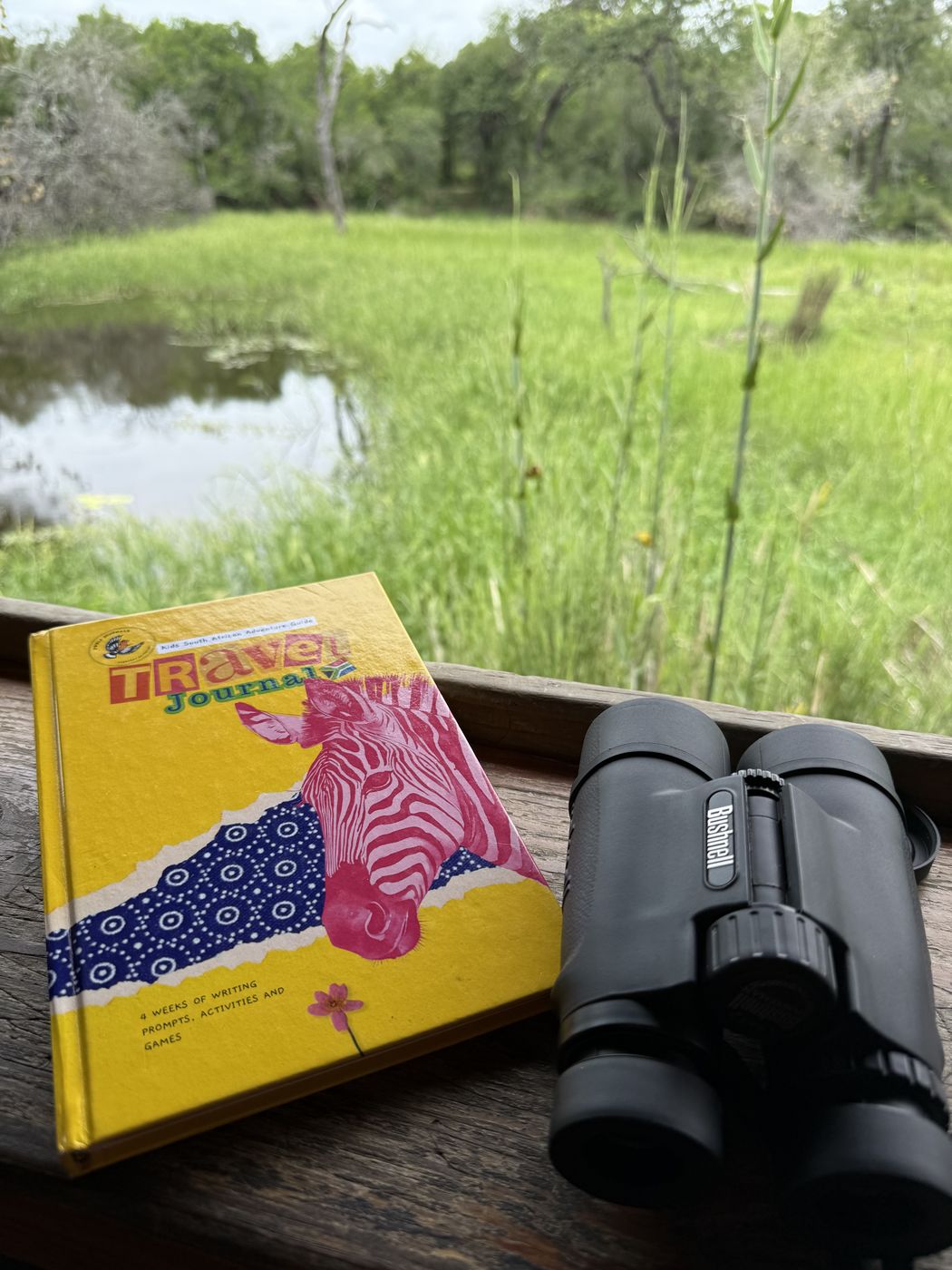
And to give children somewhere to gather the animals, the tracks and the small discoveries while they are still fresh, our South African Travel Journal is built for exactly that.