
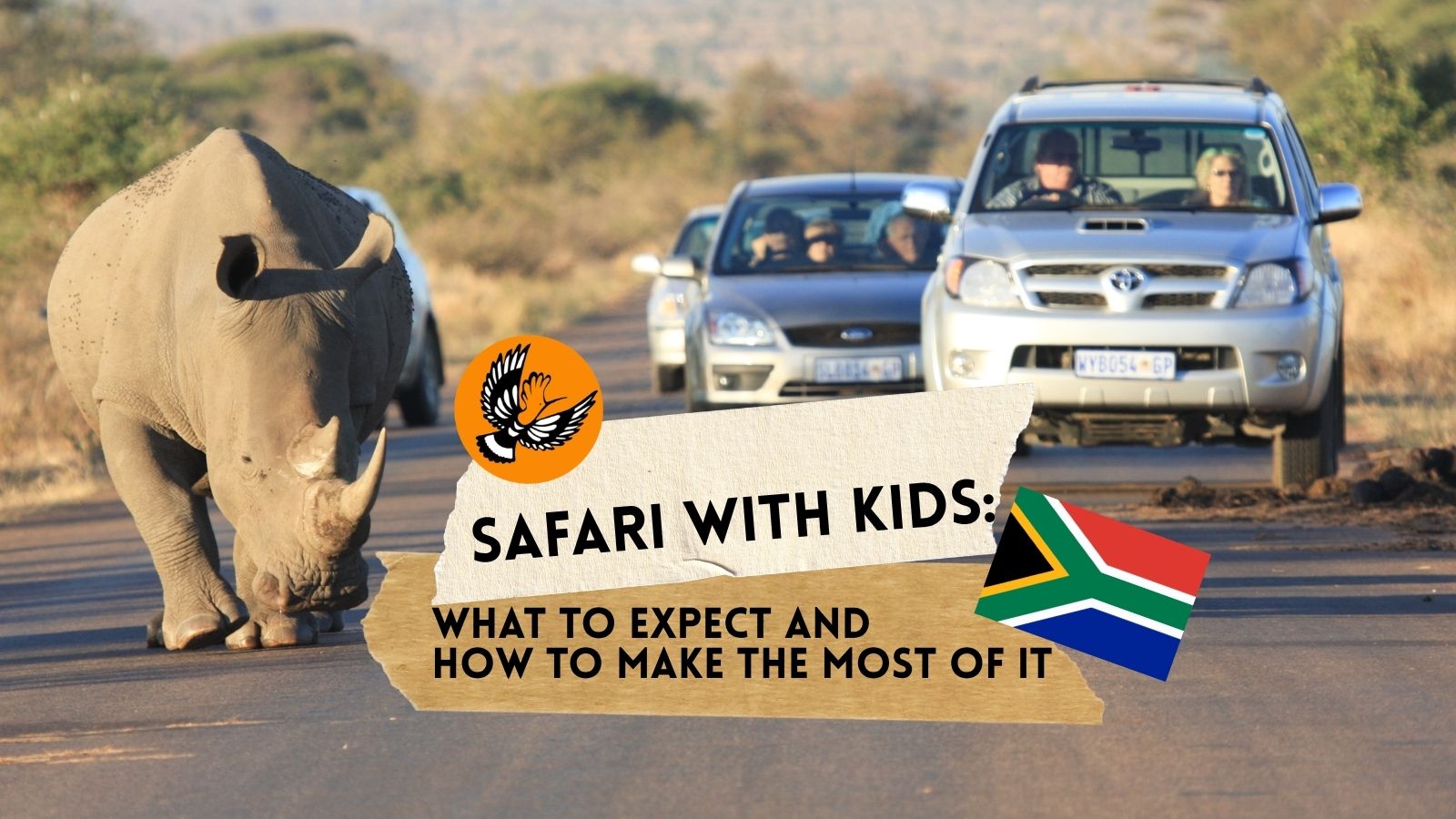
In our guide to Safari with Kids: What to Expect and How to Make the Most of It, we look at what safari is like in South Africa.
A safari is the thing children remember for the rest of their lives, and it is also the thing most likely to test them. Long drives, early starts, hours of looking at nothing in particular, and a firm rule about staying in the vehicle.
None of that is a reason to leave them at home. It just means a safari with children is a slightly different animal to a safari without them, and it repays a bit of thought before you go.
This is about the experience rather than the destination: what a safari day actually looks like, what ages suit it, how to handle the long gaps between sightings, and what turns a child from a passenger into someone who is genuinely looking.
What a safari day actually looks like
The rhythm surprises most first-timers, and it is worth explaining to children in advance so nobody feels ambushed.
You are woken somewhere between half past four and half past five. Camp gates open between about half past four and six depending on the season, and the first hour after opening is the best of the whole day, so the aim is to be sitting at the gate before it lifts rather than rolling up an hour later. There is coffee and a rusk, and then you are out.
The morning drive runs two to three hours with children. Longer is a mistake. Back by half past nine or so for a large breakfast, and then the middle of the day belongs to everybody, because it is hot and the animals are lying in the shade.
The afternoon drive leaves around four, runs until dusk, and usually stops somewhere with a view for a drink and a snack while the sun goes down. Then dinner, and children who have been awake since five fall asleep at the table. That is a good day, not a failed one.
Two full drives a day is a lot for a small child. There is no rule that says you must do both, and skipping a morning drive to swim instead is a perfectly reasonable decision that will improve everyone’s week.
What age is a good age?
There is no single right answer, but there are patterns, and the honest version is more useful than the encouraging one.
Under four. Difficult, and not because of danger. Three hours strapped in with no getting out and a requirement to be quiet near animals is a lot to ask of a two-year-old. It can be done, and self-driving makes it far more manageable, because you set your own length and can turn round whenever you like.
Four to six. Workable with shorter drives and low expectations. Elephants and giraffes land beautifully at this age. Anything requiring patience does not.
Seven to eleven. The sweet spot. Old enough to sit still, look through binoculars, take in facts and hold onto them, and young enough to find all of it genuinely thrilling. If you get to choose when to take them, take them now.
Twelve and up. Excellent, and this is the age where photography or birding can take hold and turn into something they carry on with at home.
One practical point that catches families out: many private lodges set minimum ages for shared game drives, commonly six or eight, and some go higher. Most will take younger children if you book a private vehicle, which costs more. National parks have no such limit if you are in your own car, which is a large part of why self-driving suits families with small children.
The honest problem, and how to solve it
Here is what the brochures leave out. Between sightings, there can be forty minutes of bush. Then some impala. Then more bush, and more impala.
Adults are fine with this because the landscape is enough. Children are not, and by the fourth impala the questions start being about lunch. This is the single biggest reason safaris go flat with children, and it is entirely fixable.
The fix is to stop treating them as passengers. A child who is watching is bored. A child who is looking for something is not, and the difference between those two states is small and easy to create.
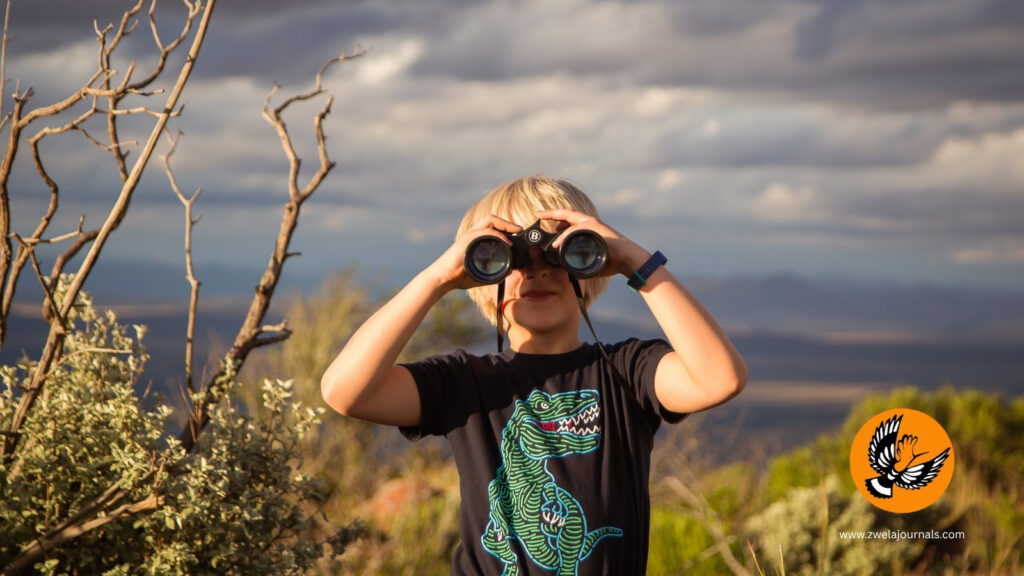
- Give every child their own binoculars. Not one pair between them, which causes more arguments than it solves. They do not need to be good. A light, small pair suits little hands far better than a heavy adult set they cannot hold steady.
- Put each child in charge of something. One is the bird spotter, one watches the left-hand side, one calls out every time the vehicle crosses a dry riverbed. Rotate it between drives.
- Use the sightings board. Most rest camps keep a board where visitors pin what they saw and where, and it is the best thing in camp for a child. They can check it before a drive, plan a route around it, and add their own sightings when they get back. It turns the whole day into something with a beginning and an end.
- Keep a running list. Everything seen, in order, written down as it happens. It settles the “have we seen more than yesterday” question that children love asking.
- Let them ask the guide directly. Guides are used to it and are usually delighted, and a child who has asked their own question listens to the answer far more closely than one who overheard yours.
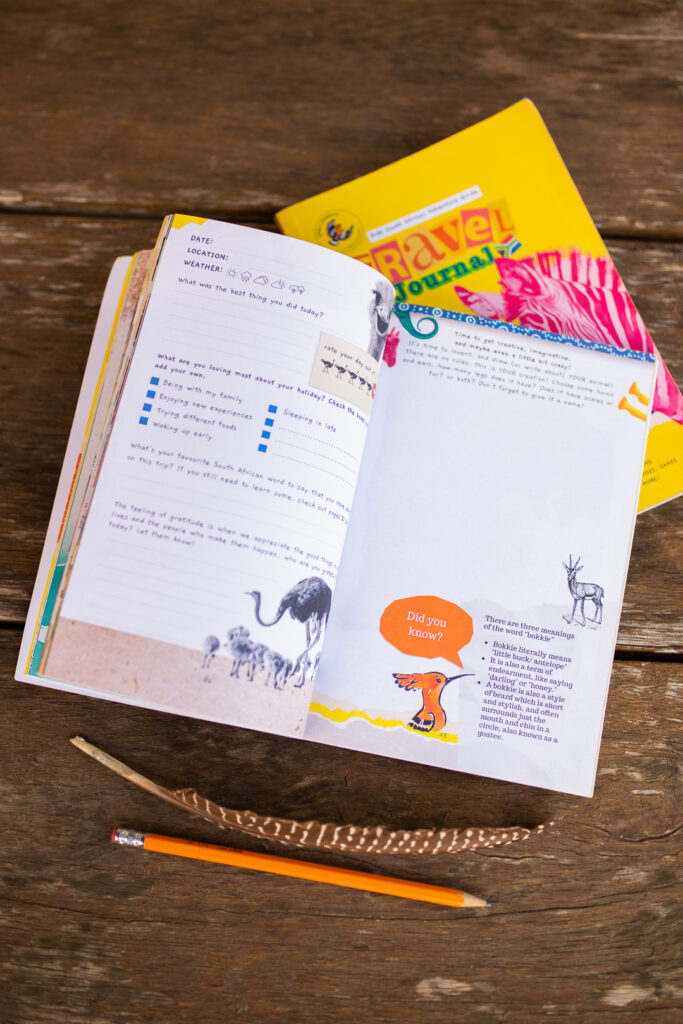
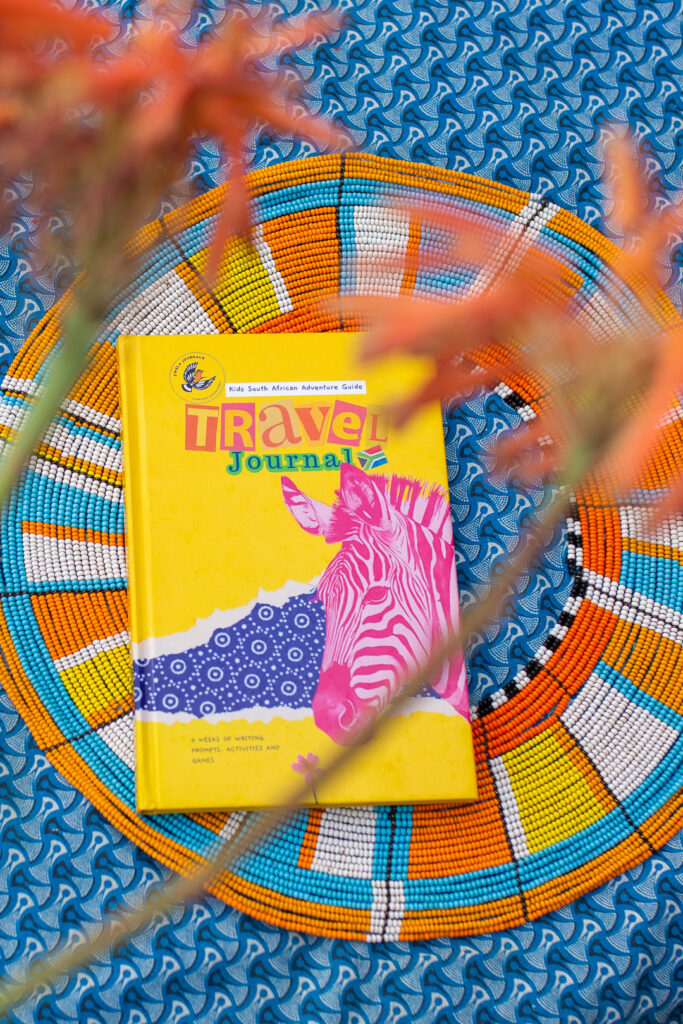
- Give them a Zwela Journal. With checklists and activities, kids can find loads of interesting things to pass the time between animal spotting.
Self-drive or guided?
These are genuinely different experiences with children, and the right answer usually involves a bit of both.
Self-driving gives you control, which with young children is worth a great deal. You go when they are ready, you stop when someone needs the loo, you turn round when the mood has gone, and everyone is warm, contained and behind closed windows. It costs a fraction of a guided drive and it means the family car becomes a small mobile hide with snacks in it.
It also gives you the picnic sites and the hides, which matter more with children than anyone expects. National parks have designated spots where you are allowed out of the car, some with braai facilities and a kettle, and hides built at waterholes where you can sit quietly and watch things come to drink. For a child who has been stuck in a car for two hours, a hide is a revelation.
The trade-off is that you will see less. You are driving, so you cannot look properly. You do not have the radio network that guides use to share sightings, you cannot leave the road, and you do not have someone who knows which tree that leopard uses.
Guided drives flip all of that. A good guide finds things you would drive straight past, explains what you are looking at, and in a private reserve can go off-road to follow something. Open vehicles put you properly in the landscape, and night drives with a spotlight are a completely different world that self-drivers never see.
The trade-offs are the fixed schedule, the minimum ages, the fact that you cannot leave early, and the cold. An open vehicle at half past five in June is genuinely freezing, whatever the daytime temperature suggests.
For most families, the best answer is to self-drive most of the trip and book one or two guided drives, ideally including a sunset drive. You get the freedom and the expertise, and the guided drives feel like an event rather than a routine.
The middle of the day is not wasted time
Every safari itinerary has a hole in the middle of it, roughly ten in the morning until four in the afternoon, when it is too hot for the animals and therefore too hot for you. Families arrive expecting this to be the boring part. It is usually the part children like best.
Most national park rest camps have a swimming pool, and a pool after a five o’clock start is worth more than another hour of looking for lions. Many camps also run a junior ranger programme, a proper activity kit that gets children learning to identify tracks, dung, birds and trees, and it holds their attention far longer than you would guess.
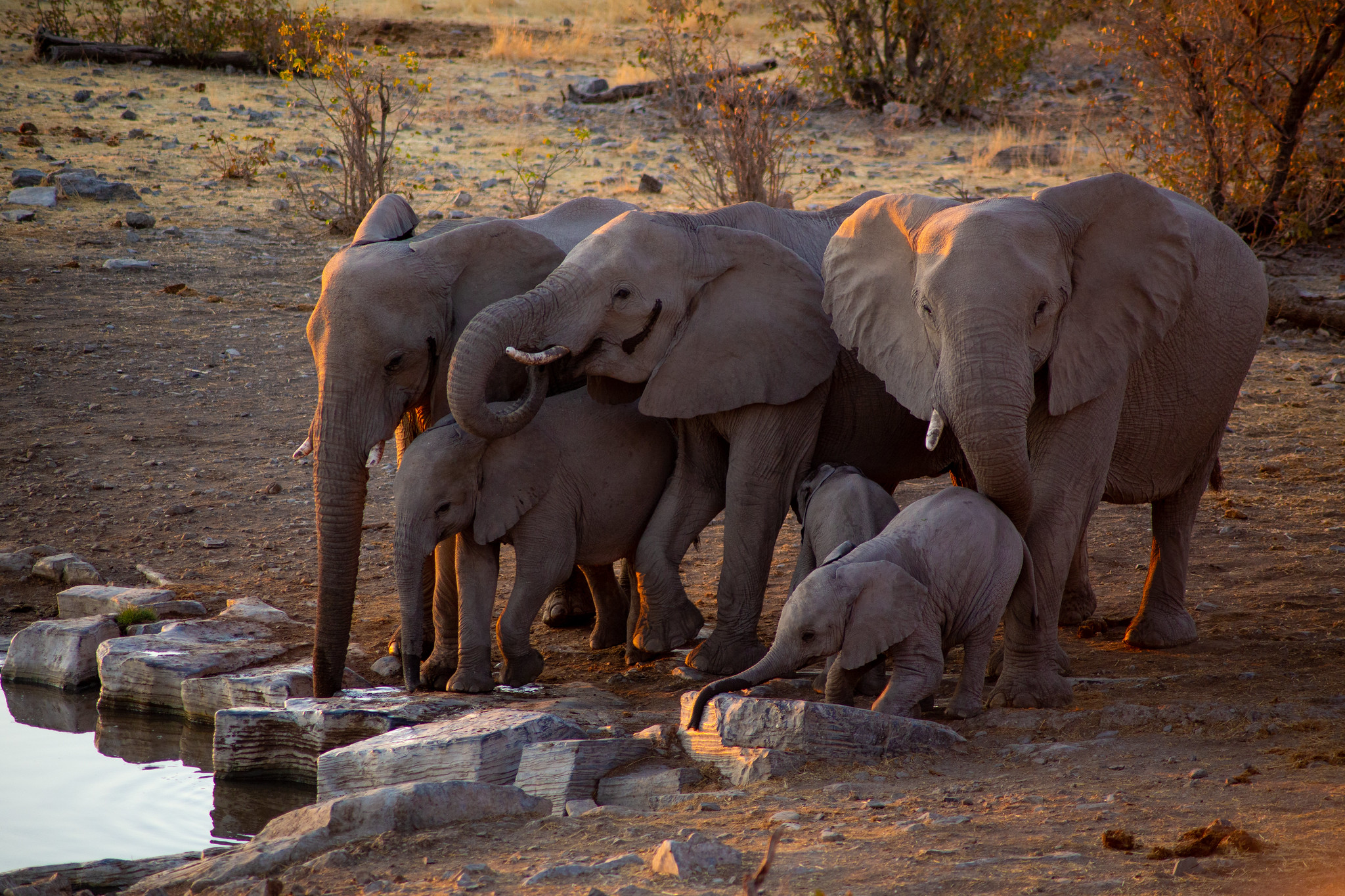
Then there are the hides, which are open all day and cost nothing. Sitting still in a hide for half an hour with binoculars is the closest most children get to actually watching wildlife rather than glimpsing it from a moving car.
Card games, filling in a Travel journal, the sightings board, the camp shop, a nap. None of it is filler. It is what makes the early starts survivable, and skipping it is the most common mistake families make.
What to take in the vehicle
Small list, and each item earns its place:
- Binoculars for every child. The single best thing you can hand them.
- Layers. It can be four degrees at dawn and twenty-eight by ten in the morning. A beanie and gloves in winter are not an overreaction on an open vehicle.
- A cool box with more snacks and water than you think. Three hours is a long time, and picnic sites are not always where you want them.
- A change of clothes. Spills, dust and the occasional small disaster.
- A Zwela journal and pencils. Pencils rather than pens, which leak in the heat and roll under seats.
- A simple field guide, bird checklist or animal cards so children can find things themselves rather than asking what everything is.
- An offline park map. Signal inside the parks is patchy to non-existent.
- Sun cream, hats and sunglasses for the afternoon. The low sun on a game drive burns shoulders and the backs of necks.
- Wet wipes, for reasons that will become obvious.
Leave the drone at home. Flying one in a South African national park is illegal, and rangers take a dim view.
The things nobody warns you about
A handful of practicalities that catch families out, none of them serious and all of them easier if you know in advance.
On a guided drive, there are no toilet stops. You get out only where the guide says it is safe, which may be once in three hours. Everybody goes before you leave, including the adults who insist they are fine. Self-driving is the opposite, with picnic sites and camps dotted through the park, which is another quiet argument for doing it yourself with small children.
Gate times are real. Camps close their gates at a fixed hour and being late means a fine, so build in far more time than the distance suggests. Speed limits inside the parks are low and properly enforced, and on the smaller gravel roads you will average less than thirty kilometres an hour. A fifty-kilometre drive can genuinely take two hours.
Some drives are blank. You will have a morning where you see almost nothing. That is not bad luck or a bad guide, that is what wild animals are. Say so to children beforehand and the blank drive stops being a disappointment, also you will be never short of birds… sometimes its interesting to just stop the car, open the windows and see what you can spot with binoculars… even in winter, it can be surprising what may be hiding in an otherwise “empty” patch of bush!
Good sightings get crowded. A leopard in a popular park can gather fifteen cars. It is worth telling children why everyone is being patient and quiet.
Three or four days is plenty. Safari fatigue is real, and it arrives faster in children. Two or three nights in the bush, then something completely different, works far better than a week of game drives. Nobody regrets leaving while they still want more.
Teaching them to look properly
The Big Five is a useful hook and a terrible way to spend a week. Chasing five animals makes everything else feel like filler, which is exactly backwards.
The children who love safari most are the ones who learn to read the place rather than tick it off, and that is easier to teach than it sounds.
Show them tracks in the sand at the edge of the road and let them decide what came past in the night. Point out the oxpeckers riding on a buffalo and ask why the buffalo puts up with it. Listen for the alarm calls of monkeys and francolins, which tell you a predator is somewhere nearby long before you see it. Look up when a vulture circles.
Then there are the Little Five, which every guide knows and most visitors have never heard of: the elephant shrew, the ant lion, the rhino beetle, the buffalo weaver and the leopard tortoise. Finding all five is much harder than finding the Big Five, and children adore the fact that the grown-ups will probably lose. Add to that the Shy Five, the Ugly Five… and you have a much more fun spotting list… what 5 would you make?
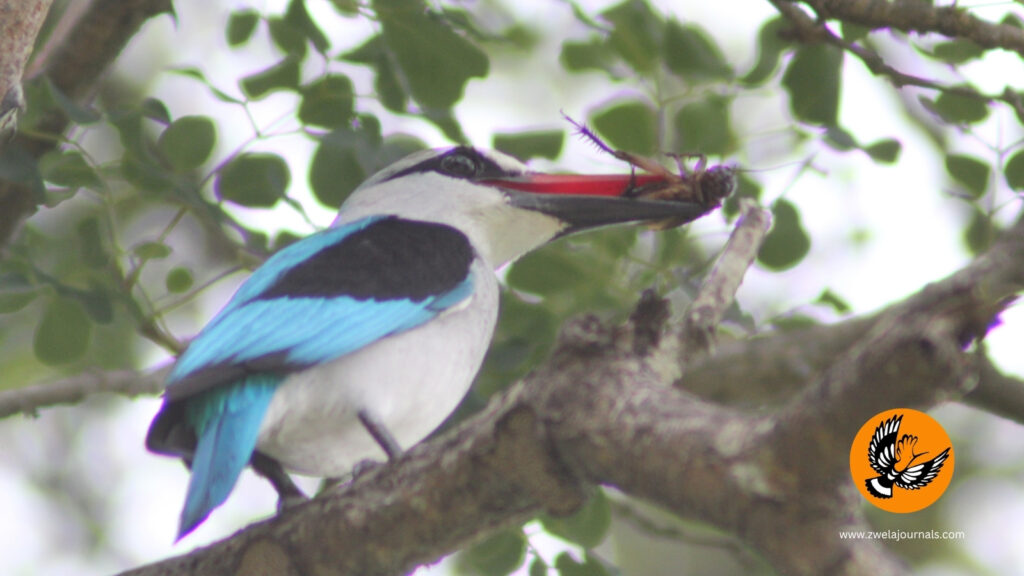
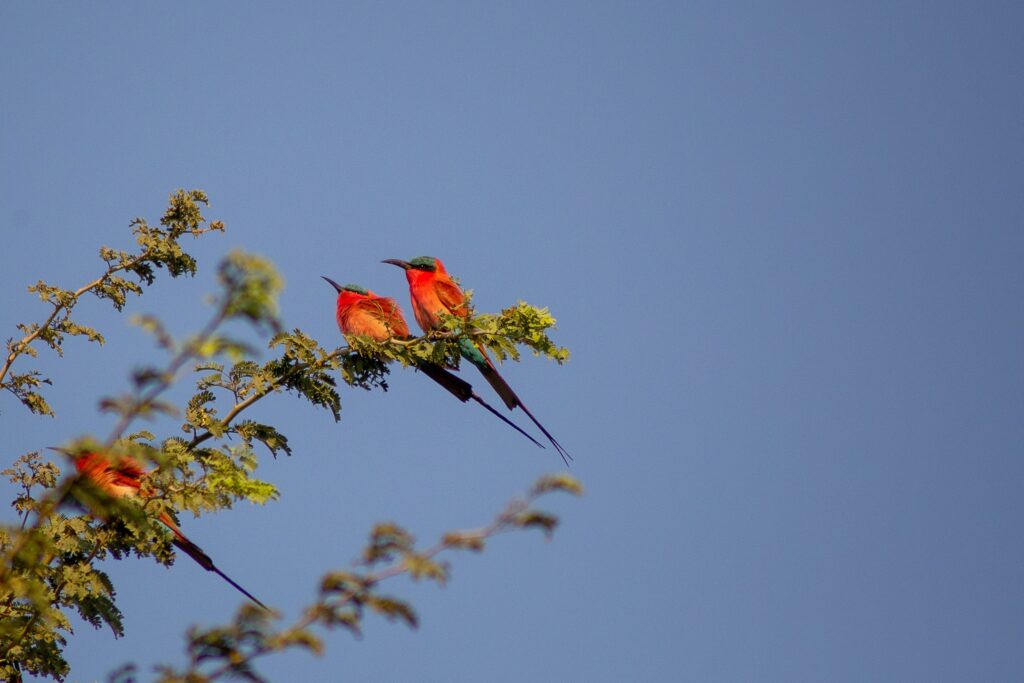
Birds are the other secret. South Africa has hundreds of species and there is always one in view, which means there is never truly nothing to see. A child who has decided to find a lilac-breasted roller has something to look for over the entire drive.
Holding onto it afterwards
Safari produces more than children can hold. Three days in, the individual sightings blur, and by the time they are home the whole thing has compressed into “we saw elephants”.
The middle of the day is what saves that. It is the natural moment to write down what happened that morning while it is still sharp: what they saw, what it was doing, what the guide said, what the tracks looked like.
It does not need to be neat or long. A list of animals with a bad drawing next to each one is worth more in ten years than any photograph you take, because it is theirs.
Our honest view
Safari with children asks more of you than most holidays. The starts are brutal, the drives are long, and there will be an afternoon when somebody cries about a giraffe.
It also does something almost nothing else does. Children who have watched a herd of elephants cross a road in front of them, close enough to hear, do not think about animals the same way afterwards. It rearranges something.
Go with lower expectations than the brochures suggest. Keep the drives short. Give every child a pair of binoculars and something to look for. Let the middle of the day be genuinely lazy, and leave the bush while everyone still wants one more drive. Then let them tell you what they saw, in their own words, before it fades.
Take note of the little things, celebrate the big things. On safari, the little things are usually the ones they remember.
Safari with Kids: What to Expect and How to Make the Most of It…
For when to go, our month-by-month guide explains why the dry winter months give you the best game viewing of the year. Our honest guide to safety with children covers the rules in the vehicle and around camp, and if you are heading for the best-known park, our five favourite family camps in Kruger is the place to start. For the wider trip, try our complete family travel guide to South Africa.
And to give children somewhere to gather the animals, the tracks and the small discoveries while they are still fresh, our South African Travel Journal is built for exactly that. There are more ideas on our Kids Travel Resources page.